Добрый день, Коллеги. Важное сообщение, просьба принять участие. Музей Ферсмана ищет помощь для реставрационных работ в помещении. Подробности по ссылке
Сборник содержит материалы докладов, представленных на Восьмом Всероссийском совещании «Меловая система России и ближнего зарубежья: проблемы стратиграфии и палеогеографии», посвященном памяти замечательного геолога и исследователя Крыма Н.И. Лысенко. Рассмотрены актуальные вопросы стратиграфии, палеогеографии, тектоники, палеонтологии и нефтяных систем меловых отложений различных регионов России и ближнего зарубежья. Сборник предназначен для геологов широкого профиля, занимающихся геологией мезозоя, палеонтологов и стратиграфов, студентов геологического, георграфического и биологического факультетов.
Сборник содержит статьи советских участников VIII конгресса INQUA в Париже, посвященные различным проблемам комплексного изучения четвертичного периода, итогам предконгрессных экскурсий по различным регионам Франции, обзору работы INQUA и его комиссий, выставкам и изданиям к конгрессу.
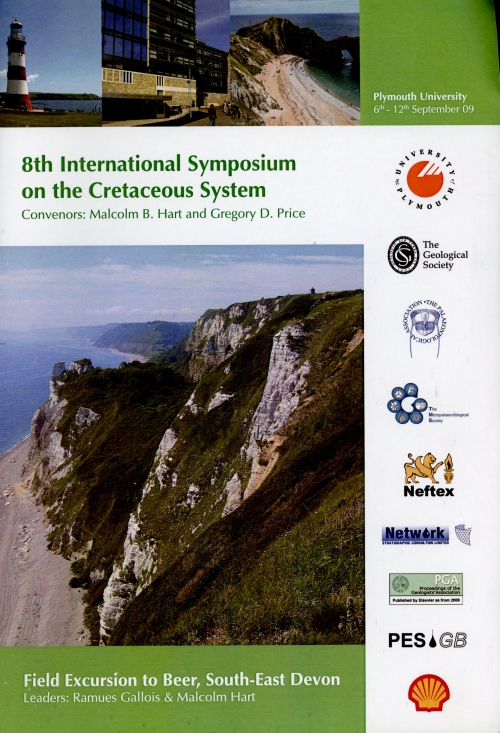
In 2001 the Dorset and East Devon Coast was inscribed on the World Heritage List as a place of outstanding universal value on the basis of its geological succession, coastal processes and landforms and its place in the history of the development of geology (especially stratigraphy and palaeontology). Extending from Orcombe Point in the west to Studland in the east, this World Heritage Site's 85 miles of coastline contains a record of 185 million years of Earth history. <...>
Сборник содержит статьи советских участников IX конгресса INQUA в Новой Зеландии, посвященные различным проблемам комплексного изучения четвертичного периода, итогам экскурсии вдоль западного побережья о. Северного, обзору работы INQUA и его комиссий, выставкам и изданиям к конгрессу.
Geology as a science has a fascinating and controversial history. Kieran D. O’Hara’s book provides a brief and accessible account of the major events in the history of geology over the last 200 years – from early theories of Earth’s structure during the Reformation, through major controversies over the age of the Earth during the Industrial Revolution, to the more recent twentieth-century development of plate tectonic theory, and on to current ideas concerning the Anthropocene.
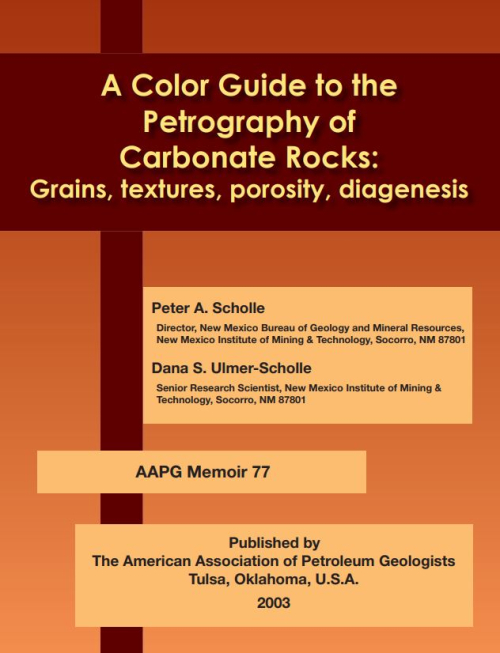
Carbonate petrography — the study of limestones, dolomites and associated deposits under optical or electron microscopes —greatly enhances field studies or core observations and can provide a frame of reference for geochemical studies. Petrography is an especially powerful tool because it enables the identification of constituent grains, the detailed classification of sediments and rocks, the interpretation of environments of deposition, and the determination of the often complex history of post-depositional alteration (diagenesis).
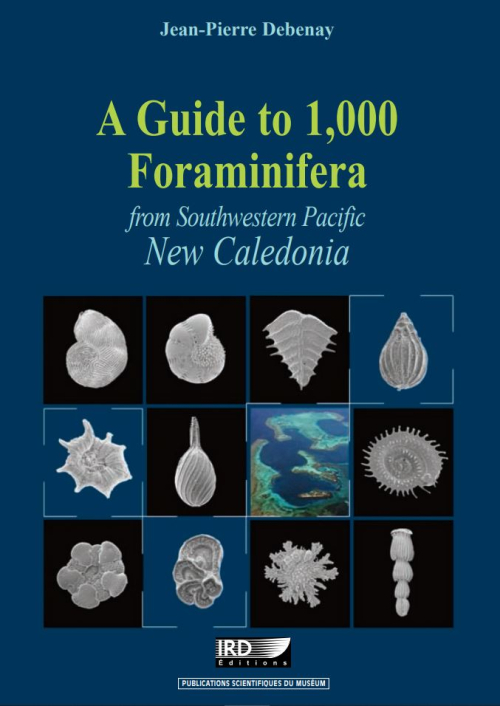
Foraminifera have an evolutionary history that extends back to the Cambrian, more than 525 million years ago. Since then, they have radiated and evolved. To date, approximately 60,000 fossil and modern species have been validly recognized (LANGER, 2011), and an estimated 10,000 species (including only 40-50 planktonic species) are still living (VICKERMAN, 1992), constituting the most diverse group of shelled microorganisms in modern oceans (SEN GUPTA, 1999). These small-sized organisms, usually 0.1 to 1 mm, may be very abundant, and tens of thousands living specimens per square meter may be found in some environments (WETMORE, 1995). Their mineralized tests (shells) usually get preserved in the sediment after the death of the organism and may constitute a major, sometimes the dominant, part of many modern or fossil sediments (fig. 1). They are easy to collect, and their high-density populations provide an adequate statistical base, even in small volume samples, to perform environmental analyses, making them a powerful tool for environmental assessment. <...>
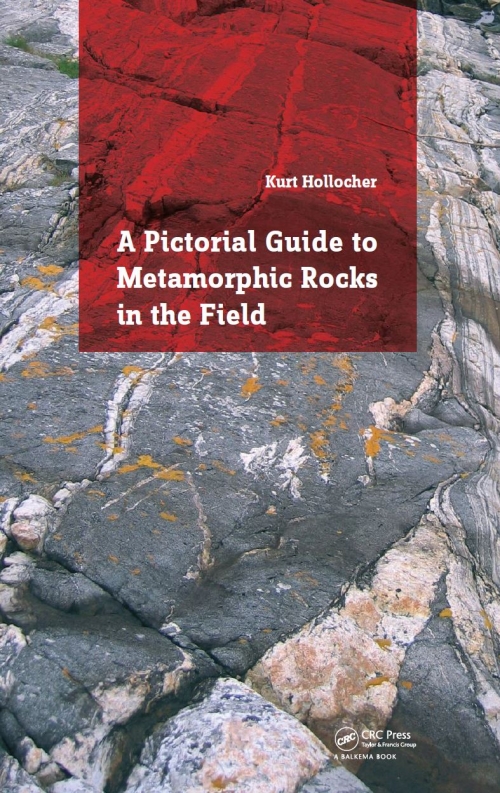
This book is a photographic introduction to metamorphic rocks. It is meant to be a survey of mostly typical metamorphic rocks, minerals, and structures as they appear in the field, and the metamorphic processes that make them. Its purpose is to help guide the eye of any student of geology to better see the geologic features in metamorphic rocks that might otherwise remain invisible or obscure. This book is a training tool, one of many, to help budding geologists of metamorphic rocks, young and old. <...>
Through the years, geologists, mining engineers, and others operating in the minerals field have used various terms to describe and classify mineral resources, which as defined herein include energy materials. Some of these terms have gained wide use and acceptance, although they are not always used with precisely the same meaning.
The U.S. Geological Survey (USGS) collects information about the quantity and quality of all mineral resources. In 1976, the USGS and the U.S. Bureau of Mines developed a common classification and nomenclature, which was published as USGS Bulletin 1450-A—“Principles of the Mineral Resource Classification System of the U.S. Bureau of Mines and U.S. Geological Survey.” Experience with this resource classification system showed that some changes were necessary in order to make it more workable in practice and more useful in long-term planning. Therefore, representatives of the USGS and the U.S. Bureau of Mines collaborated to revise Bulletin 1450-A. Their work was published in 1980 as USGS Circular 831— “Principles of a Resource/Reserve Classification for Minerals. <...>
A book like this owes much to many people. I am especially grateful to my colleagues—associates, students, and friends, past and present—at the Scripps Institution of Oceanography, from whom, over the years, I have learned a great deal.