Добрый день, Коллеги. Важное сообщение, просьба принять участие. Музей Ферсмана ищет помощь для реставрационных работ в помещении. Подробности по ссылке

Автор(ы):Rose K.D.
Издание:The Johns Hopkins University Press, Baltimore, 2006 г., 447 стр., ISBN: 0-8018-8472-1
Язык(и)Английский
The Beginning of the Age of Mammals / Начало эры млекопитающих

Mammals are amongthe most successful animals on earth. They occupy every major habitat from the equator to the poles, on land, underground, in the trees, in the air, and in both fresh and marine waters. They have invaded diverse locomotor and dietary niches, and range in size from no larger than a bumblebee (the bumblebee bat Craseonycteris: body length 3 cm, weight 2 g) to the largest animal that ever evolved (the blue whale Balaenoptera: body length 30 m, weight > 100,000 kg). Just over a decade ago, the principal references recognized 4,327 or 4,629 extant mammal species in 21–26 orders (Corbet and Hill, 1991; Wilson and Reeder, 1993), the discrepancy mainly in marsupial orders. The most recent account now recognizes 29 orders of living mammals (the increase mainly reflecting the breakup of Insectivora), with more than 5,400 species in 1,229 genera (Wilson and Reeder, 2005). But many times those numbers of genera and species are extinct. Indeed, McKenna and Bell (1997) recognized more than 4,000 extinct mammal genera, many of which belong to remarkable clades that left no living descendants. The great majority of extinct taxa are from the Cenozoic, the last one-third of mammalian history. What were these extinct forms like? What made them successful, and what led to their eventual demise? How were they related to extant mammals? When, where, and how did the ancestors of modern mammals evolve, and what factors contributed to the survival of their clades?


Издание 2
Автор(ы):Cleal C.J., Thomas B.A.
Издание:Cambridge University Press, 2019 г., 265 стр., ISBN: 978-1-108-48344-5
Язык(и)Английский
Introduction to Plant Fossils / Введение в растительные ископаемые

This book introduces the reader to the study of plant fossils, and is especially aimed at those who have had little previous experience of this type of palaeontology. We have provided an illustrated text that summarises the main groups of plants that occur as fossils and explains how one should go about investigating them. Practical guidance is given on techniques that can be used to reveal hidden details of anatomical and reproductive characters, as well as the sorts of features that are used to identify some of the most commonly found plant fossils. Many of the approaches that are used to interpret plant fossils are discussed and we show how they can be used by the palaeobotanist to increase our knowledge of plant evolution, palaeoecology, palaeogeography and stratigraphy.

Редактор(ы):Модзалевская Е.А., Никитин И.Ф., Соколов Б.С.
Издание:Наука, Ленинград, 1982 г., 176 стр., УДК: 56.07:551.7.03
Язык(и)Русский
Труды 24 сессии Всесоюзного палеонтологического общества. Современное значение палеонтологии для стратиграфии

В книге рассмотрены общие для стратиграфии и палеонтологии проблемы, современное значение палеонтологического метода в стратиграфических исследованиях вообше и при разработке региональных стратиграфических схем крупных геологических регионов. СССР, сущность биостратиграфических подразделений и их границ, возможности использования некоторых специальных методов в биостратиграфии. Особое внимание уделено использованию палеонтологии в стратиграфии в комплексе с другими непалеонтологическими методами. Приводятся примеры наиболее результативных биостратиграфических исследований при изучении различных геологических объектов.

Книга представляет интерес для широкого круга геологов, палеонтологов, стратиграфов.

Издание:Наука, Ленинград, 1982 г., 325 стр., УДК: 56+551.736 (084.4)(470.111+470.13)
Язык(и)Русский
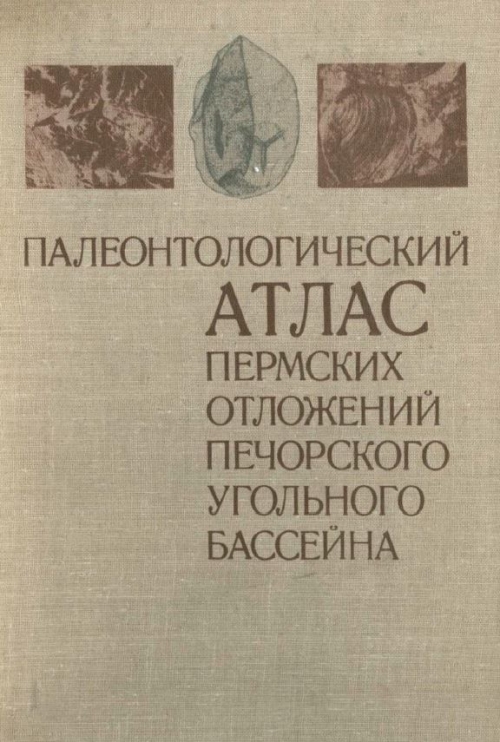
Палеонтологический атлас пермских отложений Печорского угольного бассейна

Приводится описание  макроостатков растений, миоспор и брахиопод из пермских отложений Печорского угольного бассейна. Стратиграфия дана в соответствии с унифицированной схемой перми Урала и с привязкой к обшей стратиграфической  шкале. Описания ранее известных видов, как правило, лаконичны, новых форм - более детальные.

Атлас рассчитан  прежде всего на геологов и палеонтологов, изучающих пермские отложения Севера европейской части СССР. Он может быть использован и как справочное руководство для определения пермских    фаун и флор на всей территории СССР и за рубежом

Редактор(ы):Селиверстов Ю.П.
Издание:Издательство Ленинградского Университета, Ленинград, 1981 г., 169 стр.
Язык(и)Русский
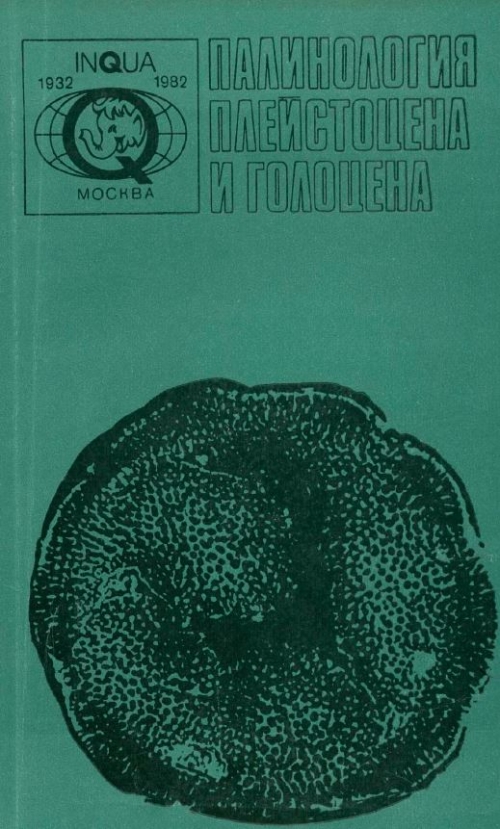
Палинология плейстоцена и голоцена. Межвузовский сборник

Сборник содержит материалы исследований, осуществляемых в порядке подготовки к проведению в Москве (в 1982 г.) XI Конгресса Международной ассоциации по изучению четвертичного периода. Рассматриваются вопросы использования данных изучения спор и пыльцы из плейстоценовых и голоценовых отложений различных континентальных и морских областей СССР с целью реконструкции ландшафтной обстановки и условий развития растительности прошлого, уточнения стратиграфических признаков при проведении геолого-поисковых работ и т. д.

Работа рассчитана на географов, геологов и биологов, занимающихся проблемами новейшей истории Земли.

Автор(ы):Perez-Lorente F.
Издание:Indiana University Press, 2015 г., 373 стр., ISBN: 978-0-253-01515-0
Язык(и)Английский
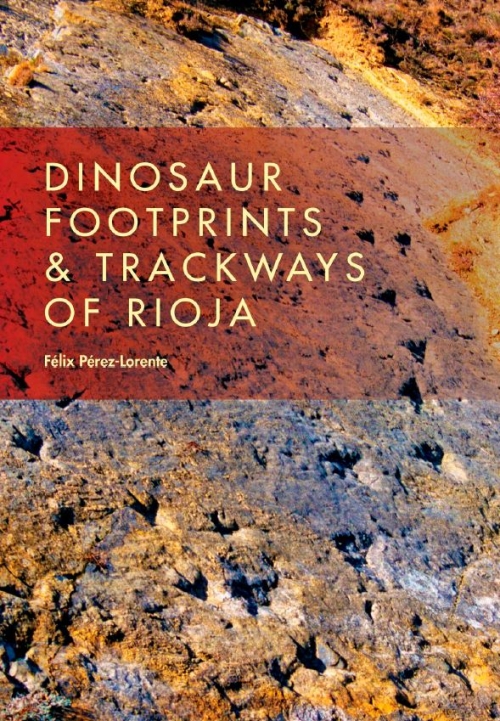
Dinosaurus footprintas and trackways of la Rioja / Следы (отпечатки следов) динозавров и тропа Риоха

The Spanish province of La Rioja is an area of the world where a huge number of dinosaur footprints have been found, with many more likely yet to be discovered. This hilly region has many rock slopes with layers so full of tracks that, if the vegetation, loose rock, and debris could be removed, would yield from 8000 to as many as 25,000 footprints. Using the best estimates from some slopes – that is, the maximum estimate from that partial data – there may be as many as 70,000 footprints.

Автор(ы):Ожгибесов В.П.
Издание:Пермь, 1985 г., 25 стр., УДК: 564.7:551.736.1 (471.53)
Язык(и)Русский
Артинские мшанки Пермского Приуралья

Актуальность темы. На территории Пермского Приуралья ведутся обширные работы с целью выявления месторождений нефти и гaзa. При поиске погребенных локальных структур бурением сквахин значительное внимание уделяется изучению стратиграфии нихнепермских отложечий с применением палеонтологического метода исследований. Актуальность изучения мшанок данного стратиграфического интервала обусловлена тем, что эти ископаемые часто встречаются в отло-хениях как хорошо охарактеризованных, так и не охарактеризованных другими группами фауны - фузулинидами, остракодами, аммонои-деями и т.д. Постановка специального изучения артинских мшанок Пермского Приуралья вызвана такхе их слабой изученностью. Имеющиеся сведения о систематическом составе этих ископаемых существенно устарели. На третьем Уральском мехведомственном стратиграфическом совещании и при опубликовании стратиграфических схем Урала, утвер-жденных МСК СССР 30 января 1978 года, ревизия пермских мшанок Урала указана как одна из "основных задач дальнейшего изучения" фауны пермского возраста в Приуралье ( Объяснительная записка..., 4.2,  1980,  с. 26-27).

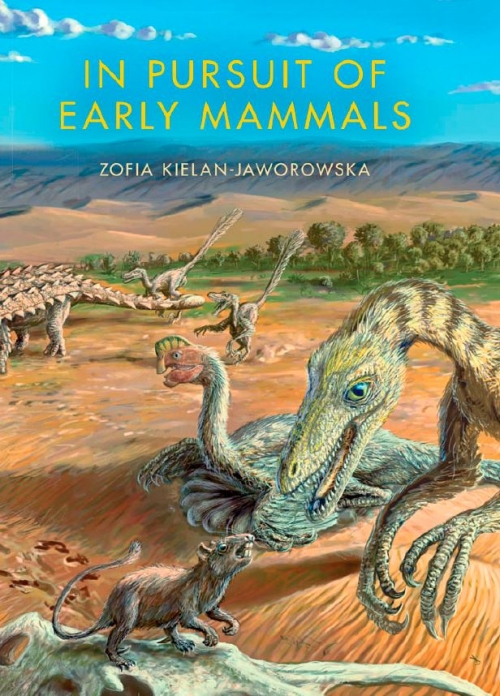
Автор(ы):Kielan-Jaworowska Z.
Издание:Indiana University Press, 2013 г., 280 стр., ISBN: 978-0-253-00817-6
Язык(и)Английский
In Pursuit of Early Mammals / В погоне за первыми млекопитающими

Since the demise of non-avian dinosaurs some 65 million years ago, modern mammals—that is to say, marsupials, placentals, and monotremes—have become conspicuous, diverse elements of Earth’s biota. But the family tree that includes mammals and their nearest relatives (mammaliaforms, in technical parlance) is far more deeply rooted in time, extending back to perhaps 220 million years ago. Clearly, then, the varieties known from the “age of mammals” that followed dinosaur extinctions represent only the uppermost boughs of what is increasingly being revealed as a bushy, complex tree. <...>

Редактор(ы):Barnosky A.D.
Издание:University of California Press, 2004 г., 408 стр., ISBN: 0-520-24082-0
Язык(и)Английский
Biodiversity Response to Climate Change in the Middle Pleistocene The Porcupine Cave Fauna from Colorado /  Реакция биоразнообразия на изменение климата в среднем плейстоцене. Пещерная дикая фауна из Колорадо

Since fossil vertebrates were first discovered at Porcupine Cave on the rim of South Park, Colorado, in 1981, the site has become the world’s most important source of information about animals that lived in the high elevations of North America in the middle part of the ice ages, between approximately one million and 600,000 years ago. Beginning in 1985, teams of scientists and volunteers from three major research institutions —the Carnegie Museum of Natural History, the Denver Museum of Nature and Science, and the University of California Museum of Paleontology—spent some 15 field seasons excavating and studying tens of thousands of fossil specimens that have opened a window onto past evolutionary and ecological adjustments. This window into the past allows us to visualize how ongoing global change could affect our living communities. This book reports the results of nearly two decades of research and has been written to appeal to three overlapping audiences

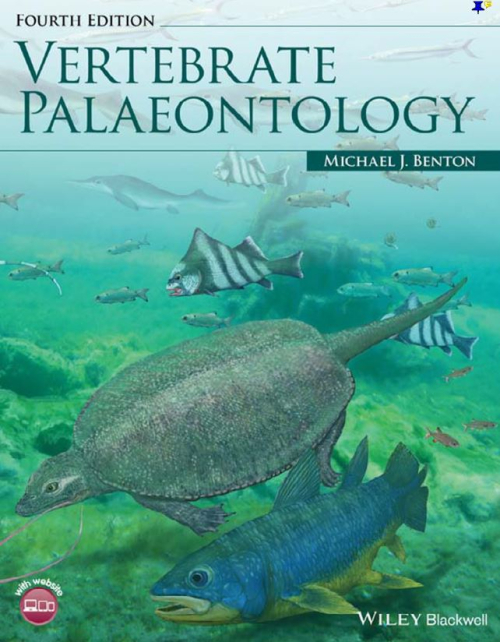
Издание 4
Автор(ы):Benton M.J.
Издание:Wiley Blackwell, 2015 г., 505 стр., ISBN: 978-1-118-40755-4
Язык(и)Русский (перевод с английского)
Vertebrate palaeontology / Палеонтология позвоночных

To many, palaeontology in general, and vertebrate palaeontology in particular, might be seen as devoted to discovering new fossils. After all, we read lavish press reports of each new species of dinosaur, fossil bird, or early human fossil that is recorded in the scientific literature. Discoveries from all continents attract attention, and none moreso than the continuing rich haul of remarkable new fossils from China. Our understanding of fossil vertebrate evolution has been much enriched by continuing discoveries of basal chordates from the Chengjiang and associated exceptional faunas of South China, as well as the feathered birds and dinosaurs from the Jehol assemblages in North China. But, as any young palaeobiologist knows, the discovery of new species is a minor concern. Much more exciting has been the blossoming of new numerical techniques that extend the reach of studies in macroevolution and palaeobiology further than might have been imagined even ten years ago.

Ленты новостей
521.08