Добрый день, Коллеги. Важное сообщение, просьба принять участие. Музей Ферсмана ищет помощь для реставрационных работ в помещении. Подробности по ссылке
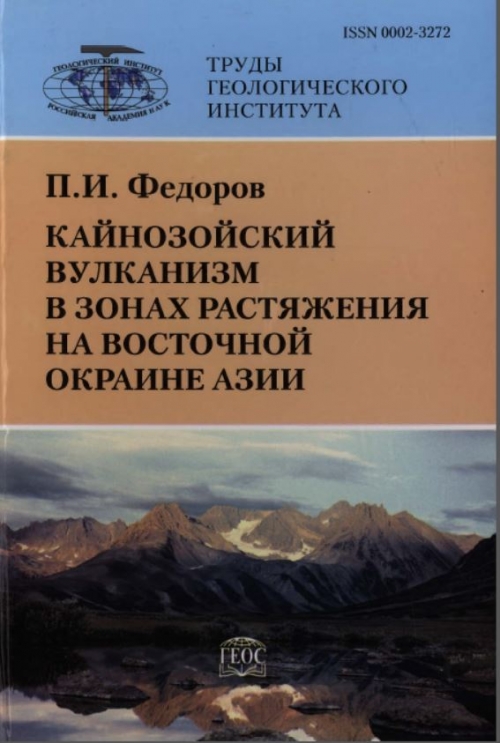
Предлагаемая монография является первой сводкой по минеральному и изотопно-геохимическому составу кайнозойских вулканических пород, связанных с зонами растяжения на восточной окраине Азии, полученной на основании оригинального фактического и литературного материала Проведена геохимическая типизация всего разнообразия кайнозойских вулканических пород континентальной окраины Азии, генетически не связанных с процессами субдукции, показана специфика их химического состава и отличия от типичных надсубдукционных образований. В работе обсуждаются вопросы разновременности процессов растяжения и связанных с ними проявлений вулканизма в различных сегментах окраины, направленности эволюции вулканизма от малоглубинных литосферных источников к глубинным гетерогенным, влияние субдукционного компонента в генезисе магм, связь изотопных характеристик кайнозойских вулканитов с мультиисточниками
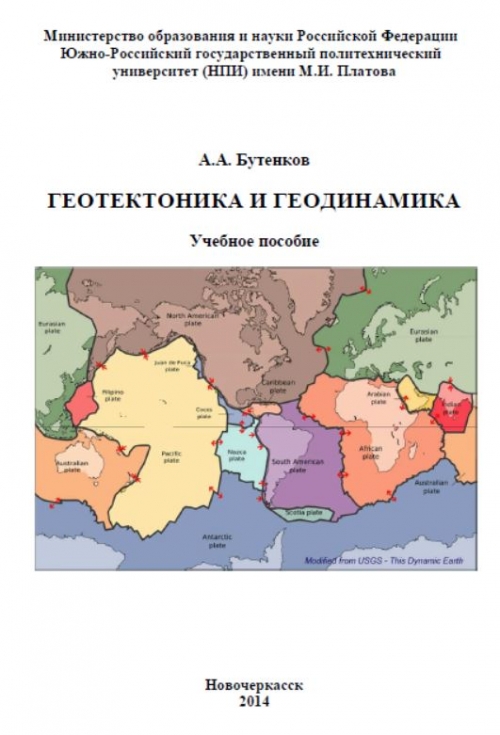
В учебном пособии рассмотрены основные положения и вопросы геотектоники – науки о строении и движениях геосфер, об их происхождении и развитии. Изложены материалы по главным геодинамическим обстановкам Земли – рифтогенным и субдукционным зонам, рассмотрены процессы, происходящие во внутриплитных обстановках. Произведён обзор основных методов геотектоники.
Учебное пособие предназначено для студентов геологических специальностей очной и заочной форм обучения.
Subduction is a major process that plays a first-order role in the dynamics of the Earth. The sinking of cold lithosphere into the mantle is thought by many authors to be the most important source of energy for plates driving forces. It also deeply modifies the thermal and chemical structure of the mantle, producing arc volcanism, and is responsible for the release of most of the seismic energy on Earth.
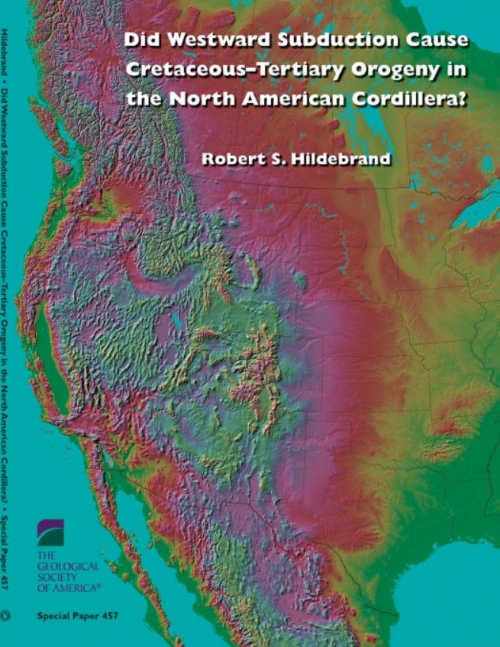
The North American portion of the Cordilleran orogen extends continuously from Alaska to southern Mexico, and from east to west over much of its length the orogen comprises an easterly vergent fold-thrust belt, a complexly deformed metamorphic hinterland that collapsed gravitationally, and an interlaced mosaic of exotic terranes. Although most models for the development of the Cordilleran orogen invoke Late Jurassic–Cretaceous intraplate, backarc shortening above an eastwardly dipping subduction zone, a simple collisional model in which the leading edge of North America was subducted to the west, beneath a segmented, arc-bearing microcontinent, better fi ts the data.
Понимание механизмов роста континентальной коры, в том числе, на примере Центрально-Азиатского складчатого пояса (ЦАСП), является одной из важных проблем в науках о Земле [Моссаковский и др., 1993; Şеngör et al., 1993; Добрецов и др., 1994; Jahn, 2001; Владимиров и др., 2003; Safonova et al., 2011, Буслов и др., 2013]. ЦАСП, являющийся орогеном аккреционно-коллизионного типа, сформировался в результате эволюции (в течение более 800 млн лет) и, в конечном итоге, закрытия Палео-Азиатского океана. Наподобие других аккреционных орогенов, ЦАСП является сложным коллажем древних микроконтинентов и островодужных террейнов, аккреционных комплексов, фрагментов океанических островов, базальтовых плато, океанической коры (офиолитов) и комплексов пассивных континентальных окраин. Амальгамация этих террейнов происходила в разное время и сопровождалась постаккреционным гранитоидным магматизмом, эксгумацией метаморфических пород высокого и сверхвысокого давления, постколлизионным орогенным гранитоидным магматизмом, внутриплитным плюмовым магматизмом, крупномасштабными посторогенными зонами сдвиговых деформаций и осадочных бассейнов pull-appart типа [e.g., Sengor and Natal’in, 1996; Shu et al., 1999; Крук и др., 1999; Laurent-Charvet et al., 2002, 2003; Jahn, 2004; Kröner et al., 2007; Wang et al., 2007; Windley et al., 2007; Charvet et al., 2007; Волкова, Скляров, 2007; Gladkochub et al., 2008; Lin et al., 2009; Safonova et al., 2009, 2010; Sun et al., 2008; Seltmann et al., 2010]. <...>
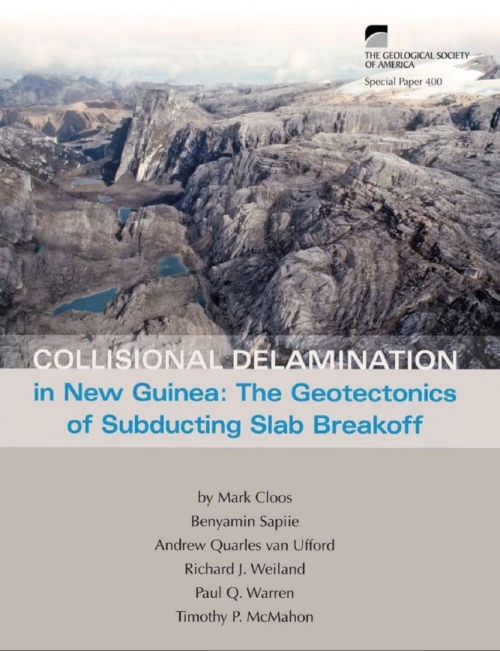
The spine of the island of New Guinea, the Central Range, is a 1300 km long by 100 to 150 km wide mountain belt with numerous peaks over 3 km elevation. This mountain belt began to form when the Australian passive margin entered a northdipping subduction zone in the Middle Miocene. Regional relationships and fi eldwork near the Ertsberg (Gunung Bijih) mining district in the western Central Range are the basis for making a detailed reconstruction of the events leading up to, and during, collisional orogenesis.<...>
Понимание механизмов роста континентальной коры является одной из важных проблем в науках о Земле. Центрально-Азиатский складчатый пояс (ЦАСП), являющийся орогеном аккреционно-коллизионного типа, сформировался в результате эволюции (в течение более 800 млн лет) и, в конечном итоге, закрытия Палео-Азиатского океана. В последнее время достигнут значительный прогресс в исследованиях структур ЦАСП на основе осмысления большого объема геологических, геохимических, геохронологических и изотопных данных.
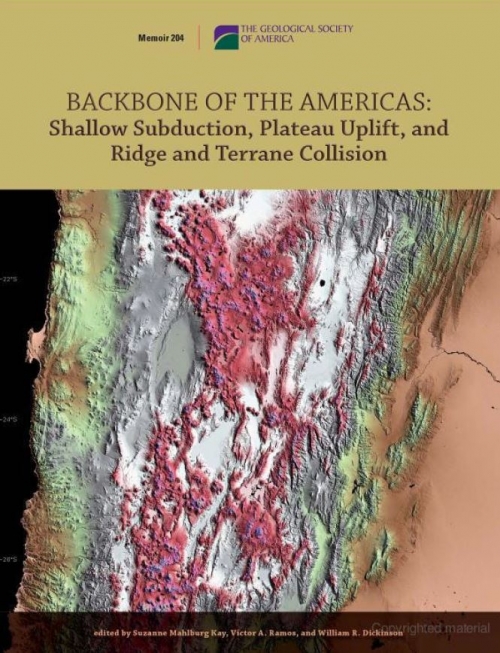
This volume has its genesis in the “Backbone of the Americas: Patagonia to Alaska” conference that took place in the city of Mendoza, Argentina, from 2 to 7 April 2006. The conference was convened by the Asociación Geológica Argentina and the Geological Society of America in collaboration with the Sociedad Geológica de Chile and was the fi rst meeting on this scale to be jointly convened by North and South American geologic societies. Some 400 participants from 20 countries along the western margins of the Americas and elsewhere participated. The purpose of the meeting was to explore common scientifi c themes affecting the evolution of the Cordilleras of the Americas from a multidisciplinary international perspective. Major themes included collision of active and aseismic oceanic ridges, shallowing and steepening subduction zones, plateau and orogenic uplift, and terrane collision. This volume presents a selection of papers by the invited plenary speakers and other represenative presentations of the symposium <...>
В сейсмической структуре верхней мантии Азии сочетаются высокоскоростные слэбы и низкоскоростные надслэбовые аномалии. Геохимическая гетерогенность мантийного магматизма интерпретируется как следствие плавления обедненного слэбового и обогащенного надслэбового материала. Определены комплементарные тренды выплавок, образовавшихся в зонах конвергентных границ Азии. Показано их отличие от трендов выплавок Гавайского горячего пятна. В эволюции позднекайнозойского магматизма Восточного Хангая установлена смена слэбовых источников надслэбовыми, свидетельствующая о развитии постколлизионных процессов, подобных процессам в Индо-Азиатской зоне конвергенции.
2-D and 3-D physical modelling of lithospheric convergence in the Luzon-Taiwan-Ryukyu region is performed with properly scaled laboratory models. The lithospheric model consists of two pails, continental (the Asian Plate, AP) and oceanic (the Philippine Sea Plate, PSP). The oceanic lithosphere has one layer, while the continental lithosphere includes both mantle and crustal layers. The continental margin is covered by sediments. A low-viscosity asthenosphere underlies the lithosphere. The opposing Luzon and Ryukyu subduction zones are initiated by inclined cuts made within the PSP. The subduction/collision is driven by a piston. Pre-collisional intraoceanic subduction along the Luzon and Ryukyu boundaries results in the formation of a transform zone between them, with two tear faults at the ends. The PSP undergoes strong compression along this zone. Subduction of the Chinese margin under the Luzon boundary further increases the compression. Compressive stresses reach the yield limit of the PSP in the arc area, which is a weak zone in the experiments. The plate fails at the western side of the arc along an eastward dipping fault, the Longitudinal Valley Fault. Underthrusting of the frontal wedge of the PSP along this fault results in the closure of the fore arc basin and is then blocked. The PSP fails at the opposite side of the Luzon arc along the westward dipping fault. The failure releases lithospheric compression in this region and results in the initiation of southward-propagating subduction of the PSP under northeastern Taiwan. The incipient subduction zone becomes part of the southeastward-retreating Ryukyu subduction zone, which allows the Okinawa back arc rift to propagate into Taiwan. The Taiwan collision thus includes the following succession of major processes over time, or from south to north: (1) an L-W shortening of the PSP in the Luzon arc; (2) a failure of this plate at the western side of the arc and the formation of the eastward-dipping Longitudinal Valley Fault (the transient plate boundary); O) a closure of the fore arc basin and a rapid uplift of the orogen; i4) a failure of the PSP at the eastern side of the Luzon arc partly overthrusting the orogen, and the initiation of westward (WN-ward) subduction of the PSP; (5) and finally 'back arc' rifting in the rear of this incipient subduction zone (i.e. in northern Taiwan). All these processes commence with some delay with respect to the preceding ones and propagate southwards.