Добрый день, Коллеги. Важное сообщение, просьба принять участие. Музей Ферсмана ищет помощь для реставрационных работ в помещении. Подробности по ссылке
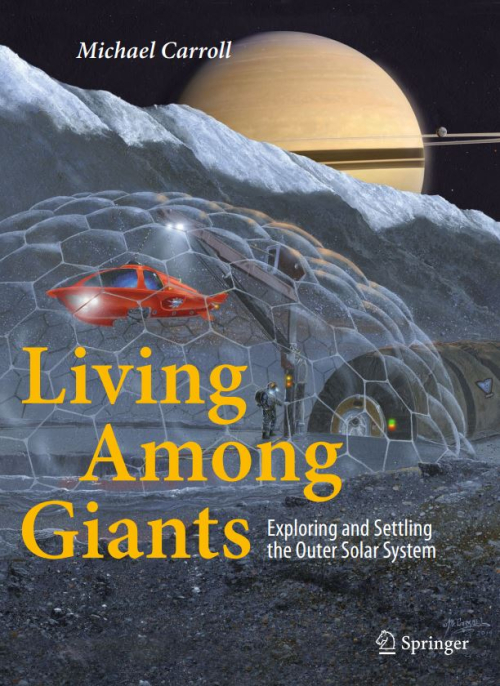
The outer Solar System may seem an unlikely destination for future human travels, let alone settlements. The cold and distant worlds of gas, rock, and ice seem to repel rather than to beckon. Humans have been to the Moon, and we have our sights fi rmly upon Mars and the asteroids, but could there be a role to play by the outer Solar System in the drama of humanity’s future?
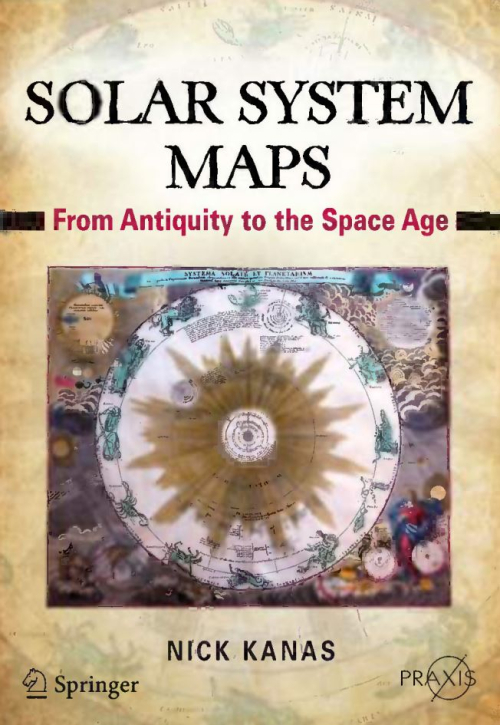
In 1543, Nicolaus Copemicus iuvenled the solar system. "Hold on!" you say. Surely the solar system had been there forever, and Copemicus didn't just iuvent it. Yes and no! What Copemicus had revealed and iuvented was the arrangement of the planets-a stunningly new way of mappiug them. He revolutionized the way humankind would conceive of the planets as a system, controlled by the Sun. "Thus iudeed," Copernicus wrote, "the sun, as though sealed on a royal throne, governs the family of planets revolving around it." Nick Kanas has documented this revolutionary shift iu his ingeniously illustrated album of solar system images, all historical even though the modern views, ''postcards from space", are scarcely a few decades old.
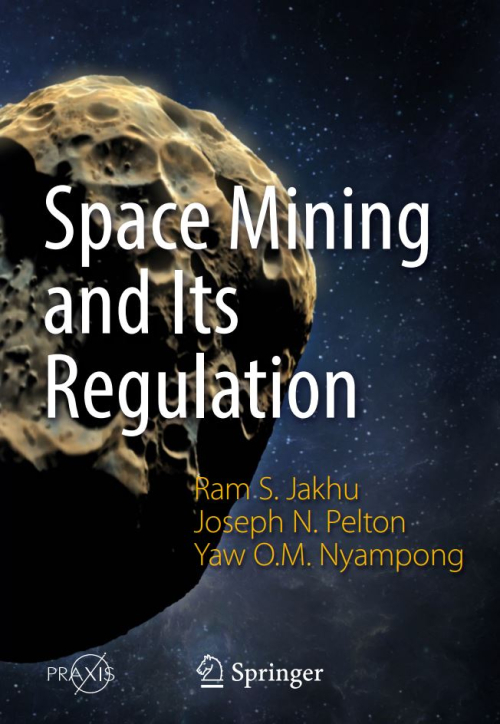
This book explores the exciting potential of mining space to obtain needed natural resources. It also examines the international and national legal and regulatory processes that would apply to this new and exotic endeavor. For almost 50 years—from virtually the start of the Space Age in October 1957—there have been practical applications of space technology. Today we have many programs that explore space via astronautic and robotic missions, and scientifi c probes to understand the chemistry, physics and workings of the universe, but from a practical perspective we also have application satellites.
В учебном пособии рассматриваются выраженные в рельефе развивающиеся и неразвивающиеся тектонические деформации, а также формы рельефа, обусловленные климатом. Приводятся примеры дешифрирования структурных форм на аэро- и космических снимках и топографических картах. Излагается методика построения специальных геоморфологических карт, отражающих этапы развития рельефа, и структурно-геоморфологических карт, используемых для практических целей. Для студентов геологических специальностей вузов.
The current approach to the study of the origin of life and to the search for life elsewhere is based on two assumptions. First, life is a purely physical phenomenon closely linked to specific environmental conditions. From this, we hypothesise that when these environmental conditions are met, life will arise and evolve. If these assumptions are valid, the search for life elsewhere should be a matter of mapping what we know about the range of environments in which life can exist, and then simply trying to find these environments elsewhere. Second, life can be clearly distinguished from the non-living world.
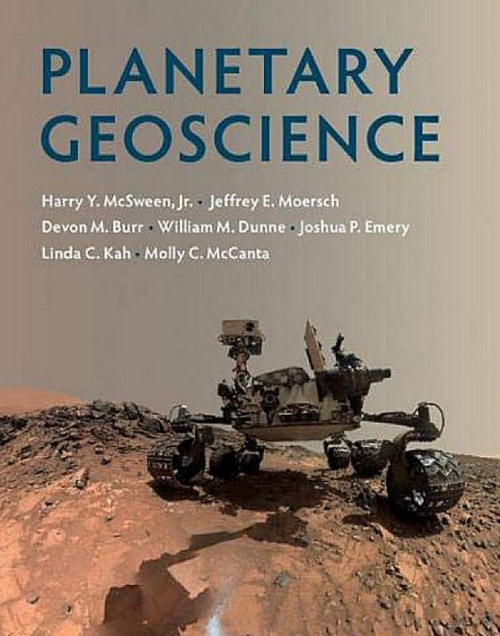
For many years, planetary science has been taught as part of the astronomy curriculum, from a very physics-based perspective, and from the framework of a tour of the Solar System – body by body. Over the past decades, however, spacecraft exploration and related laboratory research on extraterrestrial materials have given us a new understanding of planets and how they are shaped by geologic processes.
Encyclopedia of Earth and Space Science is a twovolume reference intended to complement the material typically taught in high school Earth science and astronomy classes, and in introductory college geology, atmospheric sciences, and astrophysics courses. The substance reflects the fundamental concepts and principles that underlie the content standards for Earth and space science identified by the National Committee on science Education standards and Assessment of the National Research Council for grades 9–12.
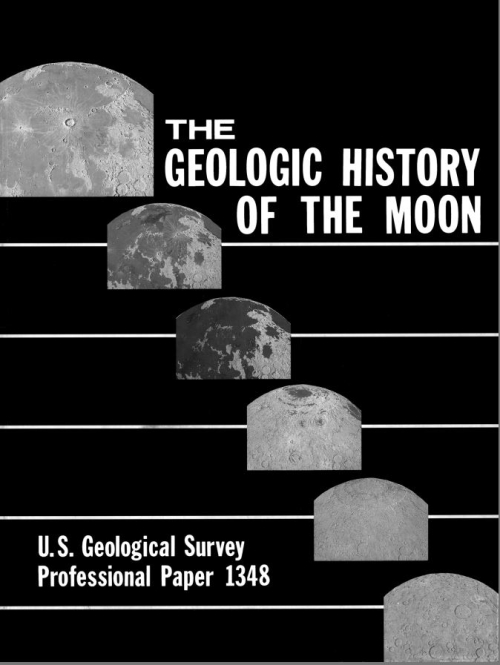
The Moon held little interest for most scientists after its basic astronomic properties had been determined and before direct exploration appeared likely (Wright and others, 1963; Baldwin, 1978). Speculations about its internal structure, composition, and origin were only broadly constrained by cosmochemical data from meteorites and solar spectra, and by astronomic data about its size, shape, motions, and surficial properties (Urey, 1951, 1952; Kuiper, 1954). Most investigators who were active before the space age began in 1957 believed that significant new advances in lunar knowledge required acquisition of additional data.
The flight of the Mariner 2 spacecraft past Venus in December 1962 marked the start of a new era in the exploration of the solar system. At that time our knowledge of the terrestrial planets other than Earth (Mercury, Venus, and Mars) was largely astronomical in nature.
Книга предназначена учащимся 6-7 классов, интересующихся астрономией. В книге даны краткие сведения о звездах, Луне, Солнце, изложены способы ориентировки по небесным светилам, а также рекомендации по их наблюдениям с учетом знаний учащихся, полученных на уроках природоведения, географии, истории