Книга «Кора и мантия Земли» представляет интересную сводку комплексных данных о земной коре и верхней мантии и развитие взглядов автора на многие проблемы современной геономии. Рассматривая обширный материал различных регионов земного шара — характеристику гравитационного, магнитного, сейсмического, теплового и электрического полей Земли и сопоставляя их со структурой коры, автор показывает специфические признаки, присущие различным геологическим структурам, и определяет диагностическое значение геофизических данных.
Впервые формулируется определение «нормальной» и «аномальной» толщины земной коры и показывается большое значение этих признаков для исследования геологической истории региона. Вместе с тем показывается, что развитие земпой коры характеризуется не только изменением ее толщины, но и главным образом изменением ее структуры и соотношения отдельных слоев. Оказалось, что изменение происходит в основном за счет уменьшения в разрезе коры слоя «гранита», замене его в одних случаях мощным осадочным комплексом, достигающим 15—20 км, налегающим непосредственно на слой «базальта». В другом случае осадочный слой имеет минимальную мощность или отсутствует совсем, но «гранитный» слой также имеет сокращенную мощность, и кора состоит иочти нацело из слоя «базальта» мощностью до 30—40 км. В этом случае она, как правило, разбита на многочисленные блоки.
Большое внимание в книге уделено строению коры океанических областей. Приводятся примеры, показывающие, что наиболее интересным в структурном отношении областям океана — срединным океаническим хребтам и их рифтовой системе — присуще весьма специфическое магнитное поле, которое в черно-белом варианте изображения напоминает «зебру». Сопоставление рельефа, геофизических полей и структуры коры показало, что океаны представляют собой «нормальный ряд» структур.
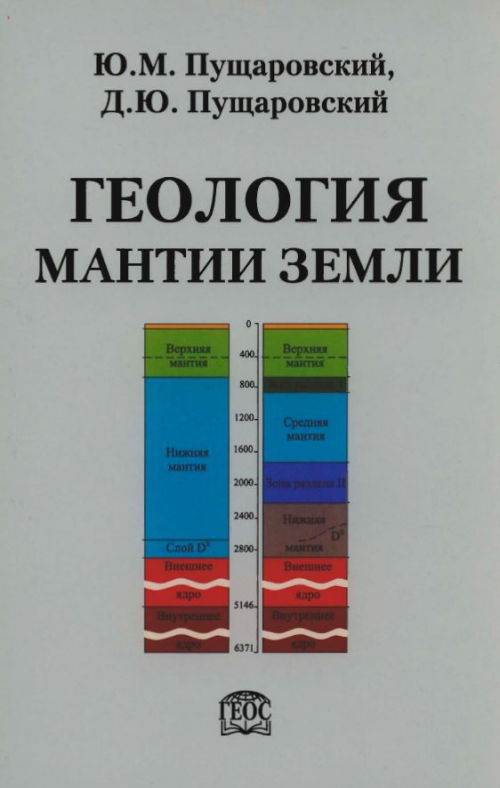
В последнем разделе книги дается описание общей характеристики рельефа и физических особенностей верхней мантии и приводится физическая карта верхней мантии. В заключение дается обзор проектов сверхглубокого бурения с научными целями в Тихом океане, на территории СССР, в Японии и Канаде.