Добрый день, Коллеги. Важное сообщение, просьба принять участие. Музей Ферсмана ищет помощь для реставрационных работ в помещении. Подробности по ссылке
Проведенный анализ складчатых орогенов Земли позволил выявить противоположную рифтам тенденцию нарастания мощности земной коры по мере усложнения гор. Орогены упорядочены в динамические ряды, из которых в настоящей книге приведена характеристика островных гор внутри платформ и возрожденных гор по окраине платформ. Описание эпигеосинклинальных оро генов новейшего времени, а также островных дуг, являющихся самыми высокими горами планеты Земля (с учетом подводного рельефа) дается во второй книге.
The British sector of the Caledonide-Appalachian fold belt, which bridges the Iapetus plate closure zone, has a range of plutonic, volcanic and volcaniclastic lithologies with characteristic space-time variations. The map of Caledonian igneous rocks in the British Isles (Plate 1) is compiled from many sources, some of which predate the use of methods of classification which are based largely on chemical data. In such cases, whilst extensive re-mapping continues, the compilers have had to resort to the collection and analysis of representative samples from the areas in question, the collection sites being based on existing maps. Thus, whilst the references to the mapped areas indicate specific publications, the chemical data on which the coding is based are commonly derived from compilations such as Stillman & Williams (1979) and Stillman & Francis (1979) for volcanic rocks and Sutherland & Pankhurst (1982), Le Bas (1982), Hall (1972) and Brown et al. (1981) for plutonic rocks.
Preface E.C. Leitch and E. Scheibner Stratotectonic Terranes of the Eastern Australian Tasmanides E.C. Leitch and E. Scheibner A Critique of Paleomagnetic Results From Australian Paleozoic Fold Belts and Displaced Terranes P. W. Schmidt and B. J. J. Embleton Terranes of the Wonominta Block, Far Western New South Wales E. C. Leitch, B. D. Webby, K. J. Mills, and P. Kolbe 31 Early Palaeozoic Back-Arc Deformation in the Lachlan Fold Belt, Southeastern Australia: Implications for Terrane Translations in Eastern Gondwanaland Christopher L. Fergusson Terranes of the Tumut District, Southeastern New South Wales, Australia H. Basden, B. J. Franklin, B. Marshall, and A. E. Waltho The Eastern Lachlan Fold Belt of Southeast Australia: A Possible Late Ordovician to Early Devonian Sinistral Strike Slip Regime G. H. Packham
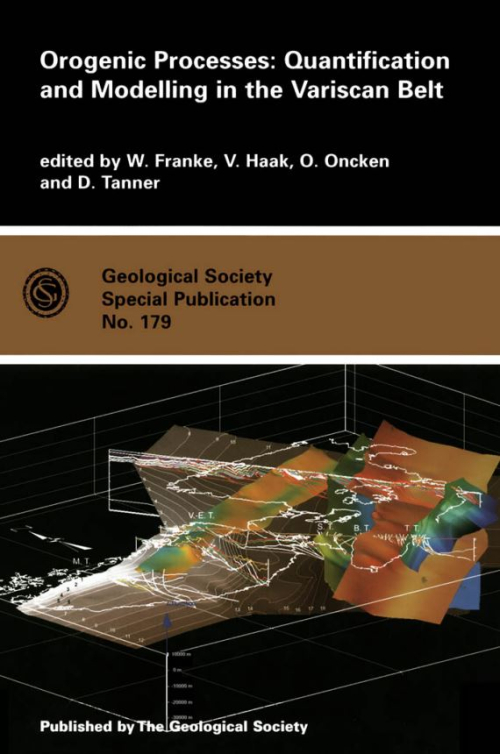
Franke, W., Haak, V., Oncken, O. & Tanner, D. Orogenic processes: quantification and modelling in the Variscan Belt McKerrow, W. S. & van Staal, C, R. The Palaeozoic time scale reviewed McKerrow, W. S., MacNiocaill, C., Ahlberg, P. E., Clayton, G., Cleal, C. J. & Eagar, R. M. C. The Late Palaeozoic relations between Gondwana and Laurussia Tait, J., Schatz, M., Bachtadse, V. & Soffel, H. Palaeomagnetism and Palaeozoic palaeogeography of Gondwana and European terranes Franke, W. The mid-European segment of the Variscides: tectonostratigraphic units, terrane boundaries and plate tectonic evolution Franke, W. & Zelazniewicz, A. The eastern termination of the Variscides: terrane correlation and kinematic evolution Belka, Z., Ahrendt, FI., Franke, W. & Wemmer, K. The Baltica-Gondwana suture in central Europe: evidence from K-Ar ages of detrital muscovites and biogeographical data Finger. F., Hanzl, P., Pin, C., von Quadt, A. & Steyrer. FI. P. The Brunovistulian: Avalonian Precambrian sequence at the eastern end of the Central European Variscides? Hegner, E. & Kroner. A. Review of Nd isotopic data and xenocrystic and detrital zircon ages from the pre-Variscan basement in the eastern Bohemian Massif: speculations on palinspastic reconstructions
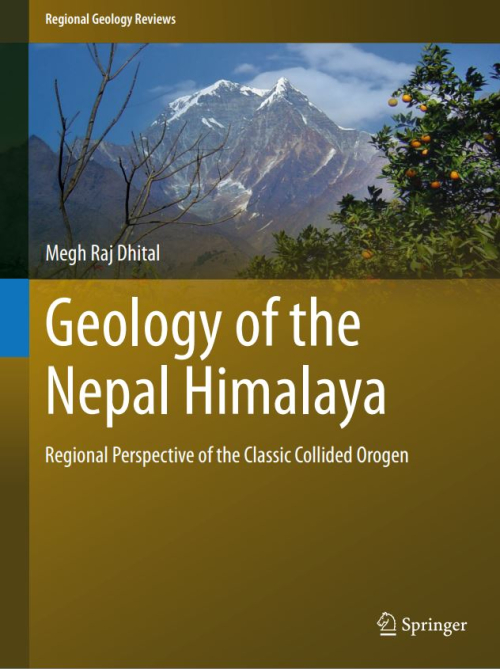
Perhaps no sector in the Himalaya is endowed with so exciting a geological setup as Nepal. Forming a bridge between the Western and Eastern Himalaya, Nepal occupies a pivotal and significant place in the geology of the Himalaya. Stretching from the low lying foothill in south to the highest peak of Sagarmatha (Mt. Everest) in the north and covering a vast time span from the Proterozoic to Holocene, the Nepal Himalaya preserves unique geological events. Varied kinds of igneous rocks, metamorphosed sequences and sedimentary rocks of disparate environments make a captivating geological mosaic.
Облик и индивидуальное своеобразие складчатых областей континентов (орогенов) определяется историей их геологического развития. Каждая складчатая область проходит закономерный эволюционный путь, включающий рифтогенный, океанический, коллизионный этапы и всю последующую историю развития в составе континентальной коры, которая часто рассматривается как постколлизионный или внутриконтинентальный период, и может включать различное количество импульсов внутриконтинентального (внутрикратонного) орогенеза.
Книга знакомит читателя с основными закономерностями эволюции внутренней структуры зон современного орогенеза в условиях горизонтального сжатия. В ней предложена новая гео динамическая модель зонного орогенеза. Показано, что с течением времени области орогенной переработки постепенно мигрируют от центров устойчивых новейших поднятий к центрам тектонических депрессий. Предложен статистико-геодинамический метод детального сейсмического прогнозирования. Осуществлены детальный сейсмический прогноз и его экзамен в Северном Тянь-Шане, Фергане и зоне перехода от Памира к Тянь-Шаню.
Настоящая работа представляет собой попытку физикогеологического анализа явлений тектонической активности Земли. Центральное место в ней занимает проблема соотношений эпейрогенеза и орогенеза, составляющая классическую задачу геологии. Основываясь на общепризнанных данных геологии, геофизики и геодезии, автор ставит перед собой задачу осветить под углом зрения элементарных законов механики процессы тектонической деформации Земли и их причинные взаимоотношения.
Монография посвящена геолого-геоморфологическому методу изучения структурных форм. Выделяются основные рельефообразующие факторы — статические и динамические; среди последних подробно рассматриваются скорость, неравномерность и стадийность развития структурных форм. Специальный раздел посвящается методике исследования. Развитием этой темы является изучение морфологического становления мегаскладок и складок, разрывов и разломов, а также распространенных сочетаний этих деформаций в условиях общих поднятий и прогибаний. Работа иллюстрирована наглядной графикой — схемами, блок-диаграммами и аэрофотоснимками. Монография рассчитана на широкий круг геологов, занимающихся структурной геологией, геологической съемкой, поисками полезных ископаемых, инженерно-геологическими исследованиями, а также на студентов старших курсов и аспирантов.
В работе с целью опровержения привычного представления о девонском орогенезе как о естественном заключительном этапе развития каледонских геосинклиналей рассматривается история становления областей, каледонской складчатости в раннем — среднем палеозое по девон включительно. Описаны следующие области: Британские острова, острова Шпицберген. Гренландия, Северные (включая Ньюфаундлендские) Аппалачи. Центральный Казахстан, Алтае-Саянская область (восток). Катазия (Юго-Восточный Китай), области Лаклан и Аделаида Австралии. Кроме них для сравнения охарактеризованы тектонические движения в девоне на большинстве древних платформ.