Добрый день, Коллеги. Важное сообщение, просьба принять участие. Музей Ферсмана ищет помощь для реставрационных работ в помещении. Подробности по ссылке
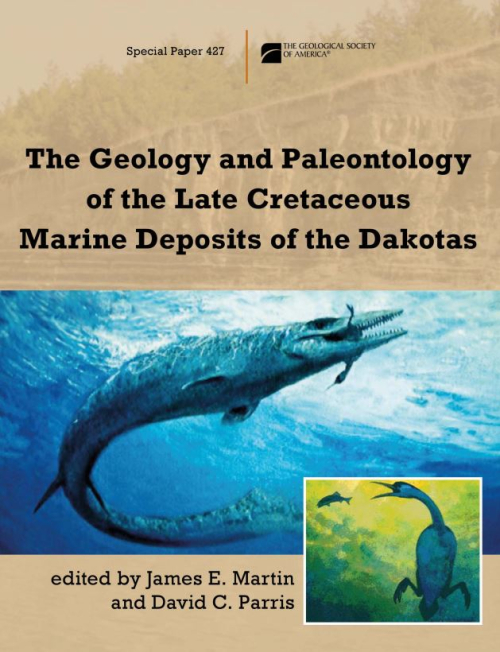
Introduction to the geology and paleontology of the Late Cretaceous marine deposits of the Dakotas D.C. Parris, S.Y. Shelton, and J.E. Martin Revised lithostratigraphy of the lower Pierre Shale Group (Campanian) of central South Dakota, including newly designated members J.E. Martin, J.L. Bertog, and D.C. Parris Geochemical and mineralogical recognition of the bentonites in the lower Pierre Shale Group and their use in regional stratigraphic correlation J. Bertog, W. Huff, and J.E. Martin Stratigraphy and paleoecology of the middle Pierre Shale along the Missouri River, central South Dakota P.A. Hanczaryk and W.B. Gallagher
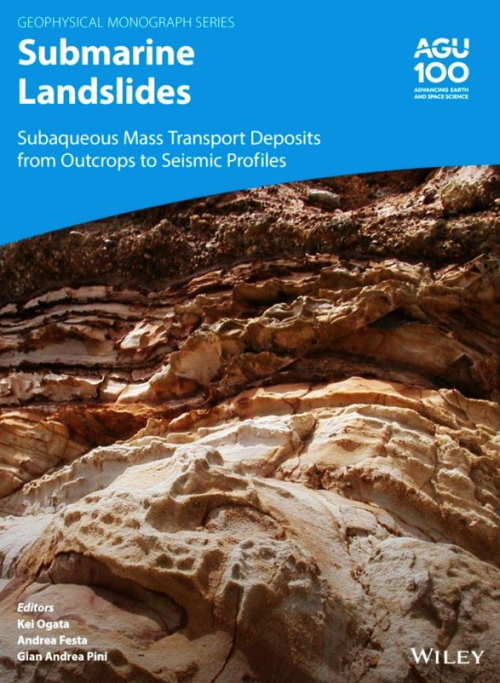
Submarine Landslide Deposits in Orogenic Belts Submarine Landslide Deposits in Orogenic Belts: Olistostromes and Sedimentary Melanges Kei Ogata, Andrea Festa, Gian Andrea Pini, and Juan Luis Alonso Mass-Transport Deposits in the Foredeep Basin of the Miocene Cervarola Sandstones Formation (Northern Apennines, Italy) Alberto Piazza and Roberto Tinterri Late Miocene Olistostrome in the Makran Accretionary Wedge (Baluchistan, SE Iran): A Short Review Jean-Pierre Burg Spatial Distribution of Mass-Transport Deposits Deduced From High-Resolution Stratigraphy: The Pleistocene Forearc Basin (Boso Peninsula, Central Japan)
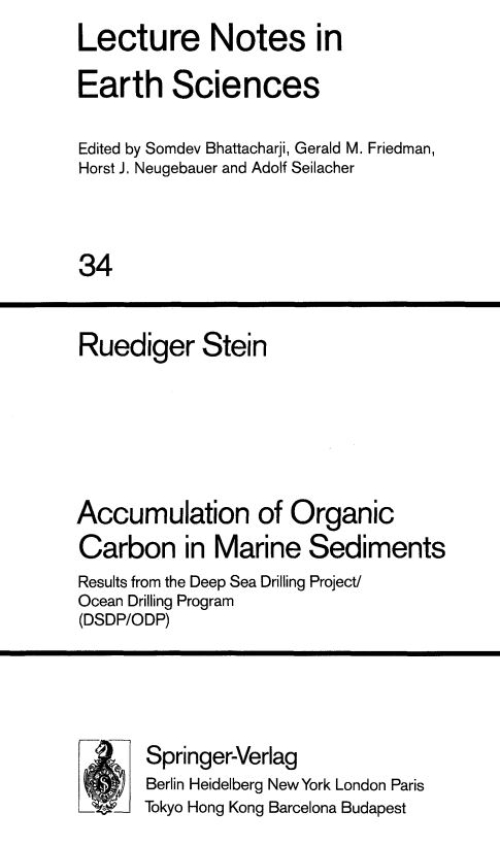
In 1984, I had had the chance to join the organic geochemistry group of Prof. Dr. D. Welte at the Institute for Petroleum and Organic Geochemistry, KFA Jtilich, where my first encounter with organic geochemistry took place. There, I learned - as marine geologist - to talk to and work with geochemists and to understand the importance of multidisciplinary cooperation. For this possibility, I gratefully thank Prof. Welte as well as Dr. J. Rullk6tter.
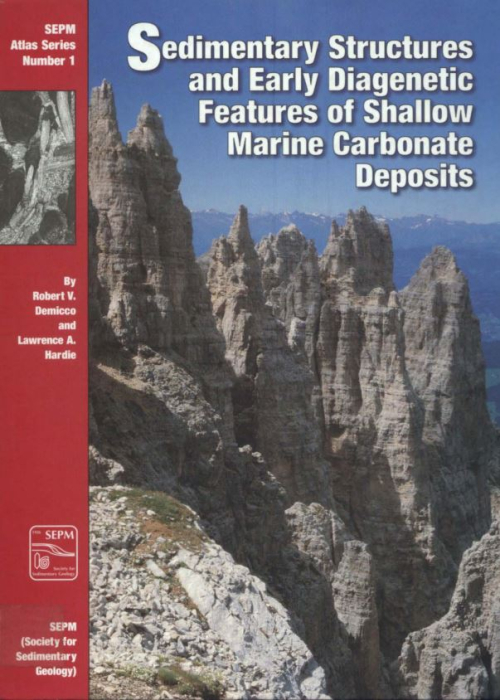
The intensive studies in the I 960's and I 970's of modern hallow marine carbonate environments in the Persian Gulf (e.g., Shearman, 1963, 1966; Kinsman, 1966; Butler, I 970; Kendall and Skipwith, 1969; Purser, 1973), Florida and the Bahamas (e.g., Shinn and others, 1969; Hardie, 1977a; Enos and Perkins, 1979), and Western Australia (e.g., Logan and others, 1970, 1974b), led to spectacular advances in our understanding of the deposition and early diagenesis of carbonate rocks. These stud1es were part of a major revolution in edimentology that saw a radical change from an approach based heavily on grain textures to one based on sedimentary structures and early diagenetic features. In this new approach, paleo-environments of serumentary deposits are ruagnosed from the vertical and lateral rustribution of elemental rock uruts (subfacies and faCJes), characterized principally by their assemblages of sedimentary structures and early diagenetic features in combinallon With other properties such as sedimentary textures and biota, using analogs established from observations of processes and their sedimentary records 10 modem depositional environments (the "comparative sedimentology" method of Ginsburg, I 974) <...>
LISP-UK studies BLACK, K. S. & PATERSON, D. M. LISP-UK Littoral Investigation of Sediment Properties: an introduction DYER, K. R. The typology of intertidal mudflats AMOS, C. L., BRYLINSKY, M., SUTHERLAND, T. F., O'BRIEN, D., LEE, S. & CRAMP, A. The stability of a mudflat in the Humber estuary, South Yorkshire, UK CHRISTIE, M. C. & DYER, K. R. Measurements of the turbid tidal edge over the Skeffling mudflats
LAW, D. J. & BALE, A. J. In situ characterization of suspended particles using focused-beam, laser reflectance particle sizing BROWN, S. L. Sedimentation on a Humber saltmarsh WIDDOWS, J., BRINSLEY, M. & ELLIOTT, M. Use of in situ flume to quantify particle flux (biodeposition rates and sediment erosion) for an intertidal mudflat in relation to changes in current velocity and benthic macrofauna
Discovered in 1972, the Amethyst Field is a group of five gas accumulations covering an area of 97 km 2 in the southern North Sea in blocks 47/8a, 47/9a, 47/13a, 47/14a and 47/15a. It is one of the closest fields to the Humberside coast. Gas production started in October 1990.
Convincing interpretations of many ancient glacimarine sequences depend on studies of analogous processes active in modern glacimarine environments. Studies of both ancient glacimarine sequences and modern glacimarine environments have increased in recent years. The time therefore seemed ripe to hold a meeting to bring workers on the contemporary and ancient record together, and so the meeting which generated this volume was conceived. The two-day meeting, organized on behalf of the Marine Studies Group of the Geological Society of London, in conjunction with the International Glaciological Society, and promoted under the aegis of IGCP Project 260, was held in March 1989 at Burlington House in Piccadilly, the London home of the Geological Society. Many of the papers presented at the meeting are contained within this volume <...>
В статьях содержится описание и обоснование расчленения морских юрских отложений Восточного Забайкалья (Т.М. Окунева) и Верхнего Приамурья (Л.В. Сибирякова), а также описание характерных для них остатков моллюсков.
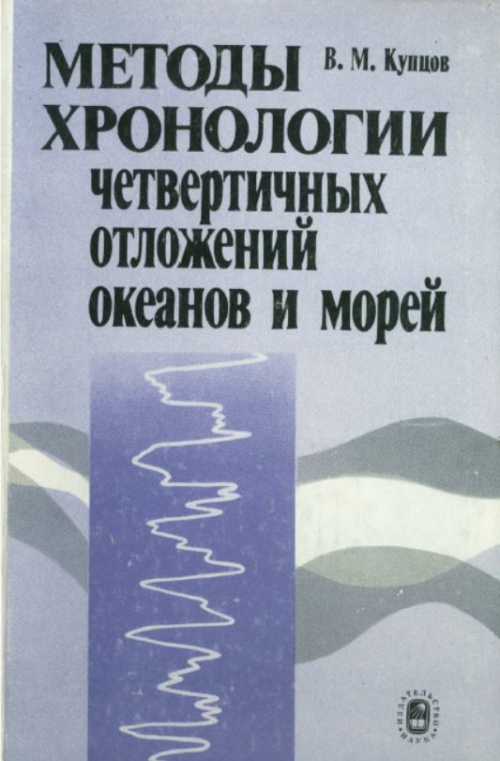
В монографии рассматривается современное состояние физико-химических и литологических методов четвертичной геохронологии донных отложений океанов и морей. Особое внимание уделено обоснованности предположений каждого метода и приведены многочисленные примеры получения практических результатов при решении широкого круга проблем палеоокеанологии. Монография представляет интерес для стратиграфов, литологов, географов, палеонтологов, океанологов широкого профиля.
В сборнике представлены статьи, посвященные методам химического анализа, применяемым при изучении химических процессов, протекающих в осадках. Рассмотрены методы исследования окислительно-восстановительных процессов, изучения форм химических соединений элементов, отделения и определения отдельных элементов, изучения газового состава морских осадков. Предлагаемые методы достаточно универсальны и могут быть использованы при анализе различных объектов: минералов, руд, продуктов обогащения, сплавов, а также при геохимических исследованиях. Книга рассчитана на широкий круг специалистов-химиков, работающих в области химического анализа неорганических веществ, а также геохимиков.