Добрый день, Коллеги. Важное сообщение, просьба принять участие. Музей Ферсмана ищет помощь для реставрационных работ в помещении. Подробности по ссылке
The British sector of the Caledonide-Appalachian fold belt, which bridges the Iapetus plate closure zone, has a range of plutonic, volcanic and volcaniclastic lithologies with characteristic space-time variations. The map of Caledonian igneous rocks in the British Isles (Plate 1) is compiled from many sources, some of which predate the use of methods of classification which are based largely on chemical data. In such cases, whilst extensive re-mapping continues, the compilers have had to resort to the collection and analysis of representative samples from the areas in question, the collection sites being based on existing maps. Thus, whilst the references to the mapped areas indicate specific publications, the chemical data on which the coding is based are commonly derived from compilations such as Stillman & Williams (1979) and Stillman & Francis (1979) for volcanic rocks and Sutherland & Pankhurst (1982), Le Bas (1982), Hall (1972) and Brown et al. (1981) for plutonic rocks.
Preface E.C. Leitch and E. Scheibner Stratotectonic Terranes of the Eastern Australian Tasmanides E.C. Leitch and E. Scheibner A Critique of Paleomagnetic Results From Australian Paleozoic Fold Belts and Displaced Terranes P. W. Schmidt and B. J. J. Embleton Terranes of the Wonominta Block, Far Western New South Wales E. C. Leitch, B. D. Webby, K. J. Mills, and P. Kolbe 31 Early Palaeozoic Back-Arc Deformation in the Lachlan Fold Belt, Southeastern Australia: Implications for Terrane Translations in Eastern Gondwanaland Christopher L. Fergusson Terranes of the Tumut District, Southeastern New South Wales, Australia H. Basden, B. J. Franklin, B. Marshall, and A. E. Waltho The Eastern Lachlan Fold Belt of Southeast Australia: A Possible Late Ordovician to Early Devonian Sinistral Strike Slip Regime G. H. Packham
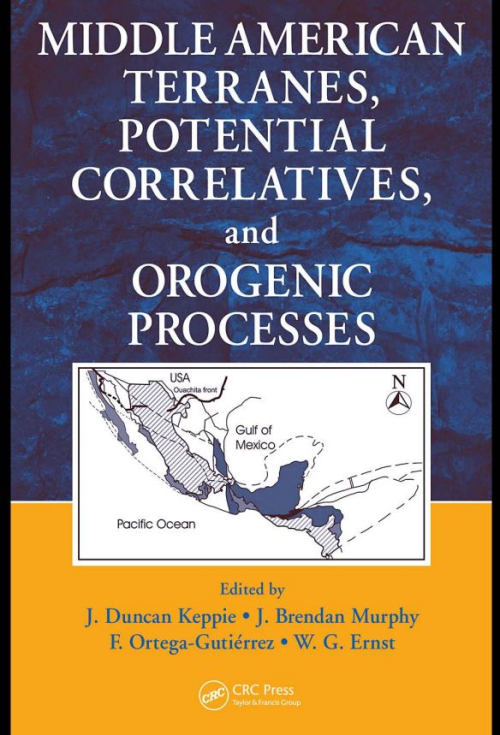
Editors’ Preface —J. Duncan Keppie, J. Brendan Murphy, F. Ortega-Gutierrez, and W. G. Ernst Middle American Terranes Terranes of Mexico Revisited: A 1.3 Billion Year Odyssey —J. Duncan Keppie Oaxaquia Terrane Sedimentary Origin of Calcareous Intrusions in the ~1 Ga Oaxacan Complex, Southern Mexico: Tectonic Implications —J. Dostal, J. D. Keppie, H. Macdonald, and F. Ortega-Gutierrez Geochronology and Geochemistry of the ~917 Ma, Calc-alkaline Etla Granitoid Pluton (Oaxaca, Southern Mexico): Evidence of Post-Grenvillian Subduction along the Northern Margin of Amazonia —C. Ortega-Obregon, J. D. Keppie, L. A. Solari, F. Ortega-Gutierrez, J. Dostal, R. Lopez, A. Ortega-Rivera, and J. W. K. Lee
Foreword Raymond A. Price Preface J. W. H. Monger and Jean Francheteau Chilean vs. Mariana Type Subduction Zones With Remarks on Arc Volcanism and Collision Tectonics Seiya Uyeda Effects of Collisions at Trenches on Oceanic Ridges and Passive Margins Zvi Ben-Avraham and Amos Nur Reconstructions, Plate Interactions, and Trajectories of Oceanic and Continental Plates in the Pacific Basin David C. Engebretson, Allan Cox, and Michel Debiche Pacific and Kula/Eurasia Relative Motions During the Last 130 Ma and Their Bearing on Orogenesis in Northeast Asia L. P. Zonenshain, M. V. Kononov, and L. A. Savostin
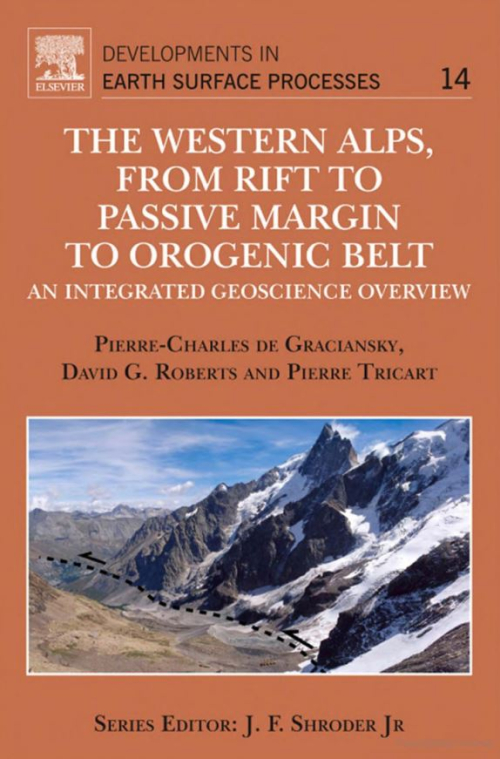
Beginning in the 18th century, the Alps were the first mountain belt in thehistory of European science to attract the interest of Naturalists. In consequence, many key geological principles were developed as a result of the progress of geological exploration in the Alps and, simultaneously, in the oceans. Within mountain belts, deep sea or pelagic sediments were first discovered before being clearly recognized as such.
Одно из базовых положений глобальной тектоники заключается в том, что офиолиты, распространенные в континентальных складчато-надвиговых системах различного возраста, представляют собой фрагменты древней океанической литосферы. На ранних этапах развития концепции плитовой тектоники считалось, что все офиолиты образуются в рифтовых зонах срединно-океанических хребтов [Колман, 1979]. Концепция разнотипности офиолитов неоднократно критиковалась [Колман, 1979; Hynes, 1975; Moores, 1975].
К настоящему времени очевидно, что разнообразие структурных, геохимических и петрологических характеристик офиолитов является результатом вариаций совокупности геологических процессов во время их формирования. Используя сравнение мафитультрамафитовых ассоциаций офиолитов континентов и мафит-ультрамафитовых ассоциаций коры современных океанов, исследователи восстанавливают историю геологического развития как отдельных складчато-надвиговых систем,
Проанализировано распределение разнотипных рудных месторождений в истории Земли начиная с 3,5 млрд лет и до современности. Выявлены планетарные металлогенические закономерности, не зависящие от возраста и типа структур и геодинамических обстановок. Показано, что существуют две металлогенические (минерагенические) линии распределения разнотипного оруденения – бассейновая и орогенная (взаимодействия континентальных блоков, процессы вдоль краев континентов).
Structural geology is the study of deformation features in rocks from microscopic to map scale. The required data are collected in field and supplemented by laboratory studies, aerial photographs, satellite imageries, and subsurface data (mostly obtained by geophysical methods). A geologist must explore an area with an open mind and interpretations and hypothesis must be based on actual field observations.
The most dramatic new discoveries about the structure of the Earth in recent years have been those arising from the investigations of the ocean floors and the deep structure of the Earth (as it now is) by geophysical means. For a long time, however, a much larger bulk of information has been accumulating from the investigations of the continental masses; moreover, this information generally yields evidence of successively earlier stages in tectonic history. It is clearly essential in elaborating geotectonic hypotheses to take into account all the relevant evidence, and failure to do so may, in large measure, be attributed to the difficulty of searching through an enormous bulk of literature on continental tectonics and also to the subjective way in which much of it appears. It therefore seemed appropriate and timely to make available tectonic data aiming at a convenient and essentially objective presentation <...>