Добрый день, Коллеги. Важное сообщение, просьба принять участие. Музей Ферсмана ищет помощь для реставрационных работ в помещении. Подробности по ссылке
Настоящие методические указания разработаны в соответствии с действующими нормативными документами, содержат методы изучения инженерно-геологических, гидрогеологических условий массивов горных пород, принципы их районирования с учетом этапов и стадий геологоразведочных работ, а также сложности инженерно-геологических условий месторождений полезных ископаемых различных геолого-промышленных типов, в том числе общераспространенных.
В методических указаниях приведены пояснения к Федеральным нормам и правилам в области промышленной безопасности «Правила обеспечения устойчивости бортов и уступов карьеров, разрезов и откосов отвалов», утвержденным приказом Ростехнадзора N 439 от 13.11.2020, а также приведены рекомендации по их применению.
Подготовлено под научно-методическим руководством Института проблем комплексного освоения недр им. академика Н.В. Мельникова Российской академии наук. Рекомендовано Ростехнадзором (письмо №07-00-04/245 от 03.03.2022).
Keynote paper. Mechanics of landslides. P. R. VAUGHAN Determination of soil strength parameters for the analysis of highway slope failures. G. I. CRABB and J. H. ATKINSON Stability analysis of a complex landslide under static and dynamic conditions. A. CANCELLI, G. CROSTA and P. ROMANI Residual strength of volcanic clay. D. H. CORNFORTH and K. F. FUJUANI Tension cracks and slope failure. R. N. CHOWDHURY and S. ZHANG — Observation of Graben geometry in landslides. D. M. CRUDEN, S. THOMSON andB. A. HOFFMANN A model for prediction of piezometric levels in landslides. R. FELL, T. G. CHAPMAN and P.K. MAGUIRE Calculation procedures for slope stability analyses involving negative pore-water pressures. H. RAHARDJO and D. G. FREDLUND
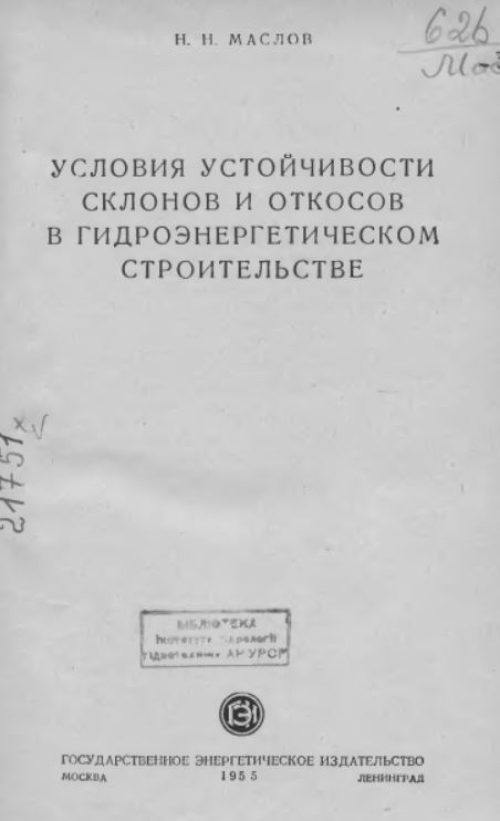
В книге освещаются вопросы, относящиеся к оценке степени устойчивости откосов и склонов. указываются причины оползней различного характера и даются рекомендации по вы-ору противооползневых мероприятий для соответствующих случаев. Книга предназначена для инженеров-геологов и гидротехников, занятых изысканиями. а равно проектированием, строительством эксплуатацией гидротехнических сооружений
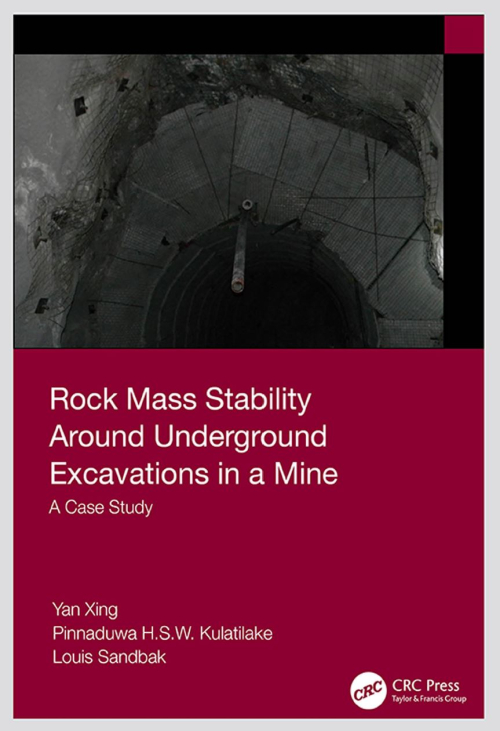
Stability of underground excavations is of great importance to an operating mine because it ensures the safety of working people and operating facilities as well as successful ore production. The rock mass stability around underground excavations heavily depends on the mechanical behavior of intact rock and discontinuities, the discontinuity geometry pattern and the in-situ stress system.
Федеральные нормы и правила в области промышленной безопасности «правила обеспечения устойчивости бортов и уступов карьеров, разрезов и откосов отвалов». 2021 г.
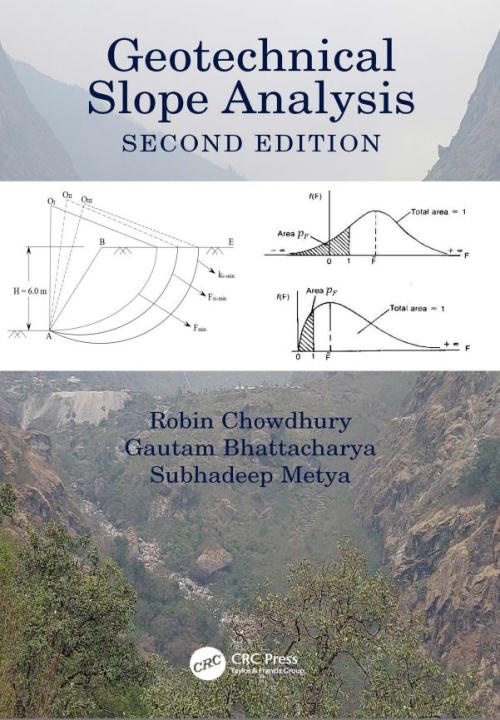
The construction, design, remediation and maintenance of slopes have always formed an important area of geotechnical engineering, which is often termed as ‘slope engineering’. A wide variety of applications of slope engineering include excavations, hill roads, railway lines, embankments, earth dams, reservoirs, open-cut mines, urban development of hilly areas, protection of river banks and coastal slope stability.
Anisotropic and foliated rock masses, the behaviour of which are dominated by closely spaced planes of weakness, present particular difficulties in the assessment of pit slope stability. Various numerical modelling techniques are available that explicitly simulate the joints and discontinuities within an anisotropic rock mass. However, due to the computational intensity of these numerical techniques, it is not practical to explicitly simulate the joint fabric of an entire three-dimensional pit slope for routine stability assessment. In order to simulate the effects of anisotropic rock mass strength and deformation behaviour on pit slope stability, a modelling methodology has been developed to account for rock mass anisotropy and scale effects using a continuum based ubiquitous joint constitutive model. This paper outlines the anisotropic modelling methodology and presents a series of demonstration models that have been used to validate the technique. <...>
Slope monitoring radar has emerged in the last ten years as a leading edge tool for monitoring movements in open pit mines, thanks to the ability to rapidly measure wall movements with millimetric accuracy over wide areas in any weather conditions. IBIS-M is an innovative interferometric radar able to provide high spatial resolution, long working distances and fast acquisition time. The first IBIS-M unit deployed in Turkey was installed in 2011 at the large lignite open pit Çöllolar Mine operated by Park Teknik. The geotechnical staff has now 24/7 real time monitoring of the slope stability with a wide coverage on the pit walls with the capability to detect the onset of wall movements far before the occurrence of failure, thus increasing the safety standards and productivity of the mine. The IBIS-M monitoring experience at Çöllolar mine is presented in this paper. <...>