Добрый день, Коллеги. Важное сообщение, просьба принять участие. Музей Ферсмана ищет помощь для реставрационных работ в помещении. Подробности по ссылке
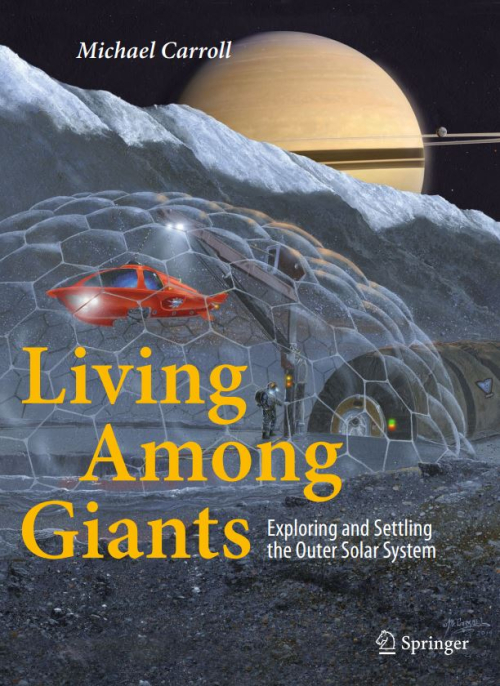
The outer Solar System may seem an unlikely destination for future human travels, let alone settlements. The cold and distant worlds of gas, rock, and ice seem to repel rather than to beckon. Humans have been to the Moon, and we have our sights fi rmly upon Mars and the asteroids, but could there be a role to play by the outer Solar System in the drama of humanity’s future?
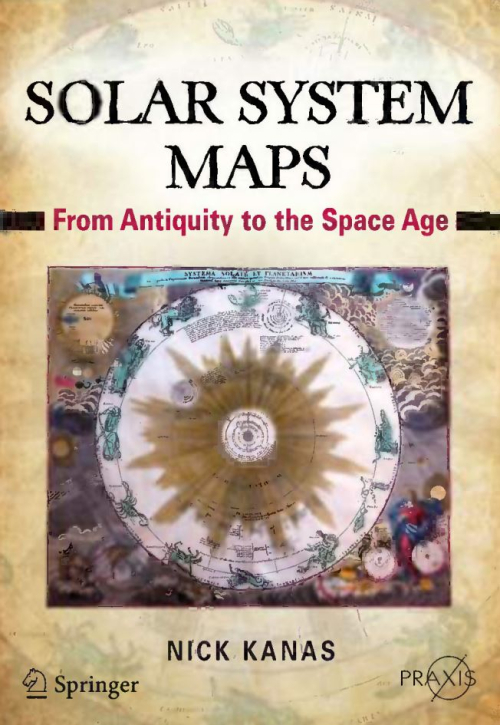
In 1543, Nicolaus Copemicus iuvenled the solar system. "Hold on!" you say. Surely the solar system had been there forever, and Copemicus didn't just iuvent it. Yes and no! What Copemicus had revealed and iuvented was the arrangement of the planets-a stunningly new way of mappiug them. He revolutionized the way humankind would conceive of the planets as a system, controlled by the Sun. "Thus iudeed," Copernicus wrote, "the sun, as though sealed on a royal throne, governs the family of planets revolving around it." Nick Kanas has documented this revolutionary shift iu his ingeniously illustrated album of solar system images, all historical even though the modern views, ''postcards from space", are scarcely a few decades old.
Фундаментальный труд одного из крупнейших геофизиков С. Чепмена и его сотрудника С. И. Акасофу подводит итоги достижениям современной солнечно-земной физики.
Фундаментальный труд одного из крупнейших геофизиков С. Чепмена и его сотрудника С. И. Акасофу подводит итоги достижениям солнечно-земной физики — научного направления, охватывающего многообразные влияния Солнца и его излучений на различные земные явления.
The giant outer planets—Jupiter, Saturn, Uranus, and Neptune (Figure 1.1)—are by far the largest planetary bodies in the solar system and together comprise 99.56% of the planetary mass. Although very far from the Earth, the enormous physical size of Jupiter and Saturn meant that these planets were easily visible to the ancients. However, the other two “giants”, Uranus and Neptune, are significantly smaller and so much farther from the Earth that they were unknown before the advent of telescopes, although Uranus is in fact just visible to the naked eye. Uranus was discovered by accident in 1781 by William Herschel (1738-1822) (later Sir William Herschel). Perturbations in the observed orbit of Uranus led John Couch Adams (1819-1892) and Urbain Jean Joseph Le Verrier (1811-1877) to independently predict the presence of a further planet, and Neptune was subsequently discovered close to its predicted position by Johann Gottfried Galle (1812-1910) in 1846. The mean observable properties of the outer planets are listed in Table 1.1. <...>
Предлагаемая вниманию читателей книга Дж. Дарвина впервые была переведена на русский язык и издана в 1923 г.; она давно уже стала библиографической редкостью. Помимо научной ценности, эта работа обладает большими достоинствами познавательного и педагогического характера. В книге рассматриваются явления планетарного и космического масштаба. Кроме того, в ней затронуты многие практические вопросы, в частности вопросы энергетики, интересные весьма широкому кругу читателей.
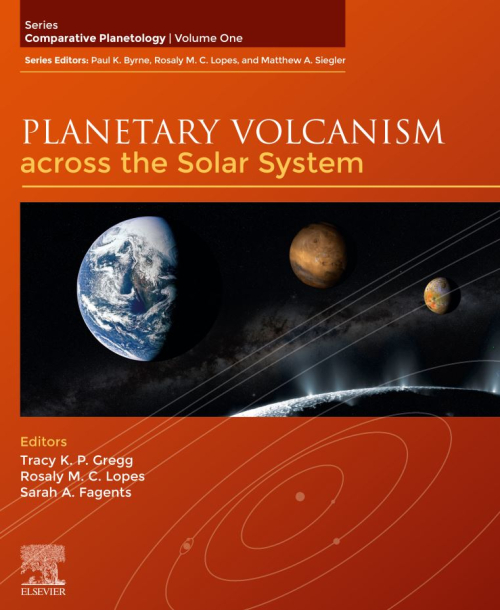
Earth’s infinite geological complexity fascinates us, and centuries of detailed observations and modeling can tempt us to believe that we have a full understanding of Earth’s igneous processes. Our world, however, is only one data point in the Solar System. A model that successfully predicts or explains a volcanic process on Earth, for example, may fail completely when applied to another planetary body. Such comparative planetology is therefore critical, and reveals the weaknesses in our understanding that would otherwise remain hidden: just because a model works on Earth does not mean that it truly explains a given process elsewhere using first principles. <...>
В монографии подведены итоги комплексного исследования физикохимических и физических процессов, протекавших в околосолнечном допла-нетном диске и протоспутниковом юпитерианском диске на разных этапах их эволюции. Получены двумерные распределения температур, давлений, положения фронтов конденсации важнейших планетообразующих веществ для разных стадий эволюции допланетного диска.
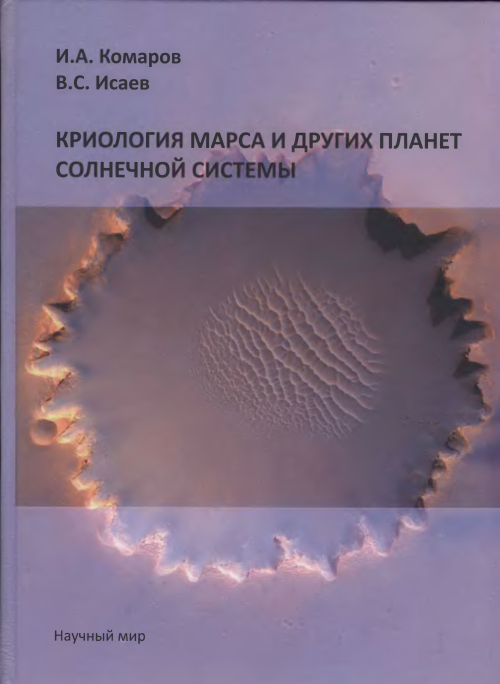
Проведено обобщение опубликованной информации по криологическим условиям и проявлениям криогенных процессов на планетах Солнечной системы и их спутниках. Основное внимание уделено сравнительному анализу данных по проявлениям криогенных процессов на Земле и Марсе, который стал в настоящее время центральным объектом многих международных исследовательских программ. Приводятся сведения о научных целях различных миссий к Марсу и основных полученных результатах. Рассмотрены достижения и мировой опыт в области применения современной измерительной аппаратуры, ее технические характеристики.