Добрый день, Коллеги. Важное сообщение, просьба принять участие. Музей Ферсмана ищет помощь для реставрационных работ в помещении. Подробности по ссылке
В книге освещается широкий круг вопросов, связанный с восстановлением закономерностей форхмирования терригенно-карбонатных и карбонатных толщ. Объектом исследования являются ордовикские и силурийские образования Сибирской платформы. На основании детального изучения их вещественного состава, геохимических особенностей проведено расчленение разнофациальных разрезов на огромной территории Сибирской платформы.
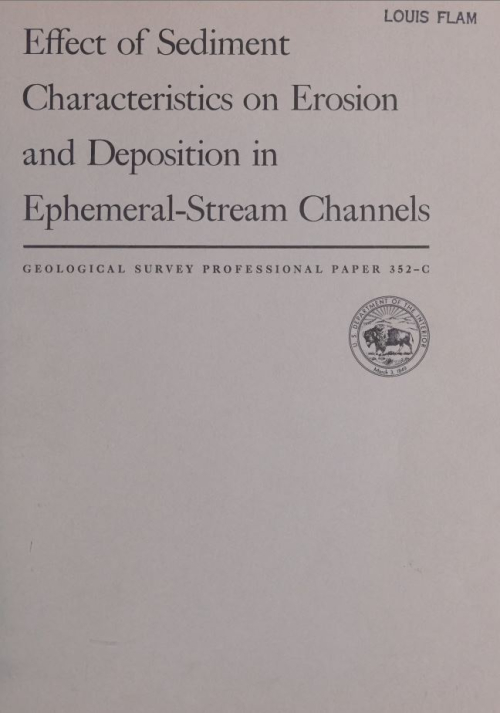
This study of five semiarid valleys emphasizes the importance of physical properties of sediment in determining streamchannel shape and differences in the mechanics of erosion and deposition between areas. Prerequisites for selection of the five areas were a progressive decrease in the percent silt-clay in stream channels and banks, active aggradation or erosion within a reach of the stream channel, and nearly uniform lithology within each drainage basin.
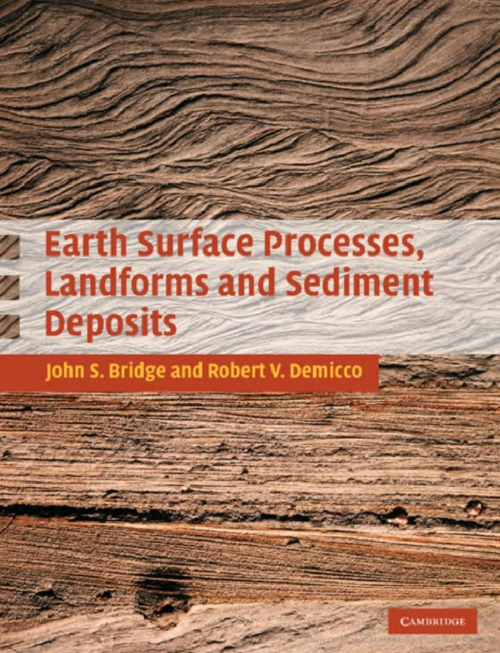
Earth surface processes, landforms, and sediment deposits are intimately related – involving erosion of rocks, generation of sediment, and transport and deposition of sediment through various Earth surface environments. These processes, and the deposits and landforms that they generate, have a fundamental bearing on engineering, environmental and public safety issues; on recovery of economic resources; and on our understanding of Earth history.
The major objective of this text is to provide information on characteristics of organic matter in sedimentary rocks and to relate these characteristics to processes relevant in their deposition, diagenesis, and weathering. Organic matter derived from biological precursors is a constituent of most sedimentary rocks. Its amount in recent and subrecent sediments is known to be controlled by a variety of physical and chemical factors such as transport distance from the site of plant growth to the site of deposition or oxygen content of water at the sedimentJwater interface.
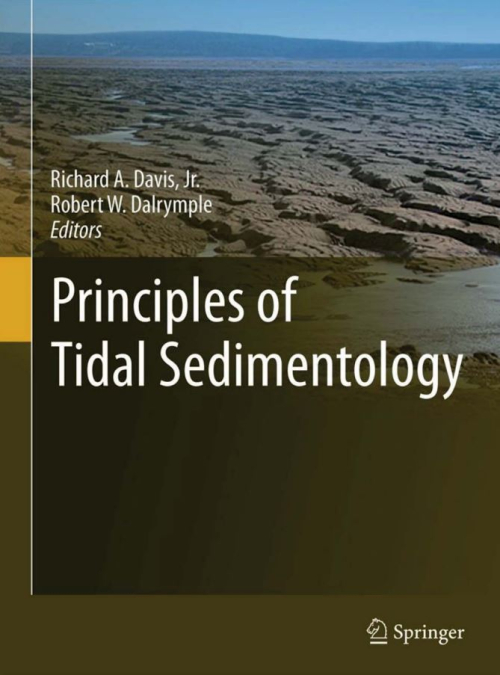
Tides have fascinated humans for millennia. Their regularity and their apparent correlation with lunar behavior intrigued natural philosophers, even the Greeks, who live on an essentially tideless sea although there are strong tidal currents in localized constrictions. Apparently, they learned about tides from areas outside the Straits of Gibralter and from the Arabs who experienced signifi cant tides in the Persian Gulf. From a practical perspective, tidal changes in water elevation and the currents associated with these changes were of great importance for shipping and military purposes. In areas such as the countries surrounding the southern North Sea, such considerations required accurate tidal predictions, which in turn drew the attention of some of the greatest astronomers and mathematicians.
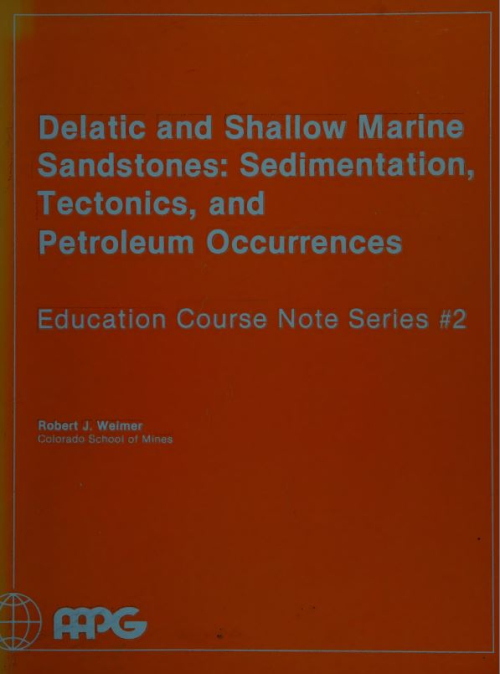
For more than 10 years, I have given special short courses on fossil fuel exploration for industry and government personnel at the Colorado School of Mines. Portions of these courses have been adapted as a basis for lecture series for the American Association of Petroleum Geologists in the Continuing Education Program. The material in this notebook relates only to lectures discussing stratigraphic principles and petroleum occurrences in deltaic and shallow marine sandstones. The lectures are designed to acquaint the participant with concepts and methods in stratigraphy and to acquaint him primarily with the U.S. literature relating to the subjects. <...>
This report provides a descriptive model of heavy-mineral sands, which are sedimentary deposits of dense minerals that accumulate with sand, silt, and clay in coastal environments, locally forming economic concentrations of the heavy minerals. This deposit type is the main source of titanium feedstock for the titanium dioxide (TiO2) pigments industry, through recovery of the minerals ilmenite (Fe2+TiO3), rutile (TiO2), and leucoxene (an alteration product of ilmenite). Heavy-mineral sands are also the principal source of zircon (ZrSiO4) and its zirconium oxide; zircon is often recovered as a coproduct.
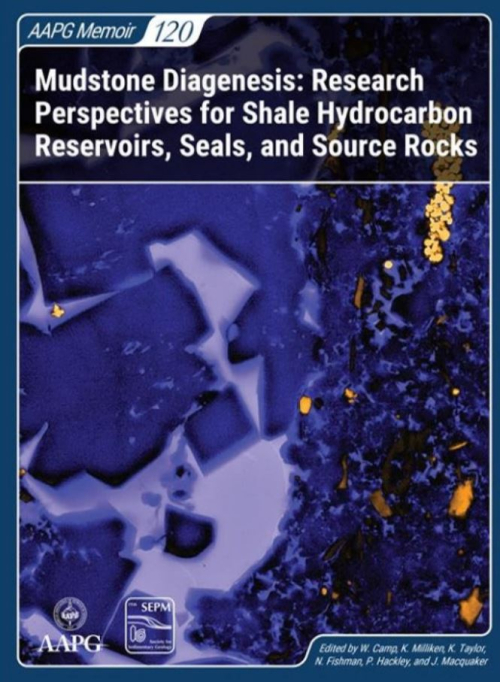
Scanning electron microscopy (SEM) has revolutionized our understanding of shale petroleum systems through microstructural characterization of dispersed organic matter (OM). However, as a result of the low atomic weight of carbon, all OM appears black in SEM (BSE [backscattered electron] image) regardless of differences in thermal maturity or OM type (kerogen types or solid bitumen).