Добрый день, Коллеги. Важное сообщение, просьба принять участие. Музей Ферсмана ищет помощь для реставрационных работ в помещении. Подробности по ссылке
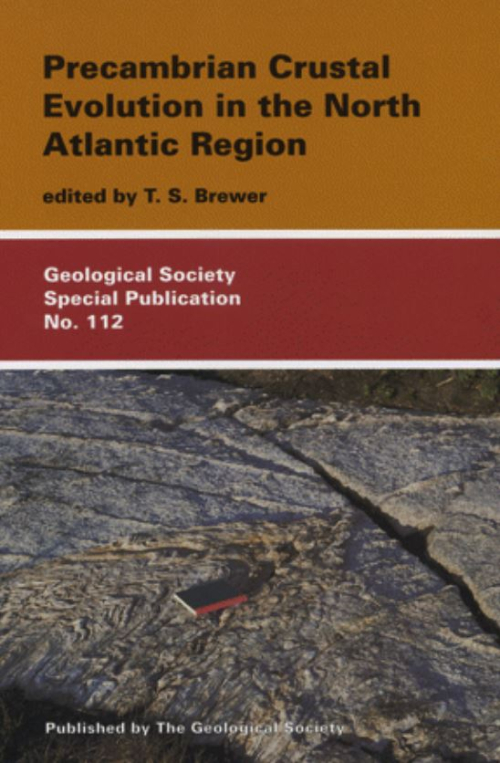
Snyder, D. В., Lucas, S. B. & McBride, J. H. Crustal and mantle reflectors from Palaeoproterozoic orogens and their relation to arc-continent collisions Rollinson, H. R. Tonalite-trondhjemite-granodiorite magmatism and the genesis of Lewisian crust during the Archaean Vrevsky, A., Krimsky, R. & Svetov, S. Rare earth and isotopic (Nd, O) heterogeneity of the Archaean mantle, Baltic Shield Bibikova, E. V, Skiold, T. & Bogdanova, S. V. Age and geodynamic aspects of the oldest rocks in the Precambrian Belomorian Belt of the Baltic (Fennoscandian) Shield
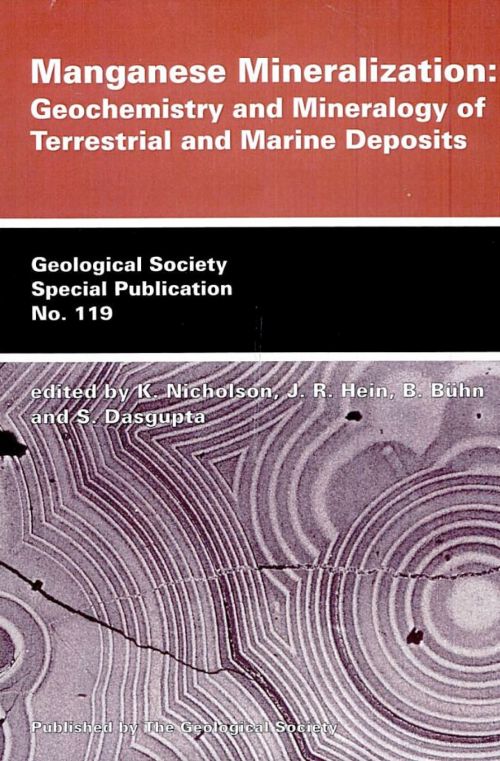
NICHOLSON, K., HEIN, J. R, BCTHN, B. & DASGUPTA, S. Precambrian to Modern manganese mineralization: changes in ore type and depositional environment
Review
RoY, S. Genetic diversity of manganese deposition in the terrestrial geological record Precambrian deposits
GLASBY, G. P. Fractionation of manganese from iron in Archaean and Proterozoic sedimentary ores
KULIK, D. A. & KORZHNEV, M. N. Lithological and geochemical evidence of Fe and Mn pathways during deposition of lower Proterozoic Banded Iron Formation in the Krivoy Rog Basin (Ukraine)
BOHN, B. & STANISTREET, I. G. Insight into the enigma of Neoproterozoic manganese and iron formations from the perspective of supercontinental break-up and glaciation
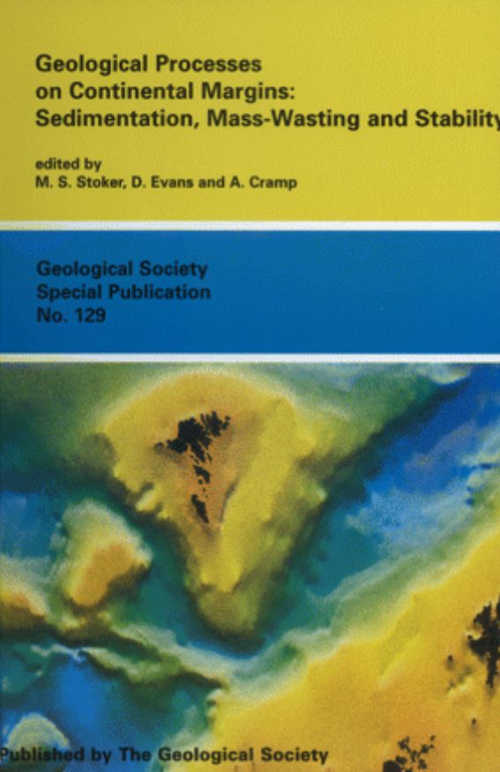
EVANS, D., STOKER, M. S. & CRAMP, A. Geological processes on continental margins: sedimentation, mass-wasting and stability: an introduction mass-wasting and stability: an introduction VAN WEERING, TJ. C. E., NIELSEN, Z., KENYON, N. H., AKENTIEVA, K. & KUIJPERS, A. H. Large submarine slides at the NE Faeroe continental margin REEDER, M., ROTHWELL, R. G., STOW, D. A. V., KAHLER, G. & KENTON, N. H. Turbidite flux, architecture and chemostratigraphy of the Herodotus Basin, Levantine Sea, SE Mediterranean DOBSON, M. R., O'LEARY, L. R. & VEART, M. Sediment delivery to the Gulf of Alaska: source mechanisms along a glaciated transform margin HOLMES, R. W., LONG, D. & DODD, L. R. Large scale debrites and submarine landslides on the Barra Fan, W of Britain
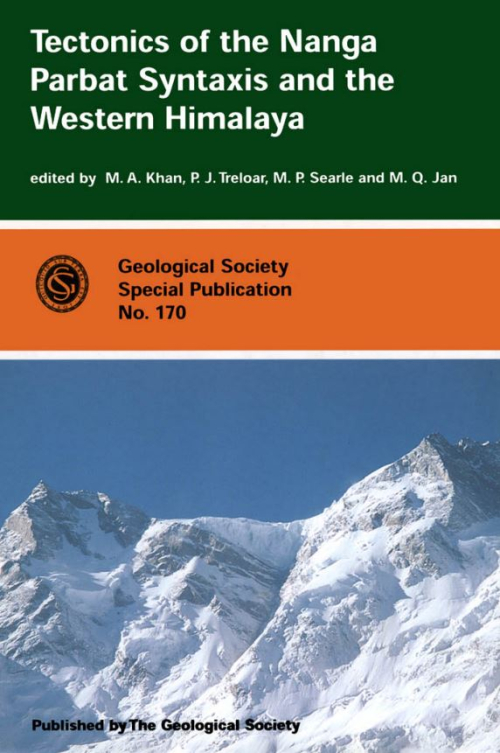
TRELOAR, P. J., SEARLE, M. P., KHAN, M. A. & JAN, M. Q. Tectonics of the Nanga Parbat syntaxis and the western Himalaya: an introduction CAPORALI, A. The gravity field of the Karakoram Mountain Range and surrounding areas
TRELOAR, P. J., GEORGE M. T. & WHITTINGTON, A. G. Mafic sheets from Indian plate gneisses in the Nanga Parbat syntaxis: their significance in dating crustal growth and metamorphic and deformation events BUTLER, R. W. H. Structural evolution of the western margin of the Nanga Parbat massif, Pakistan Himalaya: insights from the Raikhot-Liachar area EDWARDS, M. A., KIDD, W. S. R, KHAN, M. A. & SCHNEIDER, D. A. Tectonics of the SW margin of the Nanga Parbat-Haramosh massif
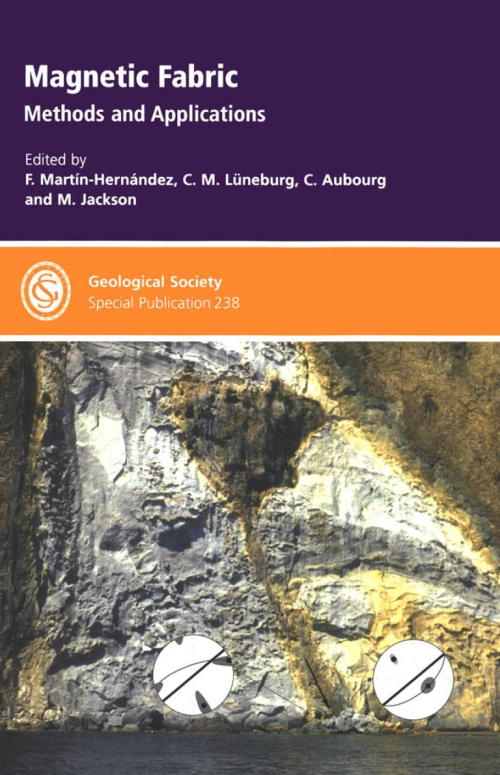
Fifty years have now passed since Graham (1954) published his seminal paper advocating the use of anisotropy of magnetic susceptibility (AMS) as a rapid and sensitive petrofabric tool. During these five decades, Graham's 'underexploited' method has become standard, and AMS and related techniques are now routinely applied to characterizing fabrics in a wide variety of geological materials (e.g. the GEOREF database lists over 500 journal publications with 'magnetic anisotropy' as keywords).
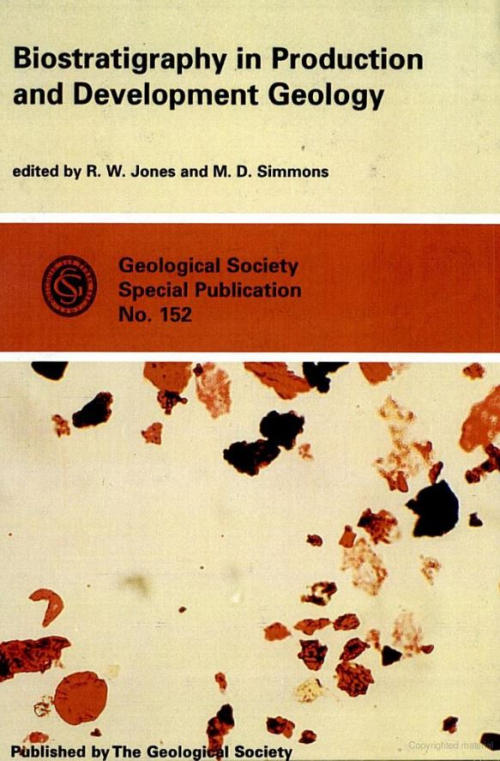
PAYNE, S. N. J., EWEN, D. F. & BOWMAN, M. J. The role and value of 'high-impact biostratigraphy' in reservoir appraisal and development DUXBURY, S., KADOLSKY, D. & JOHANSEN, S. Sequence stratigraphy subdivision of the Humber Group in the Outer Moray Firth area (UKCS, North Sea) MORRIS, P. H., PAYNE, S. N. J. & RICHARDS, D. P. J. Micropalaeontological biostratigraphy of the Magnus Sandstone Member (Kimmeridgian-Early Volgian), Magnus Field, UK North Sea Smpp, D. J. Well-site biostratigraphy of Danish horizontal wells
YIRGU, G., EBINGER, C.J. & MAGUIRE, P.K.H. The Afar volcanic province within the East African Rift System: introduction Part 1: Plate kinematic and geodynamic framework of the Afar volcanic province Introduction CALAIS, E., EBINGER, C.J., HARTNADY, C., & NOCQUET, J.M. Kinematics of the East African Rift from GPS and earthquake slip vector data GARFUNKEL, Z. & BEYTH, M. Constraints on the structural development of Afar imposed by the kinematics of the major surrounding plates BUCK, W.R. The role of magma in the development of the Afro-Arabian Rift System
VAN RENSBERGEN, P., HILLIS, R.R., MALTMAN, AJ. & MORLEY, C.K. Subsurface sediment mobilization: introduction MALTMAN, AJ. & BOLTON, A. How sediments become mobilized Shallow subsurface sediment mobilization
OWEN, G. Load structures: gravity-driven sediment mobilization in the shallow subsurface HARRISON, P. & MALTMAN, A. J. Numerical modelling of reverse-density structures in soft non-Newtonian sediments PARIZE, O. & FRIES, G. The Vocontian clastic dykes and skills: a geometric model BANKWITZ, P., BANKWITZ, E., BRAUER, K., KAMPF, H. & STORR, M. Deformation structures in Plioand Pleistocene sediments (NW Bohemia, Central Europe)
ROTHWELL, R. G. & RACK, F. R. New techniques in sediment core analysis: an introduction
HASCHKE, M. The Eagle III BKA system, a novel sediment core X-ray fluorescence analyser with very high spatial resolution RICHTER, T. O., VAN DER GAAST, S., KOSTER, R., VAARS, A., GIELES, R., DE STIGTER, H. C., DE HAAS, H. & VAN WEERING, T. C. E. The Avaatech XRF Core Scanner: technical description and applications to NE Atlantic sediments CROUDACE, I. W., RINDBY, A. & ROTHWELL, R. G. ITRAX: description and evaluation of a new multi-function X-ray core scanner THOMSON, J., CROUDACE, I. W. & ROTHWELL, R. G. A geochemical application of the ITRAX scanner to a sediment core containing eastern Mediterranean sapropel units
This work attempts to present the geology of Svalbard in some detail, arranged systematically as a definitive study and so reflecting the present conjuncture of research. It may thus meet the needs of specialists with information on related fields or of any geoscientist wanting an indication of what is known about this key region. Spitsbergen (peaked mountains), the name earlier referred to the whole archipelago. It is now replaced by the name Svalbard (cold coasts), within which Spitsbergen is the principal landmass. Spitsbergen alone is about the size of Switzerland and the whole archipelago a little less than the area of Scotland.