Добрый день, Коллеги. Важное сообщение, просьба принять участие. Музей Ферсмана ищет помощь для реставрационных работ в помещении. Подробности по ссылке
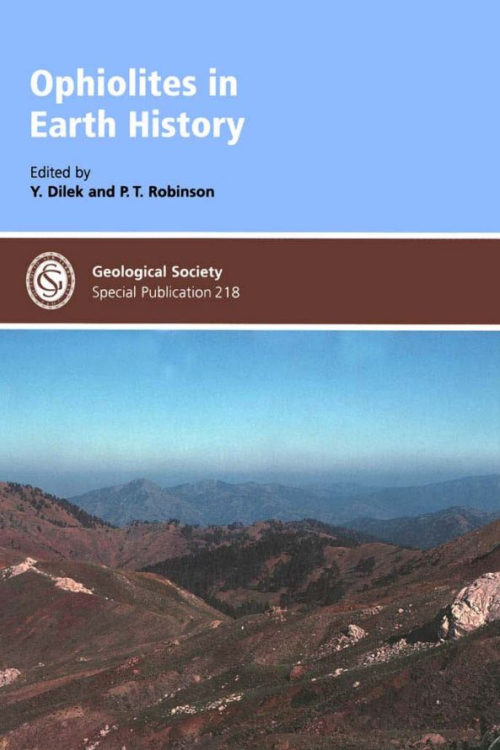
This book is derived from the interdisciplinary, contemporary work of the international ophiolite community in a most up-to-date treatment of process-oriented problems and questions on the generation and evolution of ophiolites. It is a large collection of research papers from a wide range of international contributors. Some of these papers were presented in thematic ophiolite sessions at the 2001 Annual Meeting of the Geological Society of America (Boston) and the 2001 Fall Meeting of the American Geophysical Union (San Francisco). The 32 papers here examine the mode and nature of igneous, metamorphic, tectonic, sedimentological, and biological processes associated with the evolution of oceanic crust in different tectonic settings in Earth history as revealed in various ophiolites and ophiolite belts around the world, and the geodynamic significance of these ophiolites in the evolution of different orogenic systems. Divided into six thematic sections, the book presents a wealth of new data and syntheses from mainly Phanerozoic ophiolites around the world <...>
LISP-UK studies BLACK, K. S. & PATERSON, D. M. LISP-UK Littoral Investigation of Sediment Properties: an introduction DYER, K. R. The typology of intertidal mudflats AMOS, C. L., BRYLINSKY, M., SUTHERLAND, T. F., O'BRIEN, D., LEE, S. & CRAMP, A. The stability of a mudflat in the Humber estuary, South Yorkshire, UK CHRISTIE, M. C. & DYER, K. R. Measurements of the turbid tidal edge over the Skeffling mudflats
LAW, D. J. & BALE, A. J. In situ characterization of suspended particles using focused-beam, laser reflectance particle sizing BROWN, S. L. Sedimentation on a Humber saltmarsh WIDDOWS, J., BRINSLEY, M. & ELLIOTT, M. Use of in situ flume to quantify particle flux (biodeposition rates and sediment erosion) for an intertidal mudflat in relation to changes in current velocity and benthic macrofauna
The association between fithospheric extension, continental break-up, mantle plumes and massive bursts of igneous activity is well recognized, but their causal relationship remains controversial. According to active mantle hypotheses, rifting is initiated by doming above a mantle plume. Alternative hypotheses consider magmatism as a passive response to lithospheric stretching and rifting with the chance unroofing of a plume only enhancing lithospheric failure and producing abnormally large volumes of basaltic magmatism. Some models combine aspects of both active and passive hypotheses and it is the arrival of a new plume beneath lithosphere already under tension that causes it to split and form a new ocean. The active and passive hypotheses highlight important differences in the relative timing of rifting, magmatism and uplift. Consequently, this debate should be resolved and the main aim of this volume is to integrate relevant tectonic, geochemical and geophysical data which will lead to a better understanding of the causal relationships between magmatism and continental break-up.
Waples, D. W. Basin modelling: how well have we done?
Giles, M. R., Indrelid, S. L. & James, D. M. D.: Compaction - the great unknown in basin modelling
Okui, A., Siebert, R. M. & Matsubayashi, H.: Simulation of oil expulsion by 1-D and 2-D basin modelling - saturation threshold and relative permeabilities of source rocks
Waples, D. W. & Couples, G. D.: Some thoughts on porosity reduction - rock mechanics, overpressure and fluid flow
Tokunaga, T., Hosoya, S., Tosaka, H. & Kojima, K.: An estimation of the intrinsic permeability of argillaceous rocks and the effects on long-term fluid migration
Darby, D., Haszeldine, R. S. & Couples, G. D.: Central North Sea overpressures: insights into fluid flow from one- and two-dimensional basin modelling
Throndsen, T. t~ Wangen, M.: A comparison between l-D, 2-D and 3-D basin simulations of compaction, water flow and temperature evolution
Archard, G., Stafford, J., Bardwell, K. & Bagge, M.: A review of techniques used to determine geological and thermal history in the Southern North Sea
Schegg, R. & Leu, W.: Analysis of erosion events and palaeogeothermal gradients in the North Alpine Foreland Basin of Switzerland
Hegre, J. A., Pittion, J. L., Herbin, J. E & Lopatin, N. V.: Geochemical modelling in an organicrich source rock: the Bazhenov Formation
Symington, W. A., Green, K. E., Huang, J., Poyrorf, R. J. & Summa, L. L.: A multidisciplinary approach to modelling secondary migration: a Central North Sea example
Ho, T. T. Y., Jensen, R. R, Sahai, S. K., Leadholm, R. H. & Senneseth, O.: Comparative studies of pre- and post-drilling modelled thermal conductivity and maturity data with post-drilling results: implications for basin modelling and hydrocarbon exploration
Thomsen, R. O.: Aspects of applied basin modelling: sensitivity analysis and scientific risk
Gallagher, K. & Morrow, D. W.: A novel approach for constraining heat flow histories in sedimentary basins
Discovered in 1972, the Amethyst Field is a group of five gas accumulations covering an area of 97 km 2 in the southern North Sea in blocks 47/8a, 47/9a, 47/13a, 47/14a and 47/15a. It is one of the closest fields to the Humberside coast. Gas production started in October 1990.
Convincing interpretations of many ancient glacimarine sequences depend on studies of analogous processes active in modern glacimarine environments. Studies of both ancient glacimarine sequences and modern glacimarine environments have increased in recent years. The time therefore seemed ripe to hold a meeting to bring workers on the contemporary and ancient record together, and so the meeting which generated this volume was conceived. The two-day meeting, organized on behalf of the Marine Studies Group of the Geological Society of London, in conjunction with the International Glaciological Society, and promoted under the aegis of IGCP Project 260, was held in March 1989 at Burlington House in Piccadilly, the London home of the Geological Society. Many of the papers presented at the meeting are contained within this volume <...>
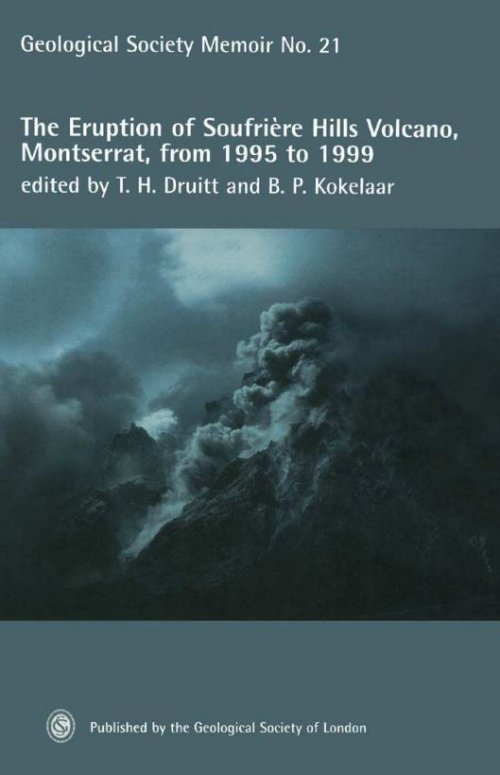
Volcanoes are the most violent surface expression of the Earth's internal energy. Only impacts of large extra-terrestrial bodies can match the explosive release and devastation of the largest volcanoes. Indeed for some of the most dramatic events the Earth has seen - the large terrestrial extinctions of animal life - the jury is still out as to whether they were brought about by meteoritic impact or by wide-scale effects of volcanic activity. Volcanoes have it too when it comes to sustained visual impact. Earthquakes, tsunamis and avalanches all cause massive devastation, but it is accomplished in the blink of an eye, and floods rise with a progressive and depressing inevitability. Volcanoes are simply the most spectacular of the destructive natural hazards to life on Earth. <...>
This book derives from the Integrated Basin Studies Project (IBS), which ran during the years 1992-1995 with the support of the European Commission DGXII. The papers produced by the IBS group have been complemented by eight papers arising from the conference 'Mediterranean Basins: Tertiary Extension within the Alpine Orogen', held in Cergy-Pontoise, France, 11-13 December 1996. The title of this conference has also been retained as the title of the book. The papers included here collectively cover the majority of the Mediterranean Tertiary extensional basins, with the exception of those in the SW of the region. <...>
Fifty years ago, Tuzo Wilson published his paper asking ‘Did the Atlantic close and then re-open?’. This led to the ‘Wilson Cycle’ concept in which the repeated opening and closing of ocean basins along old orogenic belts is a key process in the assembly and breakup of supercontinents.
Most of the deformation on Earth is concentrated in relatively narrow high-strain zones (e.g. plate boundaries). The purpose of this volume was to address different aspects dealing with high-strain zones, from the map scale to the processes active in high-strain zones to the physical properties of highly strained rocks. Several of the contributions were originally presented in a special session entitled 'High-Strain Zones' at the EGSAGU-EUG meeting 2003 in Nice, France, which inspired the compilation of this book. <...>