Добрый день, Коллеги. Важное сообщение, просьба принять участие. Музей Ферсмана ищет помощь для реставрационных работ в помещении. Подробности по ссылке
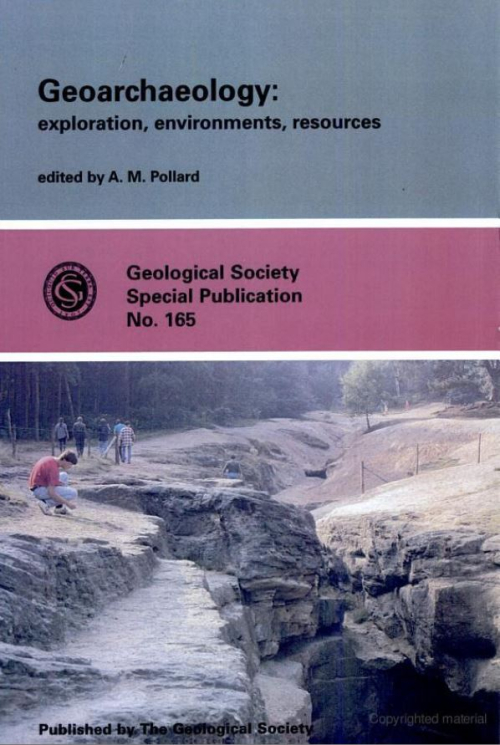
Of all of the sciences utilized in modern archaeological research, that of geology has the longest history of association with archaeology. Surprisingly, perhaps, geoarchaeology as a recognized sub-discipline has taken slightly longer to establish itself than others such as bioarchaeology. There is still some uncertainty about what exactly geoarchaeology encompasses, and some differences of usage of the term between Europe and North America. This brief introduction explores some of these issues, and attempts to place the other contributions to this volume in a slightly broader context.
We believe this is the first collection of papers to be devoted entirely to reservoir geochemistry, which is an area of growing scientific and economic importance. The main aim of reservoir geochemistry is to understand the distributions and origin(s) of the petroleums, waters and minerals in the reservoir and account for their possible spatial and compositional variation. This is ideally related to basin history and location of source-rock kitchens and migration pathways.
Archosauria include two extant clades, crocodylians and avians. However, the diversification of the avian and crocodylian crown groups are relatively recent events that began during the Late Cretaceous (Brochu 2001, 2003; Clarke et al. 2005), less than 100 Ma ago. These crown diversifications are shallow in time compared to the much deeper divergence of the crocodylian and avian stem lineages in the Triassic, approximately 250 Ma ago (Butler et al. 2011; Nesbitt 2011; Nesbitt et al. 2011). The early archosaurian diversification began in the wake of the devastating end-Permian mass extinction, and the divergence of both lineages and disparate body forms was rapid, occurring less than 10 Ma after the first archosaur (Nesbitt et al. 2010). This initial diversification was severely affected by the end-Triassic mass extinction approximately 50 Ma later, and only three major archosaur clades – pterosaurs, dinosaurs and crocodylomorphs – survived to diversify during the rest of the Mesozoic <...>
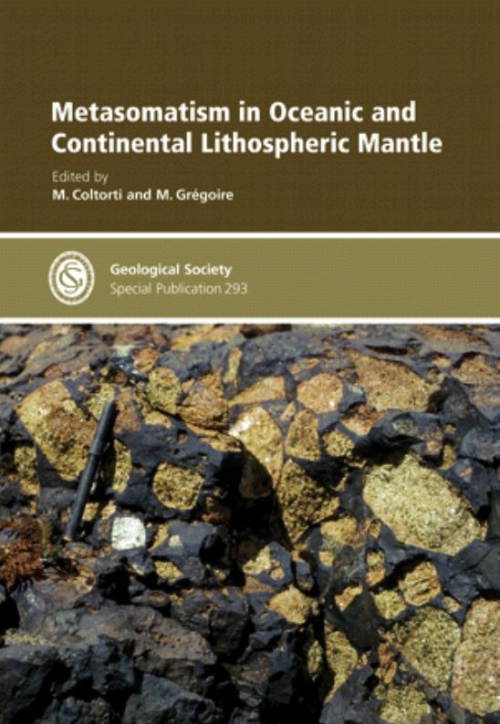
In the foreword of the volume Mantle Metasomatism by Menzies & Hawkesworth (1987), Boettcher stated that the concept of mantle metasomatism has been of immense heuristic value for Earth scientists. At that time, metasomatism was still strongly related to allochemical metamorphism, where chemical composition of the rock is changed by the additional or removal of material.
This Special Publication of the Geological Society of London, The Evolving Continents: Understanding Processes of Continental Growth, is dedicated to the long and spectacular career of Brian F. Windley, a pioneer in the application of uniformitarianism to Precambrian rocks, a leader in linking field geology with the geochemistry and geochronology of different orogenic units with global tectonic history, and an overall polymath who has had a deep influence on many fields of geological sciences.
1. The timing and location of major ore deposits in an evolving orogen: the geodynamic context
2. Global comparisons of volcanic-hosted massive sulphide districts
3. Tectonic controls on magmatic-hydro-thermal gold mineralization in the magmatic arcs of SE Asia
4. Timing and tectonic controls in the evolving orogen of SE Asia and the western Pacific and some implications for ore generation
5. Correlating magmatic-hydrothermal ore deposit formation over time with geodynamic processes in SE collision Europe
6. Contrasting Late Cretaceous with Neogene ore provinces in the Alpine-Balkan-Carpathian-Dinaride collision belt
7. Auriferous arsenopyritepyrite and stibnite mineralization from the Siflitz-Guginock Area (Austria): indications for hydrothermal activity during Tertiary oblique terrane accretion in the Eastern Alps
In recent years, the use of ground penetrating radar (GPR) to investigate the shallow subsurface has transformed the study of sediments. GPR is now an accepted and widely applied tool for the earth scientist, enabling a non-destructive investigation of both modern and ancient sediments. Based on the rapid growth of this field, we organised an international research meeting entitled Ground Penetrating Radar (GPR) in Sediments: Applications and Interpretation that was held at the Geological Society of London and the University College of London in August 2001.
Three-dimensional (3D) seismic data have had a substantial impact on the successful exploration and production of hydrocarbons. Although most commonly acquired by the oil and gas exploration industry, these data are starting to be used as a research tool in other Earth sciences disciplines. However despite some innovative new directions of academic investigation, most of the examples of how 3D seismic data have increased our understanding of the structure and stratigraphy of sedimentary basins come from the industry that acquired these data.
Though the rocks below the Red Chalk of Lincolnshire are of peculiar interest, the absence of exposures along the coast, together with the rarity and transitory character of inland excavations, have made it exceedingly difficult to build up a body of information that approaches, even approximately, that standard of detail and accuracy which characterizes modern stratigraphy. Any information that can be culled ; from borings is, therefore of especial value. <...>
Fracture and in-situ stress characterization is fast-evolving as an essential part of characterizing hydrocarbon reserviors. In this book, the Geological Society presents a selection of sixteen chapters that demonstrate the tools, methods, analysis, interpretation and application of this subject. These are of great interest to researchers and scientists in the industry and academia. This chapter includes definitions pertinent to the subject of the book and gives an overview of the papers, classified into seven major themes according to the nature of the studies.