
Добрый день, Коллеги. Важное сообщение, просьба принять участие. Музей Ферсмана ищет помощь для реставрационных работ в помещении. Подробности по ссылке
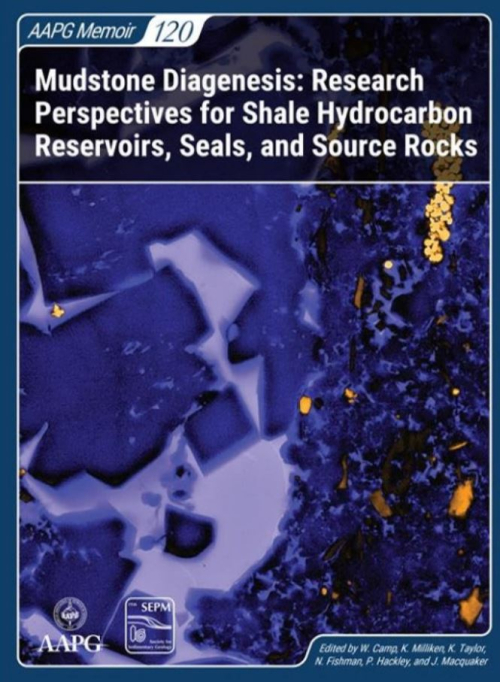
Scanning electron microscopy (SEM) has revolutionized our understanding of shale petroleum systems through microstructural characterization of dispersed organic matter (OM). However, as a result of the low atomic weight of carbon, all OM appears black in SEM (BSE [backscattered electron] image) regardless of differences in thermal maturity or OM type (kerogen types or solid bitumen). Traditional petrographic identification of OM uses optical microscopy, where reflectance (%Ro), form, relief, and fluorescence can be used to discern OM types and thermal maturation stage. Unfortunately, most SEM studies of shale OM do not employ correlative optical techniques, leading to misidentifications or to the conclusion that all OM (i.e., kerogen and solid bitumen) is the same. To improve the accuracy of SEMidentifications of dispersed OM in shale, correlative light and electron microscopy (CLEM) was used during this study to create optical and SEM images of OM in the same fields of view (500× magnification) under white light, blue light, secondary electron (SE), and BSE conditions. Samples (n = 8) of varying thermal maturities and typical of the North American shale petroleum systems were used, including the Green River Mahogany Zone, Bakken Formation, Ohio Shale, Eagle Ford Formation, Barnett Formation, Haynesville Formation, and Woodford Shale. The CLEM image sets demonstrate the importance of correlative microscopy by showing how easily OM can be misidentified when viewed by SEM alone. Without CLEM techniques, petrographic data from SEM such as observations of organic nanoporosity may be misinterpreted, resulting in false or ambiguous results and impairing an improved understanding of organic diagenesis and catagenesis. <...>