
Добрый день, Коллеги. Важное сообщение, просьба принять участие. Музей Ферсмана ищет помощь для реставрационных работ в помещении. Подробности по ссылке
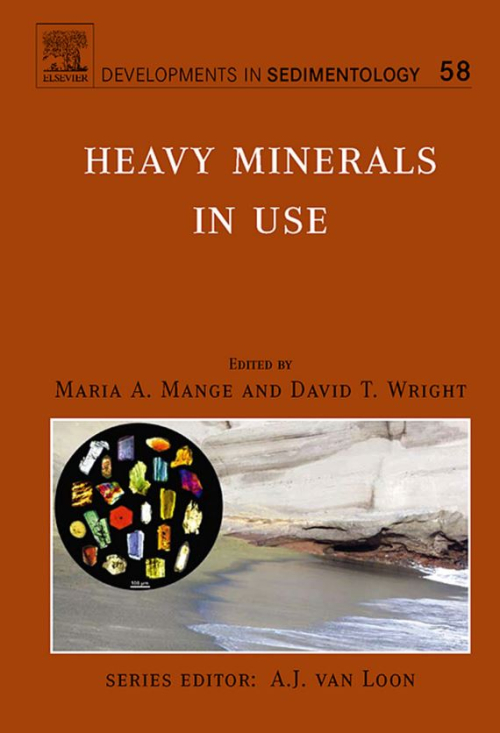
Heavy mineral studies have been enriching earth sciences with informative data for well over a century. The methods employed are well-proven, and have stood the test of time, being both flexible and adaptable, with the potential for integration with applied geology and interdisciplinary research. The use of heavy minerals for constraining sediment provenance, source lithology and palaeotransport was recognised early on, while the range of heavy mineral applications increased progressively through the 20th century and up to the present day, in parallel with the growth of modern technology.
Modern research in earth sciences is increasingly driven by new advances in technology. The development of sophisticated equipment has encouraged the adoption of single-mineral-based techniques that have become intensively used because of their easy operation and rapid production of data. However, research focusing on such a restricted analysis is subject to severe shortcomings. Heavy minerals are generally not found in isolation but form part of a population of detrital, and often also authigenic, grains that collectively provide many important indices of information, essential for the correct interpretation of the data obtained. Relying on a single line of geochemical evidence can yield only partial resolution, and results almost inevitably in the loss of—often vital—information and, therefore, in an incomplete or misleading interpretation. Evaluation of heavy mineral compositions should be based on the analysis of all relevant data in a given sediment, and should involve an examination of the impact of processes involved during their transport, deposition and diagenesis. Compared with thin-section-based sandstone petrography, the great advantage of the heavy mineral technique is that through concentration by heavy liquids, the rare but often highly diagnostic species (usually not encountered in thin sections) can be detected. <...>