
Добрый день, Коллеги. Важное сообщение, просьба принять участие. Музей Ферсмана ищет помощь для реставрационных работ в помещении. Подробности по ссылке
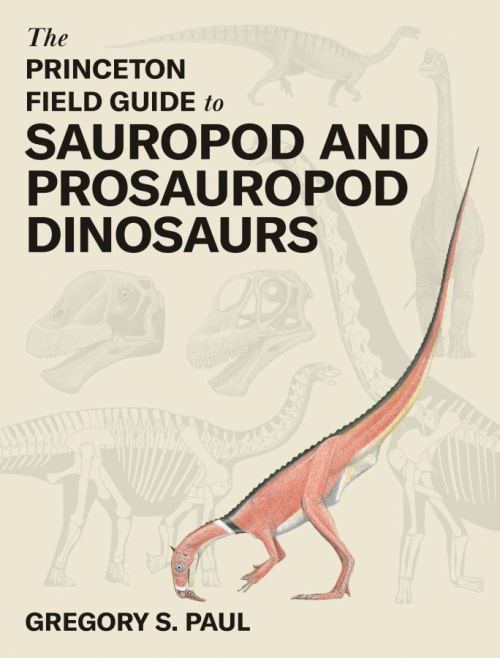
If I were, at about age twenty as a budding paleozoologist and paleoartist, handed a copy of this book by a mysterious time traveler, I would have been shocked as well as delighted. The pages would have revealed a world of new sauropod and related dinosaurs and ideas that I barely had a hint of or had no idea existed at all. My head would have spun at the revelation of the neck spines of Amargasaurus and of sauropods so colossal that they not only gave the giant baleen whales a run for their money in terms of sheer bulk but could feed over six stories high in tree crowns—and took only a few decades to get to those sizes! There were sauropodomorphs dwelling in winter chills. I would have noted the new names for some old dinosaurs, including my favorite, Giraffatitan, and that old Brontosaurus was back! Even Plateosaurus would have undergone a remake. There would be the prosauropod and sauropod bearing beds with the familiar yet often-exotic names: Tendaguru, Morrison, Lameta, Kota, Portland, Nemegt, Forest Marble, Navajo Sandstone, Grès a Reptiles, Elliot, Hutton, Paluxy, Alamo, Trossingen, North Horn, Malmros Klint, Lufeng, Arundel. Plus, there would be the novel formations, at least to my eyes and ears: Tiourarén, Las Leoneras, Anacleto, Shishugou, Huincul, Ischigualasto, Hanson, Jinhua, Los Colorados, Pari Aike, Yixian, Allaru, Pebbly Arkose, Villar del Arzobispo, Plottier, Bahariya, Cañadón, Asfalto Tegana, Aïn el Guettar, Suining, Castrillo de la Reina, Lohan Lura, Caturrita, Kallamedu, Cerro Barcino, Lourinha, Portezuelo, Kitadani, Zhanghe, Xert, Maevarano. The sheer number of new dinosaurs would have demonstrated that an explosion in sauropodomorph discoveries and research, far beyond anything that had previously occurred and often based on new high technologies, would mark the end of the twentieth century going into the twenty-first.
A paradigm shift already under way in the late 1960s and especially the 1970s would be confirmed. According to the new view, dinosaurs were not so much reptiles as they were near birds that often paralleled mammals in form and function. Dinosaurs were still widely seen as living in tropical swamps, but we would learn that some lived through polar winters so dark and bitterly cold that lowenergy reptiles could not survive. Imagine a small dinosaur shaking the snow off its hairy body insulation while the flakes melted on the scaly skin of a nearby titanic dinosaur whose body, oxygenated by a birdlike respiratory complex and powered by a high-pressure four-chambered heart, produced the heat needed to prevent frostbite.Producing this volume has been satisfying in that it has given me yet more reason to more fully achieve a long-term goal: to illustrate the skeletons of almost all prosauropod and sauropod species for which sufficiently complete material is available. These have been used to construct the most extensive library of side-view life studies of these dinosaurs in print to date. The result is a work that covers what is now two centuries of scientific investigation into a group of animals that helped rule the continents for over 160 million years. Enjoy the travel back in time <....>