

Добрый день, Коллеги. Важное сообщение, просьба принять участие. Музей Ферсмана ищет помощь для реставрационных работ в помещении. Подробности по ссылке
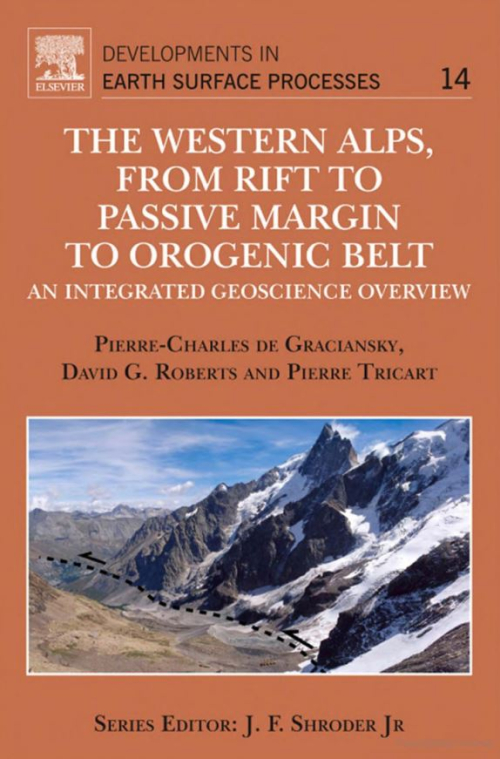
Beginning in the 18th century, the Alps were the first mountain belt in thehistory of European science to attract the interest of Naturalists. In consequence, many key geological principles were developed as a result of the progress of geological exploration in the Alps and, simultaneously, in the oceans. Within mountain belts, deep sea or pelagic sediments were first discovered before being clearly recognized as such.Their origin remained enigmatic for a long period before comparison with sediments dredged from the deep sea floor by HMS Challenger which provided, at the end of the 19th century, the necessary insight into their origin. Their presence at the highest elevations of mountain belts allowed recognition of the ephemeral nature of the oceans at geological time scales though cause and effect lay beyond conception at the end of the 19th century.
It should be noted that towards the end of the 19th century, the possibility of large scale, 100 km, horizontal displacements of rock units was demonstrated for the first time. This concept was a key generality that directly resulted from the discovery of nappes in 1884. The theory of geosynclines, interpreted as the birthplace of folded belts, emerged in 1859 from the celebrated work of James Hall in the Appalachians. It was a key driver for exploration in folded belts until 1960. By then, however, a steady flow of geophysical results from the oceans had seriously weakened the theory. The advent of palaeomagnetism had also by then confirmed the mobility of the continents thus vindicating Wegener’s visionary hypothesis of continental drift. Quantification of continental drift through the PlateTectonics hypothesis wasachieved in the mid-1960s from marine geologicaland geophysical studies and, especially the dating of oceanic magnetic anomalies, latterly seismic reflection profiles that provided key insights into passive margin structure. These observations provide the geodynamic context and framework for the present geological understanding of Alpine evolution. <...>