
Добрый день, Коллеги. Важное сообщение, просьба принять участие. Музей Ферсмана ищет помощь для реставрационных работ в помещении. Подробности по ссылке
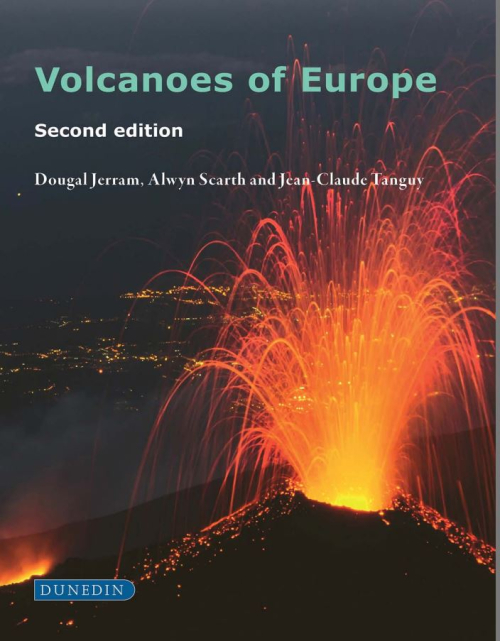
Europe, despite its many changes through history, has been home to volcanoes for many millions of years. These volcanoes pay no attention to human foibles such as historical periods, political boundaries (and how they change) and scientific definitions. Thus, the title Volcanoes of Europe disguises several kinds of arbitrary choices. We have included, for instance, the Canary Islands and the mid-Atlantic islands of Jan Mayen, Iceland, Svalbard, and the Azores within the European umbrella, although two of the Azores and half of Iceland belong to the North American plate, and the Canary Islands belong to the African plate. On the other hand, we do not describe the volcanoes of Turkey and the Caucasus, which many would, no doubt, call European.
It is altogether more difficult to define those volcanoes that are active, dormant, or extinct. Volcanoes do not always display the secrets of their past, nor do they always reveal their future intentions. Several times, even in the course of the twentieth century, expert volcanologists have been puzzled – not to say surprised – when certain volcanoes have suddenly burst into life after a long period of calm. Volcanoes are generally considered active if they have erupted in the last 10,000 years, though such a value may include volcanoes that are effectively extinct. It is also valuable to consider the older records of many of the volcanic areas as they help reveal how these spectacular landscapes develop and grow.
The notion of historical time is also extremely flexible, and historical records count for little within the defined span of 10,000 years. Even within the limited European context, the period during which eruptions could actually be recorded has varied greatly from place to place. Probably no volcano on Earth has a longer recorded history than Etna, where eye-witness accounts have recorded its eruptions, with admittedly varying degrees of fantasy, for thousands of years. However, the Italian volcanoes were in an exceptionally favoured position in the classical world. On the other hand, records in Iceland extend back only to the early centuries after the settlement in AD874, and no human being even settled in the Azores until 1439. <...>