

Добрый день, Коллеги. Важное сообщение, просьба принять участие. Музей Ферсмана ищет помощь для реставрационных работ в помещении. Подробности по ссылке
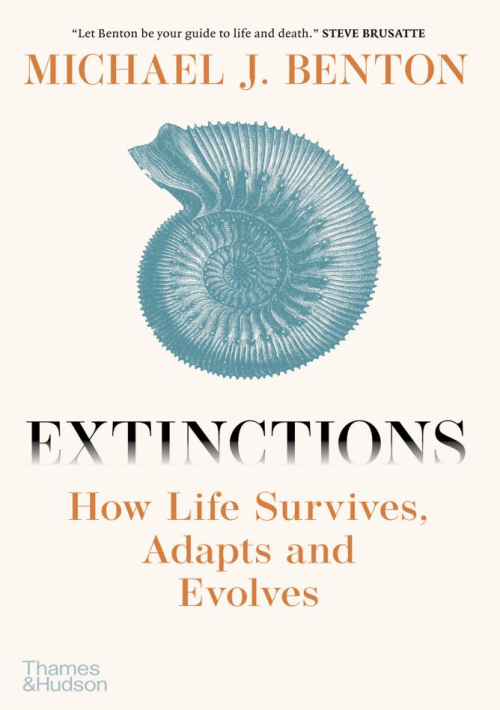
The great conservationist E. O. Wilson called the love of nature, and especially the love of biodiversity, biophilia. He had in mind not only our love of the outdoors, of nature, of getting away from our hurried, technological world, but also a fundamental justification for wildlife conservation. Why should we prevent species from going extinct? We could make economic arguments and say that we get useful products such as food and drugs from many plants, or that natural habitats keep the Earth’s energy flows, oxygen and carbon in balance. But Wilson was keen to remind us that purely economic arguments are not enough, or they can be used misleadingly. His point was that we should love biodiversity, the richness and colour of all living things, and humans (or any other species) have no right to kill off all members of another species.
But then, as a lad of seven, when I was introduced to dinosaurs, and fossils in general, I loved the fact they were extinct. I could imagine these past worlds of trilobites, great bone-armoured fishes, ichthyosaurs, dinosaurs and mammoths. How different they must have been! Who needs science fiction imaginings when the real thing, the world in front of us, has passed through such enormous spans of time and experienced so many alien worlds? And the evidence of these thousands upon thousands of extinct species is there in the rocks, preserved as fossils. I dreamt then, as I looked at my dinosaur books, that someday I could dig up these fossils and bring them back to life, not literally, but by using all the smart tools in the scientific laboratory to work out whether a particular dinosaur was warm-blooded or not, whether a giant pterosaur could fly, and how a 50-tonne sauropod ould find enough food to keep its huge body functioning successfully. And wecare about more than dinosaurs; we wonder at creatures like Hallucigenia and Anomalocaris, which represent some of the earliest marine animals of the Cambrian explosion. Even their names tell us they are weird and amazing, anomalies, or visions of a bad dream. We read about the topsy-turvy ecosystems that existed on Earth after the dinosaurs disappeared, and a time 60 million years ago when giant landwalking crocodiles were the main predators in some places, and giant, flightless, horse-eating birds terrorized life in South America. <...>