
Добрый день, Коллеги. Важное сообщение, просьба принять участие. Музей Ферсмана ищет помощь для реставрационных работ в помещении. Подробности по ссылке
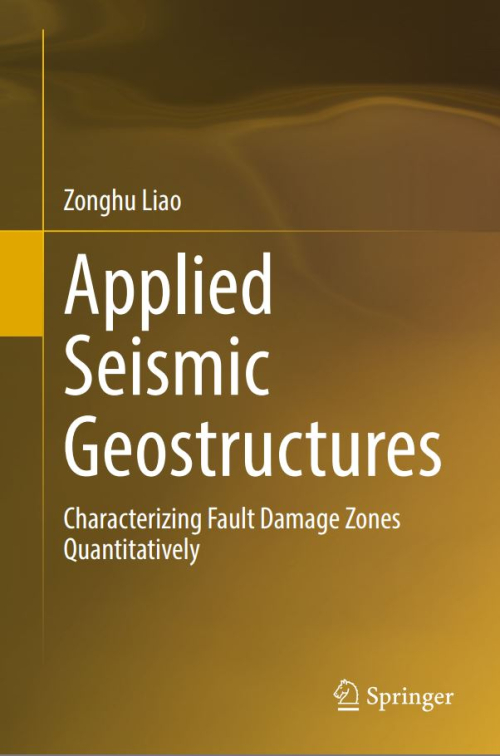
Within the esteemed halls of the University of Oklahoma, our journey into the depths of seismic interpretation began an endeavor that has since blossomed into a comprehensive exploration of fault damage zones through the lens of seismic attributes. Under the guidance of Prof. Kurt J. Marfurt and with the invaluable insights of Prof. Ze’ev Reches, we embarked on a project that not only sought to characterize the strike-slip fault in the Anadarko Basin but also to lay the groundwork for a methodical, quantitative analysis of subsurface structures—a task that was both ambitious and pioneering in 2010.
Over fourteen years, our scholarly pursuits have unfolded along two parallel paths. One path led us through the intricate world of fault dynamics using ROGA (Rotary Gouge Apparatus) designed by Prof. Ze’ev Reches, engaging in fault experiments and rotary shears to decode the mechanics of faulting. The other path navigated the complexities of fault geometries, interpreting the Earth’s cryptic subsurface patterns using seismic attributes. This dual approach underscored a pressing need for advancements in seismic resolution, to ensure our interpretations and models closely mirror the real geological constructs that lie beneath.
Our work of the fault geometries to the field, detailed within the pages of this book, includes rigorous delineation of fault damage zones across various types, e.g., normal faults, thrust faults, strike-slip faults, etc., and extending our analysis to a systemic level. Through meticulous evaluation, we established a reliable resolution within 50–150 m, thus enhancing our understanding of subsurface structures significantly <...>