

Добрый день, Коллеги. Важное сообщение, просьба принять участие. Музей Ферсмана ищет помощь для реставрационных работ в помещении. Подробности по ссылке
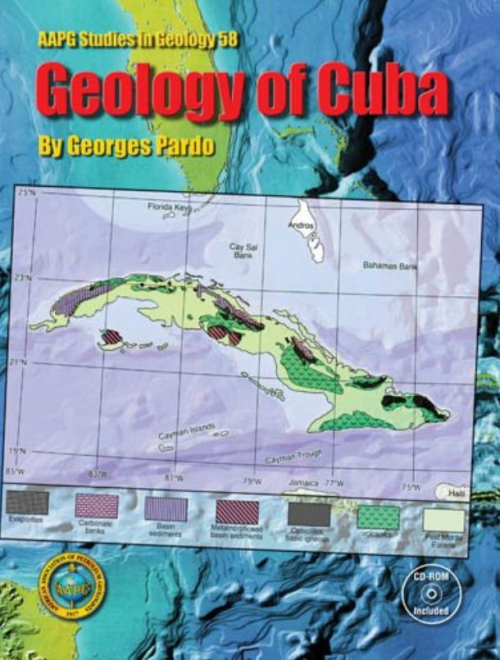
The geology of Cuba has been a challenge to geologists because of features such as the presence of well-preserved Jurassic ammonites, the rich Tertiary foraminiferal faunas (including remarkable Paleogene orbitoids), the gigantic Upper Cretaceous rudistids, the spectacular limestone Mogotes of Pinar del Rio, the extensive outcrops of ultrabasic igneous rocks, the chromite and manganese deposits, and the extraordinary structural complexity. In addition to these features, the numerous petroleum seeps, many of them coming out of basic igneous rock, have attracted much attention. It is interesting to read early papers by reputable geologists such as E. DeGoyler (1918), J. W. Lewis (1932), or R. H. Palmer (1945), and to realize how little was known or understood about the geology of the southern portion of the North American continent in the early part of the 20th century. Much early understanding of the geology of Cuba resulted fromaseries ofstudies conductedbetween 1936 and 1946 by the University of Utrecht, Holland, under the direction of L. M. R. Rutten. Some resultant publications are Rutten (1936), MacGillavry (1937), Thiadens (1937a, b), Vermut (1937), van Wessen (1943), Keijzer (1945), Hermes (1945), and De Vletter (1946). These authors outlined the components of a classic geosyncline. Between the late 1930s and late 1950s, Cuban geologists and paleontologists, such as P. R. Ortega y Ros, J. Broderman, P. Bermudez, and J. F. Albear, published several articles about the island’s geology. <...>