
Добрый день, Коллеги. Важное сообщение, просьба принять участие. Музей Ферсмана ищет помощь для реставрационных работ в помещении. Подробности по ссылке
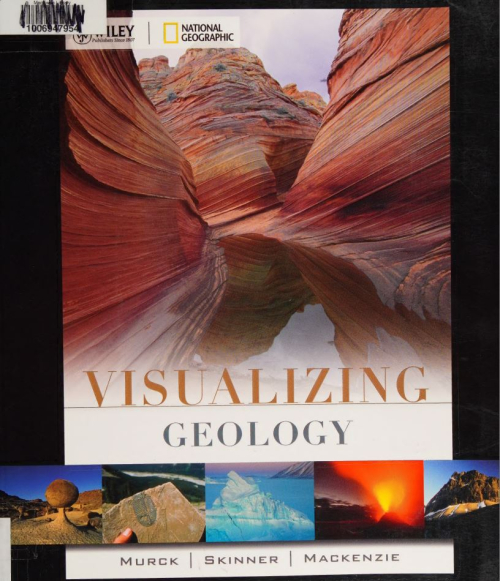
Visualizing Geology is designed to help your students learn effectively. Created in collaboration with the National Geographic Society and our Wiley Visualizing Consulting Editor, Professor Jan Plass of New York University, Visualizing Geology integrates rich visuals and media with text to direct students’ attention to important information. This approach represents complex processes, organizes related pieces of information, and integrates information into clear representations. Beautifully illustrated, Visualizing Geology shows your students what the discipline is all about—its main concepts and applications— while also instilling an appreciation and excitement about the richness of the subject.
Visuals, as used throughout this text, are instructional components that display facts, concepts, processes, or principles. They create the foundation for the text and do more than simply support the written or spoken word. The visuals include diagrams, graphs, maps, photographs, illustrations, schematics, animations, and videos. Why should a textbook based on visuals be effective? Research shows that we learn better from integrated text and visuals than from either medium separately. Beginners in a subject benefit most from reading about the topic, attending class, and studying well-designed and integrated visuals. A visual, with good accompanying discussion, really can be worth a thousand words!
Well-designed visuals can also improve the efficiency with which information is processed by a learner. The more effectively we process information, the more likely it is that we will learn. This processing of information takes place in our working memory. As we learn, we integrate new information in our working memory with existing knowledge in our long-term memory. <...>