Добрый день, Коллеги. Важное сообщение, просьба принять участие. Музей Ферсмана ищет помощь для реставрационных работ в помещении. Подробности по ссылке
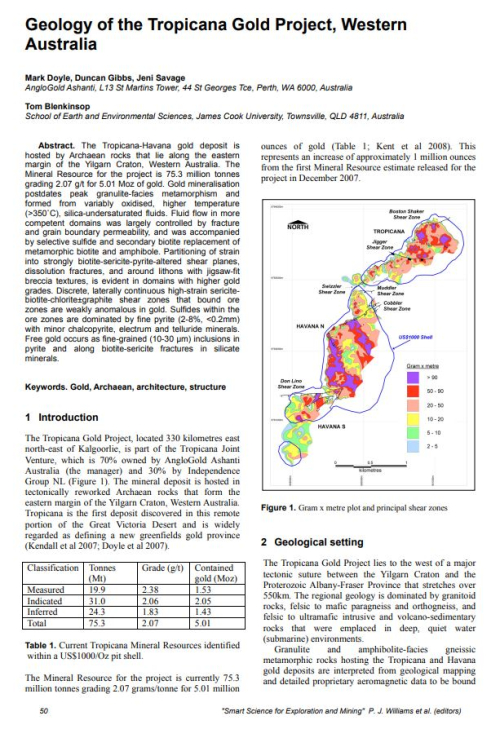
The Tropicana-Havana gold deposit is hosted by Archaean rocks that lie along the eastern margin of the Yilgarn Craton, Western Australia. The Mineral Resource for the project is 75.3 million tonnes grading 2.07 g/t for 5.01 Moz of gold. Gold mineralisation postdates peak granulite-facies metamorphism and formed from variably oxidised, higher temperature (>350˚C), silica-undersaturated fluids.
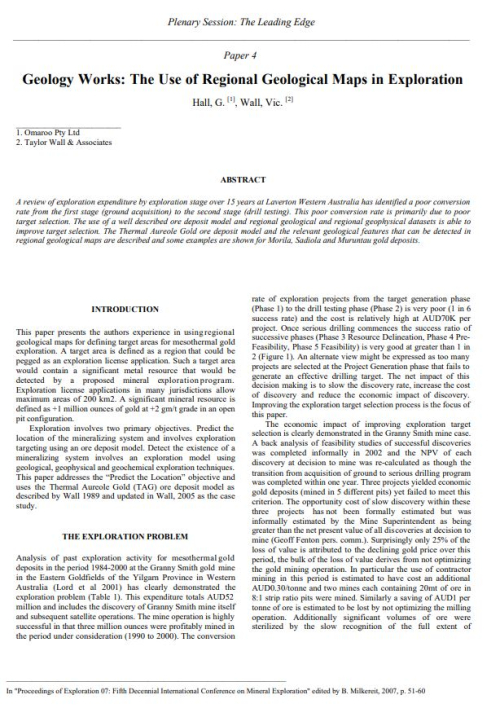
A review of exploration expenditure by exploration stage over 15 years at Laverton Western Australia has identified a poor conversion rate from the first stage (ground acquisition) to the second stage (drill testing). This poor conversion rate is primarily due to poor target selection. The use of a well described ore deposit model and regional geological and regional geophysical datasets is able to improve target selection. The Thermal Aureole Gold ore deposit model and the relevant geological features that can be detected in regional geological maps are described and some examples are shown for Morila, Sadiola and Muruntau gold deposits. <...>
Геология, флюидные включения, минеральный и (S-O) изотопный состав Бадранского орогенного месторождения золота, Яно-Колымский пояс, Восточная Сибирь: влияние на рудогенез
The Geochemistry of Supergene Processes Rob J. Bowell and M. I. Leybourne The Role of Regolith Formation and Evolution in the Development of Supergene Mineral Deposits C. R. M. Butt and R. R. Anand Gossans: In Situ Supergene Base Metal Deposits Rob J. Bowell and M. I. Leybourne Supergene Non-Sulfide Base Metal Deposits M. Boni, Rob J. Bowell, N. Sergeev, and R. Burlow Supergene Gold Deposits in Intensely Weathered Regolith R. R. Anand, C. R. M. Butt, W. S. Salama, and C. G. Porto
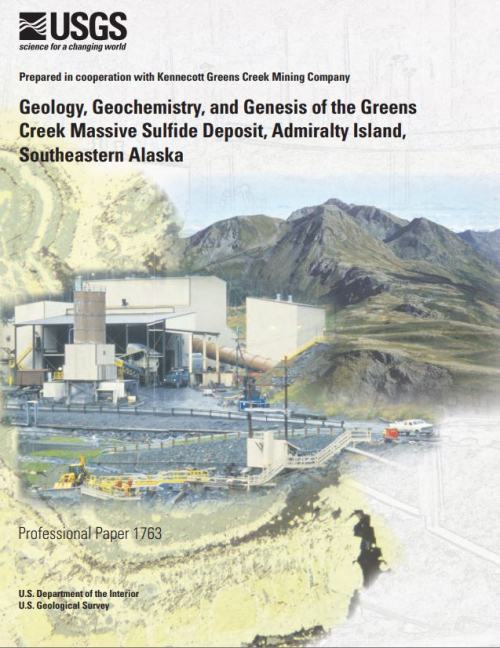
In 1996, a memorandum of understanding was signed by representatives of the U.S. Geological Survey and Kennecott Greens Creek Mining Company to initiate a cooperative applied research project focused on the Greens Creek massive sulfide deposit in southeastern Alaska. The goals of the project were consistent with the mandate of the U.S. Geological Survey Mineral Resources Program to maintain a leading role in national mineral deposits research and with the need of Kennecott Greens Creek Mining Company to further development of the Greens Creek deposit and similar deposits in Alaska and elsewhere.
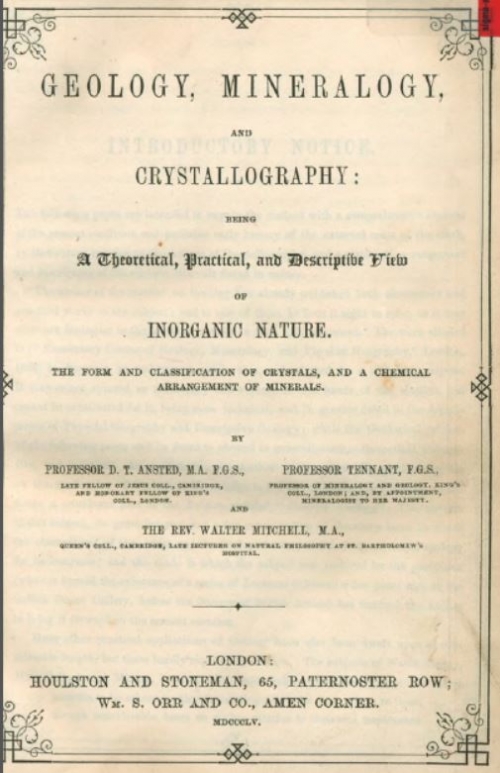
The following pages are intended to supply the student with a comprehensive account of the present condition and probable early history of the external crust of the earth, an elementary treatise on the science of Crystallography, and a systematic arrangement and description of the various Minerals found in nature.
The author of the treatise on Geology has already published both elementary and practical works on the subject; and to one of these he feels it right to refer, as it may seem not dissimilar to the present treatise in plan and treatment. The work alluded to (“ Elementary Course of Geology, Mineralogy, and Physical Geography,” London, 1850) is, however, in reality very unlike this, and adapted for a different purpose. It may either succeed or accompany this volume in the hands of the student, but cannot be substituted for it, being more technical, and in greater detail in the departments of Physical Geography and Descriptive Geology ; while the Geological portion of the following pages will be found to abound in generalization,—theoretical, descriptive, and practical. As an instance, the Author may mention the distinct treatise on the application of Geological Knowledge to the Art of Landscape Painting, which forms a prominent part of the division entitled “Practical Geology:' The novelty of this subject, its great interest, and a due consideration of the many ways in which the observations of the Artist and the Geologist run parallel, form an ample apology for its insertion; and the mode in which the subject was received by the profession (when it formed the substance of a series of Lectures delivered a few years ago at the Suffolk Street Gallery, before the Society of British Artists) has induced the Author to bring it forward on the present occasion. <...>
Geological Structure and History of Exploration of the Anikhov Graben (Southern Urals, Russia)
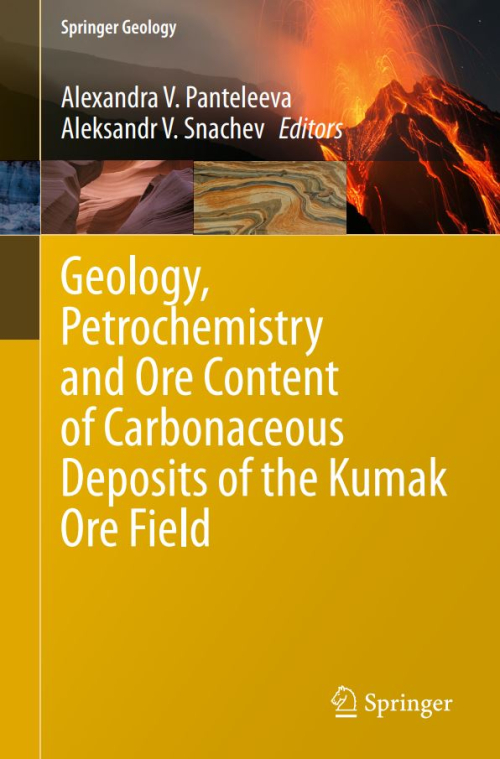
Alexandra V. Panteleeva, Aleksandr V. Snachev, P. V. Pankratev, R. S. Kisil, and V. P. Petrishchev Geological Structure of the Kumak Ore Field (Southern Urals, Russia) Alexandra V. Panteleeva, Aleksandr V. Snachev, P. V. Pankratev, V. S. Panteleev, and R. S. Kisil Petrographic Features and Carbonaceous Matter of the Black Shales of the Kumak Deposit (Southern Urals, Russia) Alexandra V. Panteleeva, Aleksandr V. Snachev, А. М. Tyurin, Mikhail A. Rassomakhin, and Irina V. Smoleva
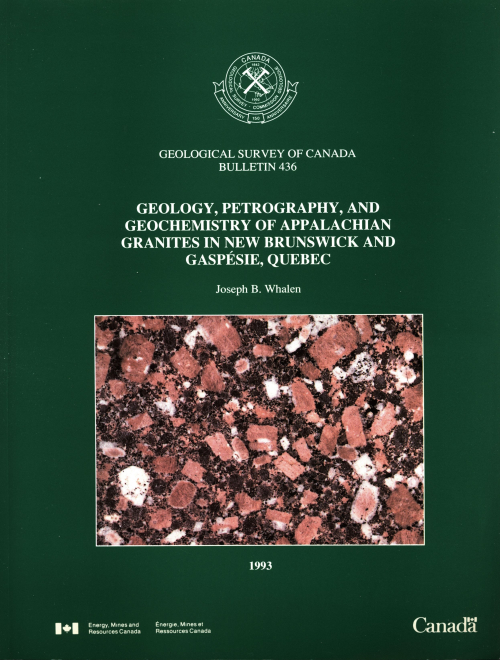
All major Appalachian tectonostratographic zones in Gaspesie, Quebec and New Brunswick (i.e. Humber, Dunnage, Gander, and Avalon) are intruded by Paleozoic granites. Granite petrological and geochemical data assist in evaluating the economic potential of the plutons and provide insight into the crustal and tectonic evolution of the orogen. Based on Na2O and Al index values (generally >3.2 wt.% and <1.1 respectively) and high-field strength element contents, most of the granites are 1-types; some have "А-type affinities". Granite chemical and isotopic characteristics distinguish three contrasting groups of granites: Humber-Dunnage, Gander, and Avalon. Positive eNd values for Humber, Dunnage, and Avalon granites indicate melting of predominately juvenile sources. Negative e Nd and elevated 201РЫШРЬ and 518 values for Gander granites are consistent with reworking of older (1.1-1.8 Ga) crust containing a significant supracrustal component. Neodymium isotopic data effectively rules out Grenville basement as a source for Humber-Dunnage granites. Gander zone is apparently the autochthonous surface expression of a distinct lower crustal block. Contrasting e Nd signatures from Avalon and Gander granites indicates that Gander and Avalon zones are underlain by different crustal blocks, i.e. Precambrian Avalon basement is not a suitable protolith for Gander granites.<...>
The state of Maharashtra is located in the country’s peninsular shield region, with hard rock formations covering around 94% of the total geographical area and sedimentary and alluvial deposits covering the remaining 6%. Basaltic lava flows cover around 80% of the state, with overlying alluvium confined to places near major rivers and streams. Alluvial deposits of shallow thickness, consisting of gravely, sandy, and clayey mixtures, are found in abundance along stream courses. With an estimated extent of 5,18,000 sq. km, Deccan Traps is one of the world’s largest accumulations of continental flood basalt.