Добрый день, Коллеги. Важное сообщение, просьба принять участие. Музей Ферсмана ищет помощь для реставрационных работ в помещении. Подробности по ссылке
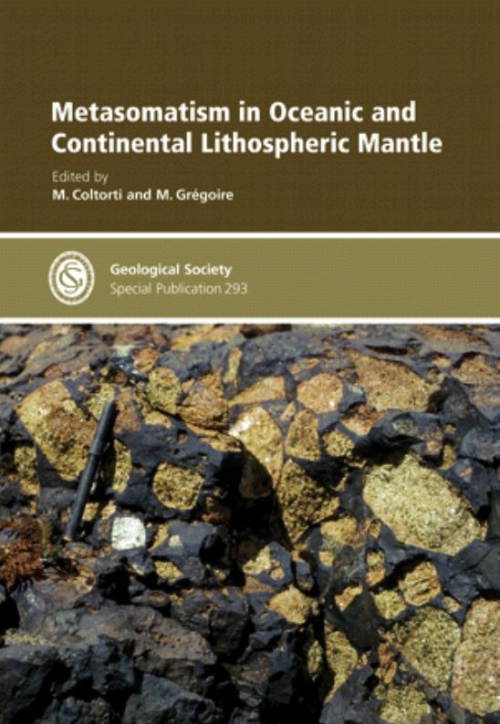
In the foreword of the volume Mantle Metasomatism by Menzies & Hawkesworth (1987), Boettcher stated that the concept of mantle metasomatism has been of immense heuristic value for Earth scientists. At that time, metasomatism was still strongly related to allochemical metamorphism, where chemical composition of the rock is changed by the additional or removal of material.
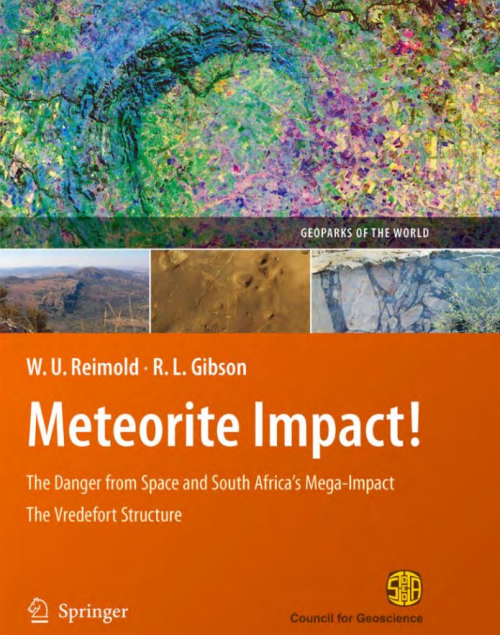
Two thousand million years (Ma) ago a mountain-sized bolide from Space, travelling at tens of thousands of kilometres per hour, slammed into the Earth at a position approximately 120 km southwest of the present-day city of Johannesburg, in the vicinity of the present towns of Vredefort and Parys. Within moments, it had blown a hole tens of kilometres deep and more than 100 km wide into the crust of the Earth. Th e force of the impact hurled countless millions of tonnes of rock, some of it heated to temperatures of thousands of degrees centigrade (°C), around the crater over an area extending for hundreds of kilometres from the impact site (Fig. 3a).
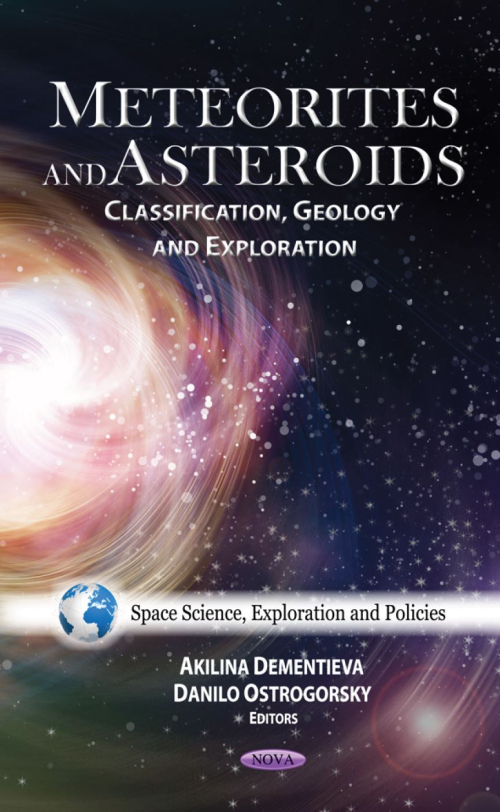
In this book, the authors present current research in the study of the classification, geology and exploration of asteroids and meteorites. Topics discussed include meteorites and their asteroidal parent bodies; the diversion and exploitation of ice-rich NEOs using the solar collector; radar characteristics of asteroid 33342 (1998 WT24); asteroid dimensions and the truncated pareto distribution; Hilda asteroids in the Jupiter neighborhood; and asteroid Apophis and 1950 DA.
GRADY, M. M., HUTCHISON, R., MCCALL, G. J. H. & ROTHERY, D. A. Meteorites: their flux with time and impact effects
SHOEMAKER, E. M. Long-term variations in the impact cratering record on Earth The flux of extraterrestrial material to the Earth: determination by astronomical and statistical techniques
BAILEY, M. E. & EMEL'YANENKO, V. V. Cometary capture and the nature of the impactors NAr'IER, W. M. Galactic periodicity and the geological record
HUGHES, D. W. The mass distribution of crater producing bodies The flux of meteorites to the Earth: determinations by terrestrial techniques
In Chapter 2, Microseeps as Pathfinder and Regional Filtering Tool in Petroleum Exploration, Tedesco discusses the aid of microseeps in petroleum exploration. As shown in previous research (Tedesco, 1995), the use of surface geochemistry can enhance the probability of success from 10% to 60%.
The Society of Exploration Geophysicists published Reservoir Geophysics, the predecessor of this book, in 1992. This was a time of transition in the geophysical profession and in the petroleum industry, which had suffered a significant downturn in the mid-1980s. With the exception of the months just before and after the first Gulf War, oil prices were low compared with the boom of the late 1970s. Exploration was moving toward more challenging and costly areas — deeper water, deeper targets, more remote locations. Improved recovery in existing fields became an industry imperative <...>
The experimenter is confronted nearly every day with the examination of results from his or her own experiments as well as those of others. There is a need to know the methods by which the data were obtained and what confidence can be placed in the numerical results. Significant aspects of these matters involve the principles and methods of statistics, and the jective of this chapter is to describe the basic ideas of statistics that are relevant to errors of observations and numbers derived from these observations.
The Soil Science Society of America is extremely pleased to publish this comprehensive compilation of modern mineralogical methods. Co-editors April L. Ulery and L. Richard Drees have done an outstanding job of assembling this volume. This valuable work began with the vision of Dr. L. Richard Drees, who unfortunately fell ill during the early stages of the monograph and was unable to complete the task. Co-editor Dr. April Ulery has done a great job of bringing it to completion.
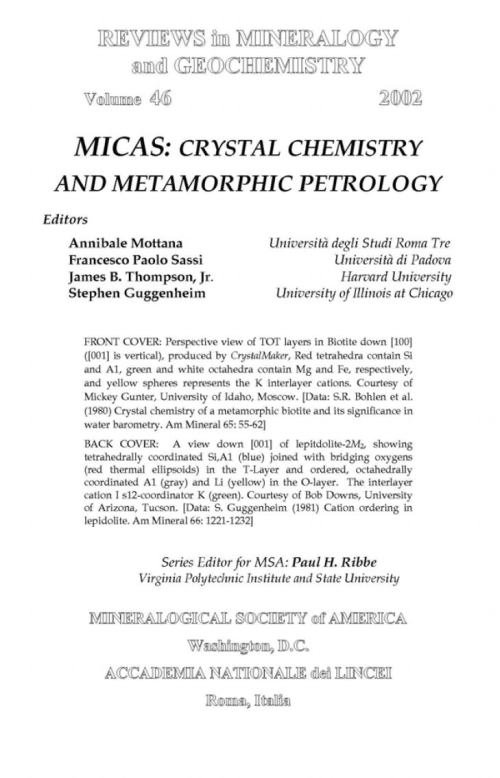
Micas are among the most common minerals in the Earth crust: 4.5% by volume. They are widespread in most if not all metamorphic rocks (abundance: 11%), and common also in sediment and sedimentary and igneous rocks. Characteristically, micas form in the uppermost greenschist facies and remain stable to the lower crust, including anatectic rocks (the only exception: granulite facies racks). Moreover, some micas are stable in sediments and diagenetic rocks and crystallize in many types of lavas. In contrast, they are also present in association with minerals originating from the very deepest parts of the mantle—they are the most common minerals accompanying diamond in kimberlites.
During recent years, systematic, scientific, and engineering effort by researchers in the United States and abroad, has established the scientific basis for Microbial Enhanced Oil Recovery (MEOR) technology. In the past, basic research was left to the laboratory, and field use was generally limited to an uninformed oil producer using microbes without knowing what to expect. The merger of these two groups--researchers and producers--is fostering acceptance of MEOR technology through the petroleum community. The applicability of MEOR technologies, its economic feasibility, and indications for future directions have become essential elements of current MEOR research programs. <...>