Добрый день, Коллеги. Важное сообщение, просьба принять участие. Музей Ферсмана ищет помощь для реставрационных работ в помещении. Подробности по ссылке
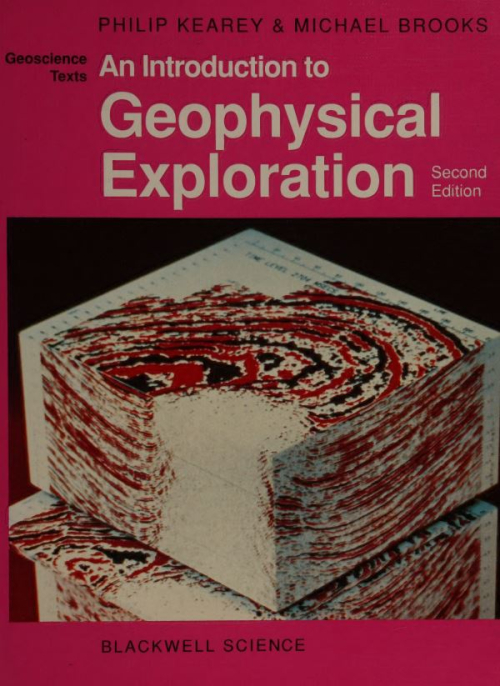
This book provides a general introduction to the most important methods of geophysical exploration. These methods represent a primary tool for investigation of the subsurface and are applicable to a very wide range of problems. Although their main application is in prospecting for natural resources the methods are also used, for example, as an aid to geological surveying, as a means of deriving information on the Earth’s internal physical properties, and in engineering or archaeological site investigations.
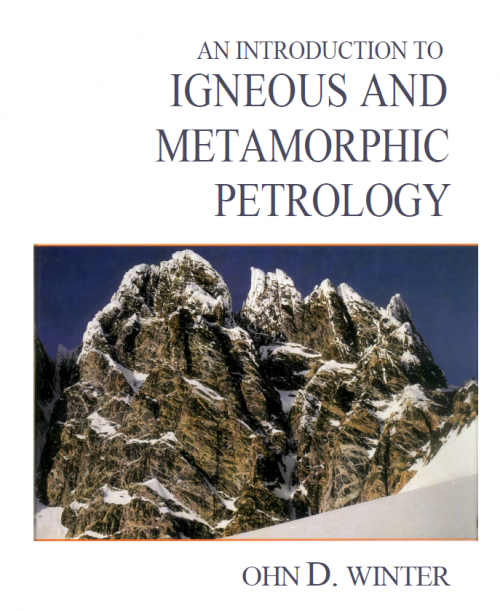
This text is designed for use in advanced undergraduate or early graduate courses in igneous and metamorphic petrology. The book is extensive enough to be used in separate igneous and metamorphic courses, but I use it for a one-semester combined course by selecting from the available chapters. The nature of geological investi-gations has largely shaped the approach that I follow.
Metamorph;c processes have been taking place on a massive scale throughout the Earth's history, and have affected the bulk of the rocks now present in the crust. Despite this, they are not as well understood as sedimentary or volcanic processes, because metamorphism can scarcely ever be observed directly, and the study of metamorphic rocks is instead based on observation, inference and logic, founded in relatively simplistic experimental studies and the basic principles of chemistry and physics
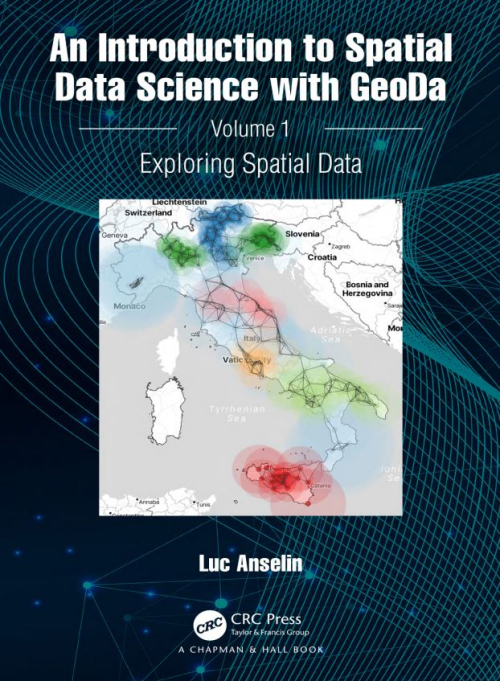
This book is the first in a two-volume series that introduces the field of spatial data science. It offers an accessible overview of the methodology of exploratory spatial data analysis. It also constitutes the definitive user’s guide for the widely adopted GeoDa open-source software for spatial analysis. Leveraging a large number of real-world empirical illustrations, readers will gain an understanding of the main concepts and techniques, using dynamic graphics for thematic mapping, statistical graphing, and, most centrally, the analysis of spatial autocorrelation. Key to this analysis is the concept of local indicators of spatial association, pioneered by the author and recently extended to the analysis of multivariate data.
This work is based on a series of lectures given to graduate students both at the University of Illinois, Chicago Circle in the United States, and at Oxford University in England. It is intended to provide a framework for such a course given primarily to graduate students in applied mathematics, as well as to be a useful supplementary text for students of oceanography, meteorology and engineering.
Diatoms are microscopic unicellular algae. Whatever the shape or size of the cell, it consists of the same basic parts: the nucleus, cytoplasm, plasma membrane, and the cell wall.
1.1. Structure of the Cell Wall
Emphasis in this Introduction is placed on the structure of the diatom cell wall, as opposed to the living contents, as, in the main, interest in diatom study is directed toward the structure and microstructure of the cell wall. Classification of diatoms and their identification pertinent to many areas of investigation is based on the structure of, and markings on the cell wall as revealed by the light microscope (LM). It is therefore imperative that the student of diatoms possesses a good basic knowledge of that structure and the terminology associated with it. <...>
The empirical derivation of the minimum berm width and the formulae presented by the various design criteria are different due to the input parameters selected, thus resulting in a range of minimum berm widths that can be calculated for the same set of rock mass and geometric conditions.
As Earth' s crust is the most accessible part of our planet, a wealth of information on its structure and composition is available from geological observations and geophysical measurements. Its shape and composition today are, however, the result of processes occurring at different scales in time and space, rendering study of the crust a complex and challenging undertaking. Field observations and seismic data, for example, confront us with the present day structures and must, for an in-depth understanding of their origin, be reconciled with the processes of deformation that created them. Reconstructing these processes in the past is commonly hindered by lack of continuous outcrop, limited depth resolution and little to no constraints on time. Analogue and numerical models may help improve our understanding of crustal-scale processes through their ability to simulate the birth and evolution of deformational structures at different scales. In this context, the link between theory and observations makes modelling a fundamental tool for the study of processes that alter the Earth's crust. <...>
Vibrations in mechanical systems are oscillations occurring without being intentionally provoked. They often have detrimental effects on the system performance and may cause premature wear of the system components, underperforming processes, and could even involve security problems, such is the case in aircraft wings; which in the worst case scenario, excessive vibration causes the aircraft to crash.
In oilwell drillstring systems, vibrations constitute an important source of economic losses; drill bit wear, pipes disconnection, borehole disruption and prolonged drilling time, are only some examples of consequences associated with drilling vibrations.<...>
For the analysis of spatially distributed data, a fundamental aspect is first considered: can the data be interpolated, or are they of such a type that an interpolation between two values measured at different locations makes no sense?