Добрый день, Коллеги. Важное сообщение, просьба принять участие. Музей Ферсмана ищет помощь для реставрационных работ в помещении. Подробности по ссылке
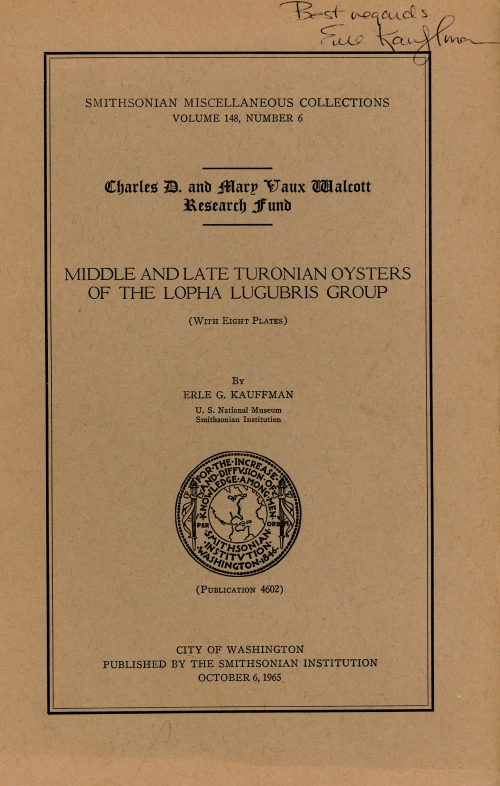
Fossil oysters are among the most common and well preserved faunal elements in Cretaceous sediments. With few exceptions, however, they have been ignored in evolutionary studies and biostra-tigraphy. Although countless species have been described, the taxonomy of the group is confusing and inconsistent. It seems ironic, therefore, that they are one of the groups most suited to modern population systematics. The present investigation attempts to demonstrate the feasibility of detailed systematic and evolutionary study, faunal zonation, and regional correlation based on oysters. It employs simple biometric analysis of large collections, from numerous localities, distinct stratigraphic levels, and diverse sediment types. I have chosen for this purpose a typical lophid species group centered around Lopha lugubris (Conrad), and including L. bellaplicata bellaplicata (Shumard), L. bellaplicata novamexicana, n. subsp., and varieties of these forms.
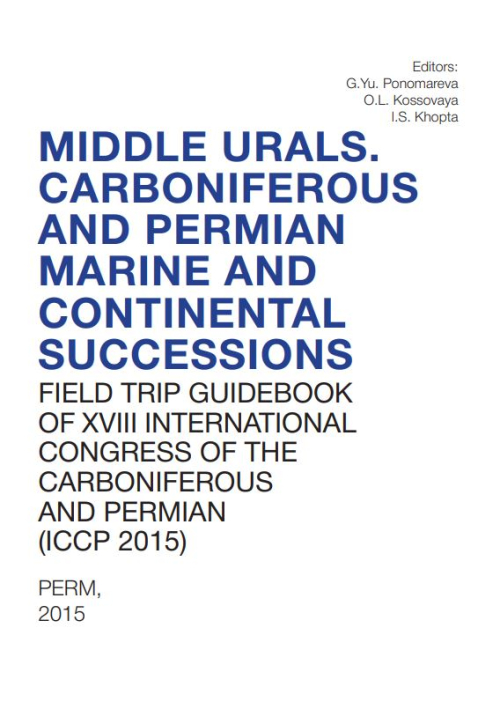
Средний Урал. Каменноугольные и пермские морские и континентальные серии: путеводитель по полевой экскурсии 18 Международного конгресса по каменноугольным и пермским отложениям
The descriptions and biostratigraphic analyses of the important type and reference sections of the Famennian, Carboniferous and Lower Permian. The foraminifers, conodonts, Rugosa corals are illustrated. For geologists and paleontologists who study Carboniferous and Permian stratigraphy, paleontology <...>
Zuverlässige Kenntnisse über die Migrationsprozesse bilden eine entscheidende Grundlage zur erfolgreichen Bewirtschaftung und zum wirksamen Schutz unterirdischer Wasserressourcen. Ihre computergestützte Simulation bildet den Kern und zugleich das Ordnungsprinzip des Buches. Sie ist die Basis sowohl für die Projektierung effektiver Maßnahmen als auch für eine optimale Prozeßführung (CAD/CAM) und setzt die Existenz simulierbarer mathematischer Prozeßmodelle voraus.
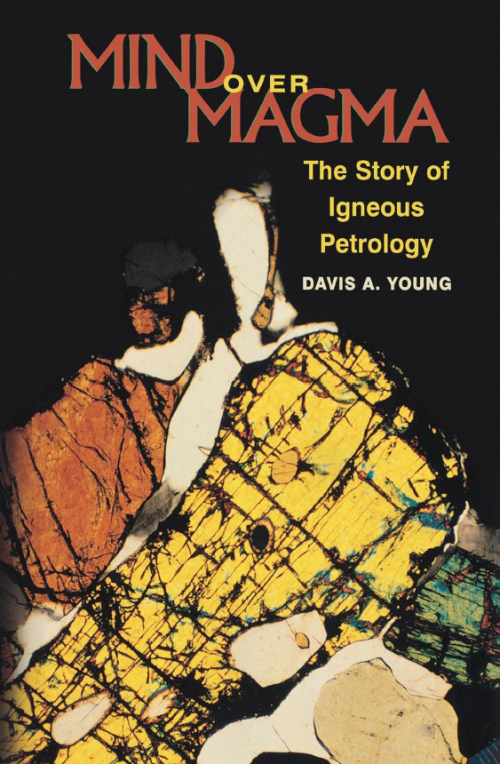
The science of igneous petrology requires three things: igneous rocks, human beings, and an appropriate methodology for the acquisition of knowledge and understanding about the igneous rocks. Magmatic activity and igneous rocks have characterized the crust throughout the 4.5 billion years of Earth history.
This revised handbook addresses mine closure, one of the themes in the Leading Practice Sustainable Development (LPSD) Program. The program aims to identify key issues affecting sustainable development in the mining industry and provide information and case studies that illustrate a sustainable basis for the industry. A number of other themed handbooks in the series complement this handbook. The leading practice handbooks integrate all phases of mineral production, from exploration to post-closure and relinquishment.
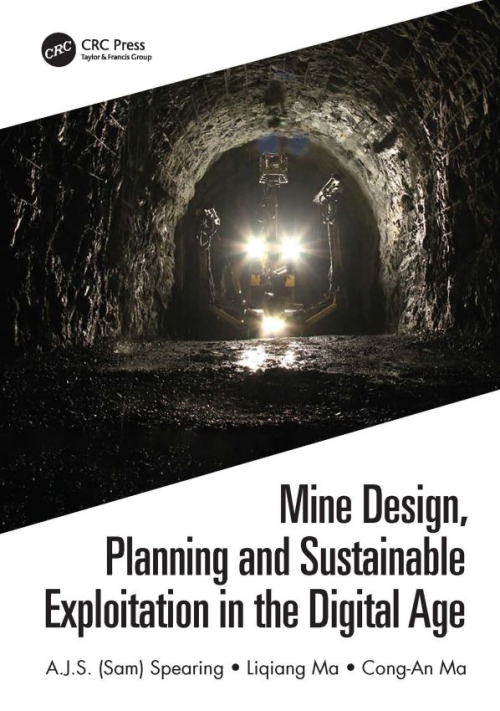
The aim of selecting a specific mining method should be to maximize the safe and cost-effective extraction of an orebody whilst minimizing the environmental impact and effectively collaborating with the local community (social license to operate) so they can benefit long term from the mining.
It is a privilege to introduce the 19th International Symposium on Mine Planning and Equipment Selection – MPES 2010 Conference Proceedings. Throughout its history, MPES symposium has been recognised as the leading forums for promoting international technology transfer, with the main focus on all aspects of mine planning, as well as mining equipment.
Ignez de Pinho Guimarães and Jefferson Valdemiro de Lima Editorial for Special Issue “Mineral Chemistry of Granitoids: Constraints on Crystallization Conditions and Petrological Evolution”
Jefferson Valdemiro de Lima, Ignez de Pinho Guimarães, José Victor Antunes de Amorim, Caio Cezar Garnier Brainer, Lucilene dos Santos and Adejardo Francisco da Silva Filho A Review of the Mineral Chemistry and Crystallization Conditions of Ediacaran–Cambrian A-Type Granites in the Central Subprovince of the Borborema Province, Northeastern Brazil
Although aspects of mineral deposit evaluation are covered in such texts as McKinstry (1948), Peters (1978), Reedman (1979) and Barnes (1980), no widely available in-depth treatment of the subject has been presented. It is thus the intention of the present book to produce a text which is suitable for both undergraduate and postgraduate students of mining geology and mining engineering and which, at the same time, is of use to those already following a professional career in the mining industry. An attempt has been made to present the material in such a way as to be intelligible to the average geologist, or engineer, who is perhaps daunted by the more mathematical approach to the subject of orereserves found in more specialist books and papers. Although most of the theory in this book is written using metric units, individual case histories are described using the units employed at each mine at the time of writing <...>
Conceptual models that describe the essential characteristics of groups of similar deposits have a long and useful role in geology. The first models were undoubtedly empirical attempts to extend previous experiences into future success. An example might be the seeking of additional gold nuggets in a stream in which one nugget had already been found, and the extension of that model to include other streams as well. Emphasis within the U.S. Geological Survey on the synthesis of mineral deposit models (as contrasted with a long line of descriptive and genetic studies of specific ore deposits) began with the collation by R. L. Erickson (1982) of 48 models. The 85 descriptive deposit models and 60 grade-tonnage models presented here are the culmination of a process that began in 1983 as part of the USGS-INGEOMINAS Cooperative Mineral Resource Assessment of Colombia (Hodges and others, 1984). Effective cooperation on this project required that U.S. and Colombian geologists agree on a classification of mineral deposits, and effective resource assessment of such a broad region required that grade-tonnage models be created for a large
number of mineral deposit types. A concise one-page format for descriptive models was drawn up by Dennis CO X, Donald Singer, and Byron Berger, and Singer devised a graphical way of presenting grade and tonnage data. Sixty-five descriptive models (Cox, 1983a and b) and 37 grade-tonnage models (Singer and Mosier, 1983a and b) were applied to the Colombian project. Because interest in these models ranged far beyond the Colombian activity, it was decided to enlarge the number of models and to include other aspects of mineral deposit modeling. Our colleagues in
the Geological Survey of Canada have preceded this effort by publishing a superb compilation of models of deposits important in Canada (Eckstrand, 1984). Not urprisingly, our models converge quite well, and in several cases we have drawn freely from the Canadian publication.