Добрый день, Коллеги. Важное сообщение, просьба принять участие. Музей Ферсмана ищет помощь для реставрационных работ в помещении. Подробности по ссылке
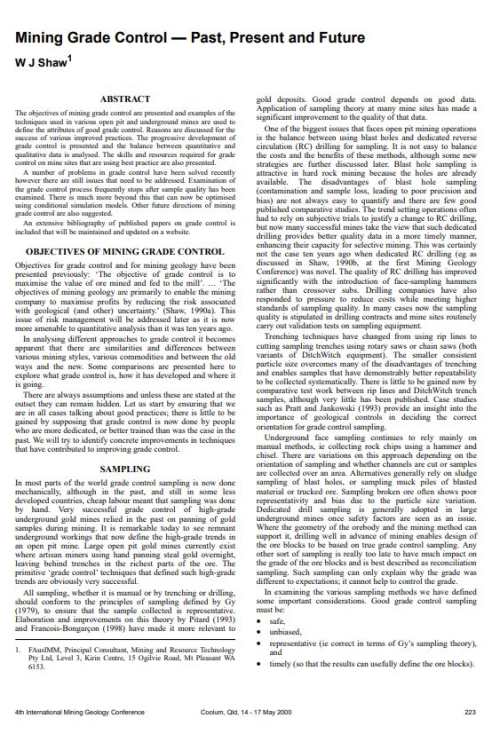
The objectives of mining grade control are presented and examples of the techniques used in various open pit and underground mines are used to define the attributes of good grade control. Reasons are discussed for the success of various improved practices.
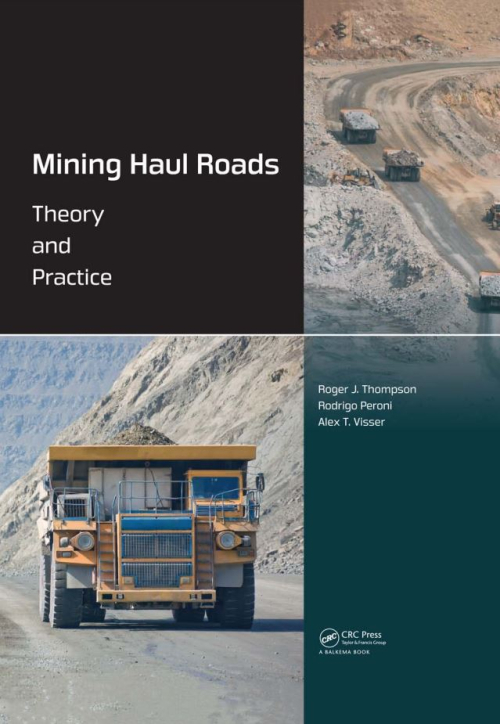
Mining operations may be classified into surface mining, where the operations are unconstrained and open to the sky, and underground operations, where mining takes place in tunnels and galleries. In both situations roads play a key role as a typical mining operation consists of moving overburden (waste material) and ore from where the material was formed or deposited, to waste dumps or beneficiation plants.
New-generation technique and technology for leakage tests А. Bulat, O. Voloshyn, S. Ponomarenko & D. Gubenko
Optimal parameters of wall bolts computation in the united bearing system of extraction workings frame-bolt support V. Bondarenko, I. Kovalevs’ka, R. Svystun & Yu.
Cherednichenko Pillars sizing at magnetite quartzites room-work N. Stupnik, V. Kalinichenko & S. Pismennyi
The calculation scheme of mathematical modeling of displacement process of a terrestrial surface by working out of coal layers M. Antoshchenko, L. Chepurnaya & M. Filatyev
Changes of overburden stresses in time and their manifestations in seismic wave indices A. Antsyferov, A. Trifonov, V. Tumanov & L. Ivanov
Specifics of percarbonic rock mass displacement in longwalls end areas and extraction workings I. Kovalevs’ka, V. Vivcharenko & V. Snigur
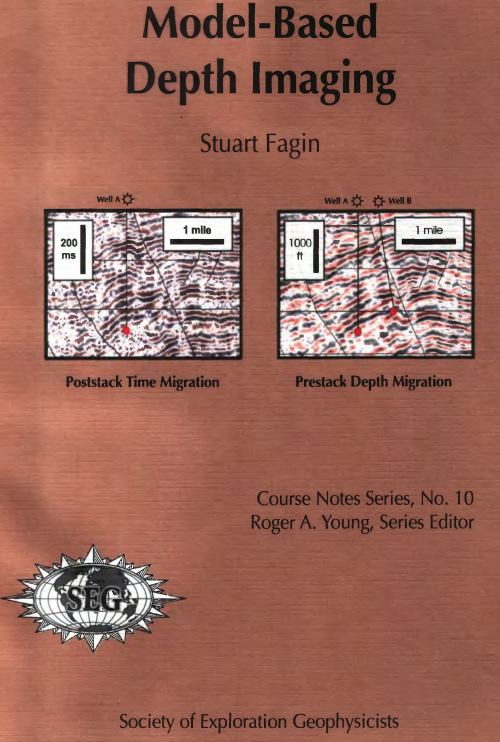
Depth imaging is changing the face of seismic technology. First and foremost, depth imaging greatly extends our ability to image geologic structure. This is true not only for highly complex structures such as thrust imbricates and subsalt structures, but also for subtle structural plays like fault shadows. In fact, since the late 1980’s, almost all structural play exploration has been stalled at the frontier where time imaging is no longer effective. In the 1990’s depth imaging has taken us through this frontier and is renewing many of these structural plays.
Quantitative modeling techniques and methods are central to the study and development of process engineering, and mineral processing is no exception. Models in mineral processing have been difficult to develop because of the complexity of the unit operations that are used in virtually all mineral recovery systems. Chief among these difficulties is the fact that the feed material is invariably a particulate solid. Many of the conventional mathematical modeling techniques that are commonly used for process equipment have limited application to particulate systems and models for most unit operations in mineral processing have unique features. Common ground is quite difficult to find. The one obvious exception is the population balance technique and this forms a central thread that runs throughout the modeling techniques that are described in this book. The models that are described are certainly incomplete in many respects, and these will be developed and refined by many researchers during the years ahead. Nevertheless, the models are useful for practical quantitative work and many have been widely used to assist in the design of new equipment and processes. Some of the newer models have not yet been seriously tested in the industrial environment <...>
Introduction: Simulations of Natural Flows in the Laboratory and on a Computer Paul F. Linden
Section I: Baroclinic-Driven Flows
1 General Circulation of Planetary Atmospheres: Insights from Rotating Annulus and Related Experiments Peter L. Read, Edgar P. Pérez, Irene M. Moroz, and Roland M. B. Young
2 Primary Flow Transitions in the Baroclinic Annulus: Prandtl Number Effects Gregory M. Lewis, Nicolas Périnet, and Lennaert van Veen
3 Amplitude Vacillation in Baroclinic Flows Wolf-Gerrit Früh
Geophysics, or physics modelling of geological phenomena, is as old and as established as geoscience itself. The statistical physics modelling of various geophysical phenomena, earthquake in particular, is comparatively recent. This book intends to cover these recent developments in modelling various geophysical phenomena, including the imposing classic phenomenon of earthquakes, employing various statistical physical ideas and techniques. This first book on statistical physics modelling of geophysical phenomena contains extensive reviews by almost all the leading experts in the field and should be widely useful to the graduate students and researchers in geoscience and statistical physics. It grew out of the lecture notes from a workshop on “Models of Earthquakes: Physics Approaches”, held in Saha Institute of Nuclear Physics, Kolkata, under the auspices of its Centre for Applied Mathematics and Computational Science in December 2005. The book is divided in four parts. In the first part, tutorial materials are
This book describes a unique approach using the principles of rock fracture mechanics to investigate the behaviour of fractured rock masses for rock engineering purposes.
Rock fracture mechanics, a promising outgrowth of rock mechanics and fracture mechanics, has developed rapidly in recent years, driven by the need for in-depth understanding of rock mass failure processes in both fundamental research and rock engineering designs.
Today, as rock engineering extends into many more challenging fields (like mining at depth, radioactive waste disposal, geothermal energy, and deep and large underground spaces), it requires knowledge of rock masses, complex coupled thermal–hydraulic–chemical–mechanical processes. Rock fracture mechanics play a crucial role in these complex coupled processes simply because rock fractures are the principal carrier and common interface <...>
Gold occurs as primary commodity in a wide range of gold deposit types and settings. In the last decade, significant progress has been made in the classification, definition and understanding of the main gold deposit types. Three main clans of deposits are now broadly defined, each including a range of specific deposit types with common characteristics and tectonic settings. The orogenic clan has been introduced to include vein-type deposits formed during crustal shortening of their host greenstone, BIF or clastic sedimentary rock sequences. Deposits of the new reduced intrusion-related clan share an Au-Bi-Te-As metal signature and an association with moderately reduced equigranular post-orogenic granitic intrusions. Oxidized intrusion-related deposits, including porphyry, skarn, and high-sulfidation epithermal deposits, are associated with high-level, oxidized porphyry stocks in magmatic arcs. Other important deposit types include Carlin, low-sulfidation epithermal, Au-rich VMS and Witwatersrand deposits. The key geology features of the ore-forming environments and the key geologic manifestations of the different deposit types form the footprints of ore systems that are targeted in exploration programs. Important progress has been made in our ability to integrate, process, and visualize increasingly complex datasets in 2D GIS and 3D platforms. For gold exploration, important geophysical advances include airborne gravity, routine 3D inversions of potential field data, and 3D modeling of electrical data. Improved satellite-, airborne- and field-based infrared spectroscopy has significantly improved alteration mapping around gold systems, extending the dimensions of the footprints and enhancing vectoring capabilities. Conventional geochemistry remains very important to gold exploration, while promising new techniques are being tested. Selection of the appropriate exploration methods must be dictated by the characteristics of the targeted model, its geologic setting, and the surficial environment. Both greenfield and brownfield exploration contributed to the discovery of major gold deposits (>2.5 moz Au) in the last decade but the discovery rates have declined significantly. Geologists are now better equipped than ever to face this difficult challenge, but geological understanding and quality field work were important discovery factors and must remain the key underpinnings of exploration programs.