Добрый день, Коллеги. Важное сообщение, просьба принять участие. Музей Ферсмана ищет помощь для реставрационных работ в помещении. Подробности по ссылке

Поиск по книгам
Автор(ы):Roy K.K.
Издание:Springer, 2008 г., 670 стр., ISBN: 978-3-540-721089-8
Язык(и)Английский
Potential Theory in Applied Geophysics / Теория потенциалов в прикладной геофизике

Since foundation of potential theory in geophysics is based on scalar and vector potentials, a brief introductory note on vector analysis is given. Besides preliminaries of vector algebra, gradient divergence and curl are defined. Gauss’s divergence theorem to convert a volume integral to a surface integral and Stoke’s theorem to convert a surface integral to a line integral are given. A few well known relations in vector analysis are given as ready references.

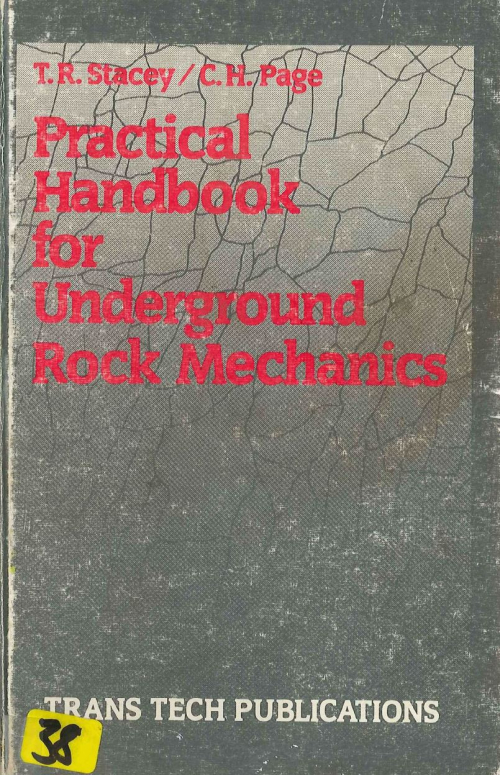
Автор(ы):Hencher S.
Издание:Spon Press, 2012 г., 465 стр., ISBN: 978-0-415-46908-1
Язык(и)Английский
Practical engineering geology / Практическая инженерная геология

Geology can be defined as the scientific study of the Earth and especially the rocks and soils that make up the Earth: their origins, nature and distribution, and the processes involved in their formation. Engineering geology then may be defined as the scientific study of geology as it relates to civil engineering projects such as the design of a bridge, construction of a dam or preventing a landslide. Engineering geologists need to identify the local rock and soil conditions at a site and anticipate natural hazards such as earthquakes so that structures can be designed, constructed and operated safely and economically. He (or she, throughout) needs to work with civil engineers and understand what they are trying to do and the constraints under which they work. His remit and responsibilities can be extensive, covering all of the Earth Sciences, including geophysics, geochemistry and geomorphology. <...>

Издание 2
Автор(ы):Hencher S.
Издание:CRC Press, 566 стр., ISBN: 978-1-032-39225-7
Язык(и)Английский
Practical engineering geology / Практическая инженерная геология

The engineering geologist should be able to identify soil and rocks by visual examination and to interpret the geological history and structure of a site as set out in Chapter 4. He needs to be able to describe these rocks and soils both geologically and, in an unambiguous way, in terms of their relative strengths. He also must have knowledge of geomorphological processes, be able to interpret terrain features and hydrogeological conditions. Principles of hydrogeology are dealt with in Chapter 5.

Автор(ы):Alexandre P.
Издание:Springer, 2021 г., 123 стр., ISBN: 978-3-030-72452-8
Язык(и)Английский
Practical geochemistry / Практическая геохимия

This textbook had an unusual inception. I had just started writing another one, on isotopes in the natural sciences, and was discussing it with a colleague, who surprised me and startled me. He commented that, in substance, a book about isotopes is all very nice, but that I should write a general introductory geochemistry book. I was taken aback: there are plenty of these out there already! From Brownlow [1] to Albarede [2], Misra [3], and White [4], to name just a few, there are several excellent general introductory geochemistry textbooks available, widely used by university students around the world. And once we include more specialized books, for instance about isotopes or geochronology, then we can fill not only shelves, but whole library sections with them! And really, I pointed out to my colleague that they are mostly very good, thorough, and complete textbooks, so the topic is well covered.


ТематикаГеохимия
МеткиГеохимия (611)
Автор(ы):Clark I.
Издание:2001 г., 119 стр.
Язык(и)Английский
Practical geostatistics / Практическая геостатистика

This book is aimed at postgraduates, undergraduates and workers in industry who require an introduction to geostatistics. It is based on seven years of courses to undergraduates, M.Sc. students and short courses to industry, and reflects the problems which have been encountered in presenting this material to mining engineers and geologists over a wide age range, and with an equally wide range of numerical ability. The book would provide the foundation of a course of about 20 to 30 hours, or of a five-day short course.

Автор(ы):Clark I.
Издание:Elsevier, 1987 г., 129 стр., ISBN: 0-85334-843-X
Язык(и)Английский
Practical geostatistics / Практическая геостатистика
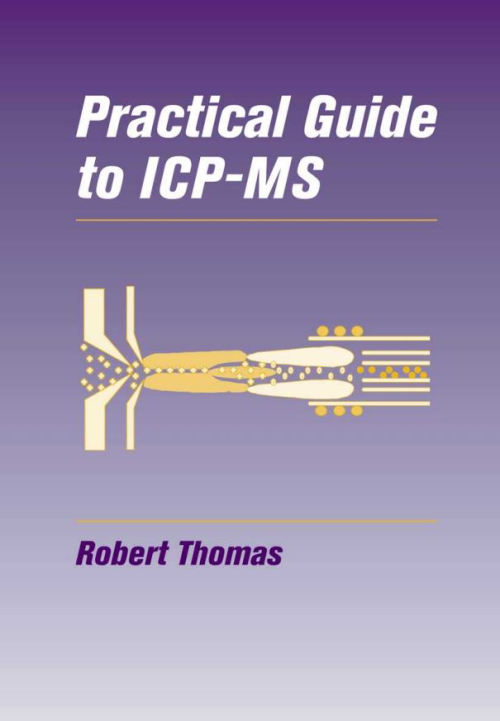
Автор(ы):Thomas R.
Издание:Marcel Dekker Inc, 2004 г., 338 стр., ISBN: 0-8247-5319-4
Язык(и)Английский
Practical guide to ICP-MS / Практическое руководство по ICP-MS

Milestones mark great events: walking on the moon, analyzing rocks on Mars, flying a self-propelled, heavier-than-air machine, using a Bunsen burner for flame atomic spectrometry, and perhaps employing an atmospheric pressure plasma mass spectrometry as an ion source for solution mass spectrometry. Yes, inductively coupled plasma mass spectrometry (ICP-MS) ranks among the milestone inventions of spectrochemical analysis during the 20th century.

Автор(ы):Snowden D.V.
Издание:1999 г., 20 стр.
Язык(и)Английский
Practical interpretation of mineral resource and ore reserve classification guidelines / Практическое применение руководства по классификации минеральных ресурсов и рудных запасов

The Australasian Code for reporting of Mineral Resources and Ore Reserves (JORC Code) was updated in 1999 (JORC 1999). This paper has been written as an update of Snowden (1996 and 1997) to recognise the large amount of experience with the use of the JORC Code gained by industry over the last four years, and describes the latest developments in technology and toolkits for risk classification.

Автор(ы):Snowden D.V.
Издание:1999 г., 15 стр.
Язык(и)Английский
Practical interpretation of resource classification guidelines / Практическое применение руководства по классификации минеральных ресурсов

Mineral resource and ore reserve classification defines the risk associated with quoted resource tonnes and grades, allowing the interested party to make a judgement as to the ‘worth’ of the resource statement. The JORC Code and Guidelines (1992) are now well entrenched as the foundation upon which gold and base metal deposits in particular are publicly reported. There are three categories of resource, namely Measured, Indicated or Inferred reflecting decreasing levels of confidence. The ore reserve, that is the economically mineable part of the resource, is classified as Proven or Probable and can only be drawn from the Measured and Indicated resource categories. <...>

808.06