Добрый день, Коллеги. Важное сообщение, просьба принять участие. Музей Ферсмана ищет помощь для реставрационных работ в помещении. Подробности по ссылке
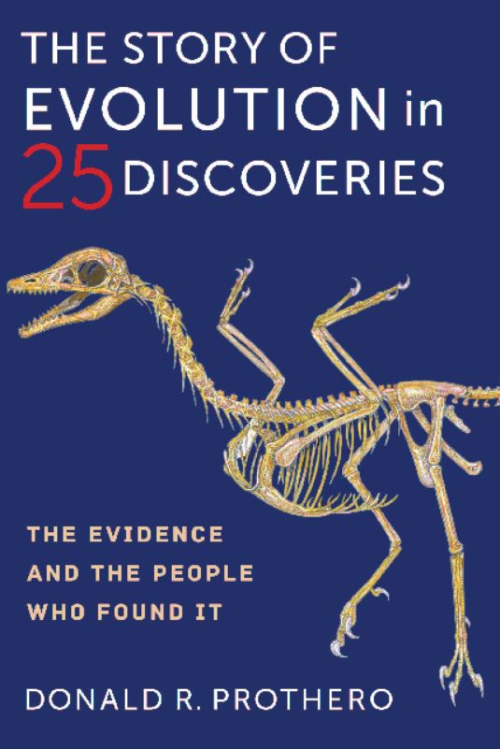
Since the publication of my book Evolution: What the Fossils Say and Why It Matters (Columbia University Press, 2007; second edition, 2017), the fields of evolutionary biology and paleontology have made many new discoveries. Meanwhile, the evidence for evolution has been piling up and accumulating since publication in 1859 of the revolutionary book, On the Origin of Species, by Charles Darwin. Some of that evidence is discussed in my first evolution book, but much of it is new, or mentioned only briefly in that book. <...>
The Gull Rapids area, Manitoba, lies on the Superior craton margin and forms part of the Superior Boundary Zone (SBZ), a major collisional zone between the Archean Superior craton and the adjacent Paleoproterozoic Trans-Hudson Orogen. There are two main rock assemblages at Gull Rapids: orthogneisses (of possible Split Lake Block origin) and supracrustal rocks (metavolcanic and metasedimentary). Late, crosscutting felsic and mafic intrusive bodies (mostly dykes and sills) are used to constrain the relative and absolute timing of deformation and metamorphism.
The writer wishes to acknowledge the help of Dr. R. E. Grim of the Geology Department of the University of Illinois for supervising this work and for reading and criticizing this paper. Grateful acknowledgement is also made to Dr. W. F. Bradley of the Illinois Geological Survey and to Dr. G. W. Clark of the Chemistry Department of the University of Illinois for helpful suggestions in the theoretical and experimental X-ray work; to Dr. D. T. Englis of the Chemistry Department of the University of Illinois for allowing the use of the microphotometer; to Dr. M. M. Knechtel of the U. S. Geological Survey for making possible the field study of the Wyoming bentonite deposits; to the Baroid Sales Division of the National Lead Company for granting the fellowship under which this work was done and for supplying many of the samples which were used for study and to the geologists and chemists of that organization for allowing the use of their physical property determinations. <...>
The inflow performance of a well represents the ability of that well to give up fluids. A typical plot is noted in Figure 1.1 and shows how the shapes of the curves may differ. For example, flowing pressure vs rate may be essentially a straight line (water drive and/or pressure above saturation pressure) or it may curve (solution gas’ drive and flow below the bubble point). The ability of a well to give up fluids depends to a great extent upon the type of reservoir and drive mechanism, and such variables as reservoir pressure, permeability, etc. It is common practice to assume that inflow into a particular well with constant conditions is directionally proportional to (Pr). Note curve A in Fig. 1.1 which is a straight line. Normally this is true only for flowing pressures above the bubble point. <...>
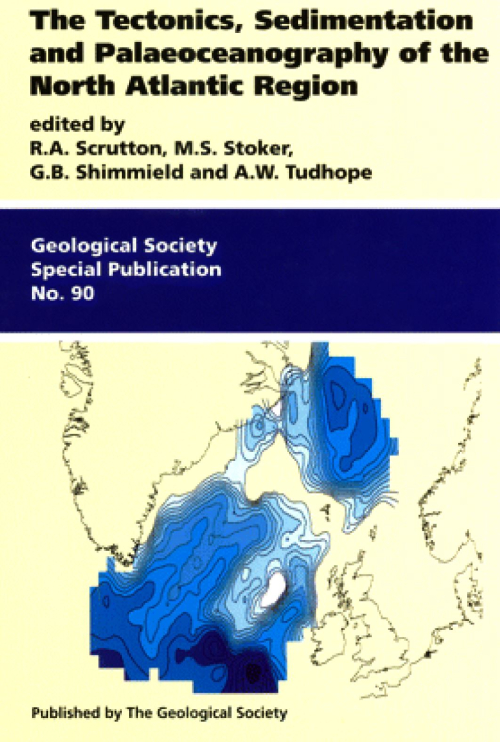
Extensional tectonics in the Jeanne d'Arc Basin, offshore Newfoundland: Implications for the timing of break-up between Grand Banks and Iberia
Sequence stratigraphic response to Aptian-Albian rifting in conjugate margin basins: a comparison of the Jeanne d'Arc Basin, offshore Newfoundland, and the Porcupine Basin, offshore Ireland
Early Tertiary evolution and sequence stratigraphy of the Faeroe-Shetland Basin: implications for hydrocarbon prospectivity
1. The timing and location of major ore deposits in an evolving orogen: the geodynamic context
2. Global comparisons of volcanic-hosted massive sulphide districts
3. Tectonic controls on magmatic-hydro-thermal gold mineralization in the magmatic arcs of SE Asia
4. Timing and tectonic controls in the evolving orogen of SE Asia and the western Pacific and some implications for ore generation
5. Correlating magmatic-hydrothermal ore deposit formation over time with geodynamic processes in SE collision Europe
6. Contrasting Late Cretaceous with Neogene ore provinces in the Alpine-Balkan-Carpathian-Dinaride collision belt
7. Auriferous arsenopyritepyrite and stibnite mineralization from the Siflitz-Guginock Area (Austria): indications for hydrothermal activity during Tertiary oblique terrane accretion in the Eastern Alps
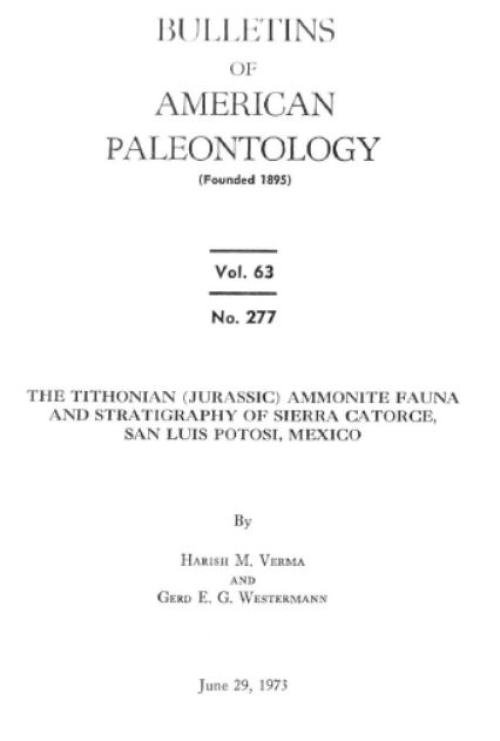
The Jurassic and Cretaceous of Sierra Catorce, which yielded the mol-luscan fauna for the first large paleontological monograph on Mexico (Castillo and Aguilera, 1895), comprises from the base: the Oxfordian Huizachal formation and Zuloaga Limestone and the Kimmeridgian to Tithonian La t aja Formation which is overlain by the Valanginian Taraises Formation. I he richly fossiliferous La Caja (— 53 m) is divided into two members. The I I Pastor Member, below, contains two condensed fossiliferous units, one near the base and one near the top; the El Verde Member, above, has sporadically distributed ammonite fauna. <...>
Key moments in European history can be identified with relative ease, whereas periods of formation or disintegration require more lengthy analysis and argument to define their significance. In prehistory, on the other hand, rarely can significant moments be identified, although with the characterisation of broad periods, change, gradual or otherwise, can be described. The essential outlines of the periods discussed in this book are well known; they pivot around one clearly identifiable event, the cataclysmic eruption of the Santorini (Theran) volcano sometime in the late 17th or late 16th century B.C.
Ultrabasic rocks of bahiaitic type occur as bands in amphibolite at Tovqussaq. It is concluded that the ultrabasics are formed in situ in the amphibolite in zones of stress concentration. Stress of high order in connection with chemically, and mechanically generated heat is regarded to be the cause of the metamorphic differentiation that was responsible for the formation of the ultrabasic rocks. From the results of the examination of the hypersthenes of the Tovqussaq region it seems reasonable to assume that the 'hypersthene may be used as a geological thermometer. Ultrabasic rocks are described from other pre-cambrian areas and the peri-dotites of orogenic zones are discussed. The interpretation of the ultrabasic rocks as being the products of metamorphic, rather than magmatic processes seems to have general validity. Finally, the peridotites are compared with eclogites vvhicii were probably formed in a similar way.