Добрый день, Коллеги. Важное сообщение, просьба принять участие. Музей Ферсмана ищет помощь для реставрационных работ в помещении. Подробности по ссылке
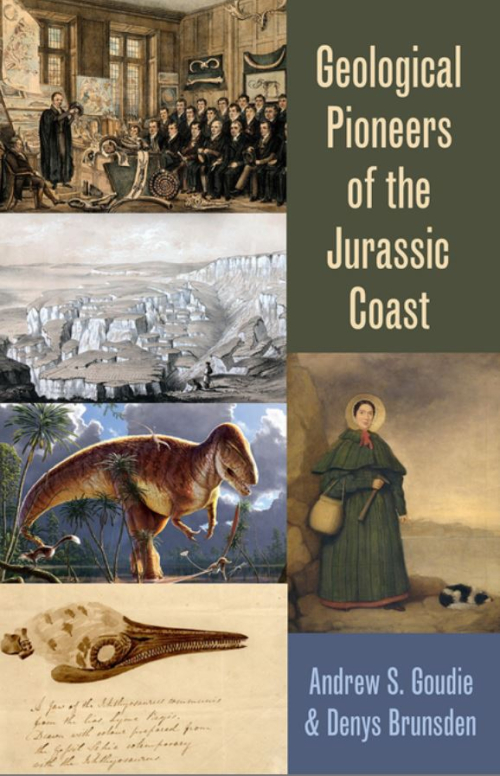
The purpose of this book is to recount the lives and achievements of some of the great geologists and geomorphologists who have studied the Jurassic Coast, England’s only natural World Heritage Site, and have made it the Mecca that it has become for all those interested in Earth Science since the late seventeenth century. We classify these individuals into six groups: the earliest investigators, the fossil collectors, the geologists of the so-called Golden Age, the geological mappers, gifted stratigraphers and palaeontologists, and remarkable amateurs and some other stars.
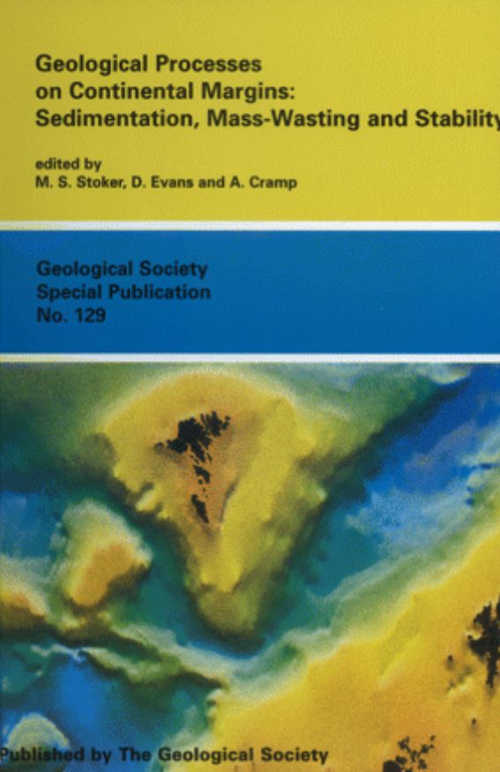
EVANS, D., STOKER, M. S. & CRAMP, A. Geological processes on continental margins: sedimentation, mass-wasting and stability: an introduction mass-wasting and stability: an introduction VAN WEERING, TJ. C. E., NIELSEN, Z., KENYON, N. H., AKENTIEVA, K. & KUIJPERS, A. H. Large submarine slides at the NE Faeroe continental margin REEDER, M., ROTHWELL, R. G., STOW, D. A. V., KAHLER, G. & KENTON, N. H. Turbidite flux, architecture and chemostratigraphy of the Herodotus Basin, Levantine Sea, SE Mediterranean DOBSON, M. R., O'LEARY, L. R. & VEART, M. Sediment delivery to the Gulf of Alaska: source mechanisms along a glaciated transform margin HOLMES, R. W., LONG, D. & DODD, L. R. Large scale debrites and submarine landslides on the Barra Fan, W of Britain
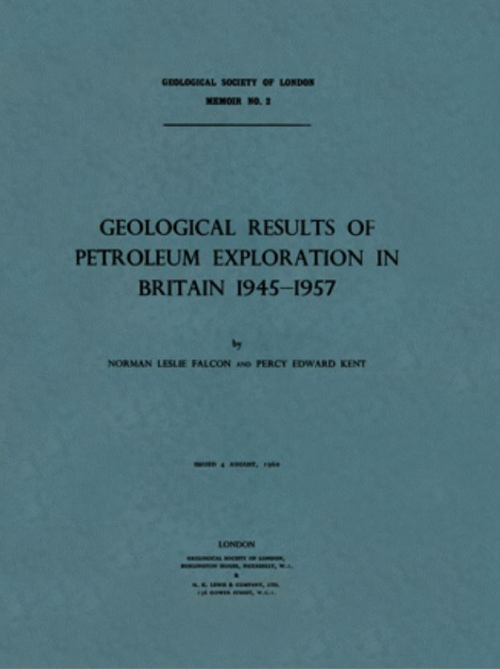
The main geological results of exploration by the British Petroleum Company Limited since 1945 are outlined, and the general basis of operations described. In the south of England new data emphasize the progressive development of the Wealden area as a Jurassic depositional basin, on a surface of mainly Devonian and Carboniferous rocks. In the East Midlands and West Yorkshire more information on the relation of Carboniferous basins is now available, and extensive occurrences of contemporary and intrusive basic igneous rocks are described.
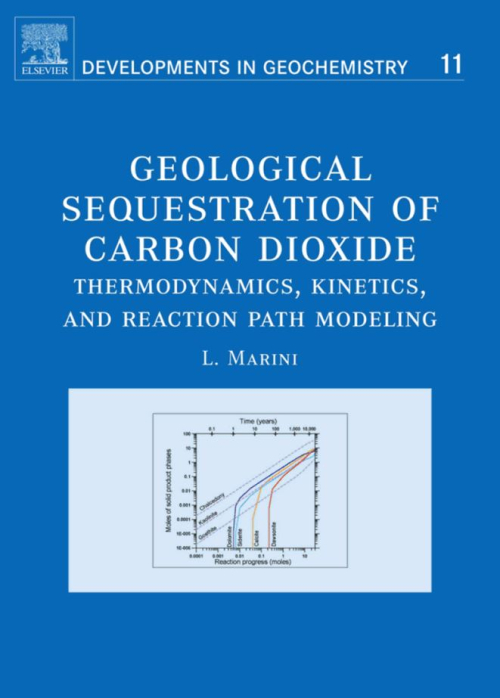
Carbon dioxide was first identified around the middle of the 18th century by Joseph Black (1728-1799), a Scottish, in the framework of his studies to get the degree in medicine at the University of Edinburgh. Results of Black's chemical investigations were published in 1756 under the title Experiments upon Magnesia Alba, Quick-lime, and Some Other Alcaline Substances (Leicester, 1956). <...>
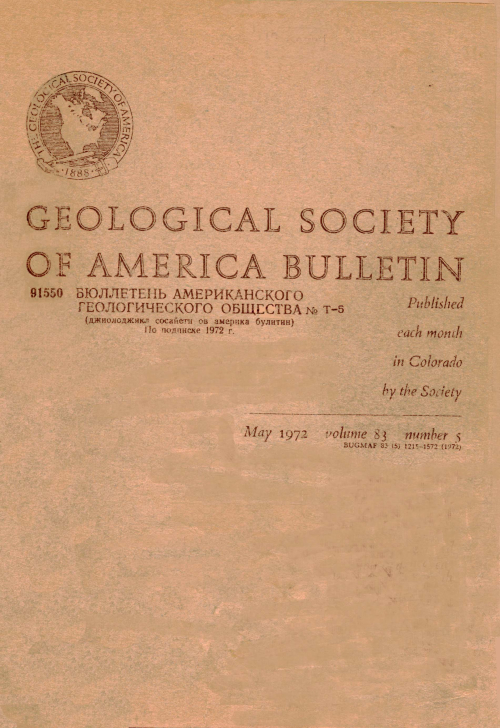
Precambrian Belt Basin of Northwestern United States: Its Geometry, Sedimentation and Copper Occurrences Jack. E. Harrison Heat Flow and Continuous Seismic Profiles in the Cayman Trough and Yucatan Basin A.J. Erickson, С.E. Helsley, and G. Simmons Coarse Sediment Transport by Flood Flows on Knik River, Alaska W.C. Bradley, R.K. Fahnestock, and E. T. Rowehamp Chemical and Mineralogical Variations during Prograde Metamorphism, Great Smoky Mountains, North Carolina and Tennessee G. C. Allen and P. C. Ragland Palynological Evidence Bearing on the Ordovician—Silurian Paraconformity in Ohio J. Gray and A. J. Boucot Sediments of the Continental Margin off the Eastern United States J.D. Milliman, О.H. Pilkpy, and D.A. Ross
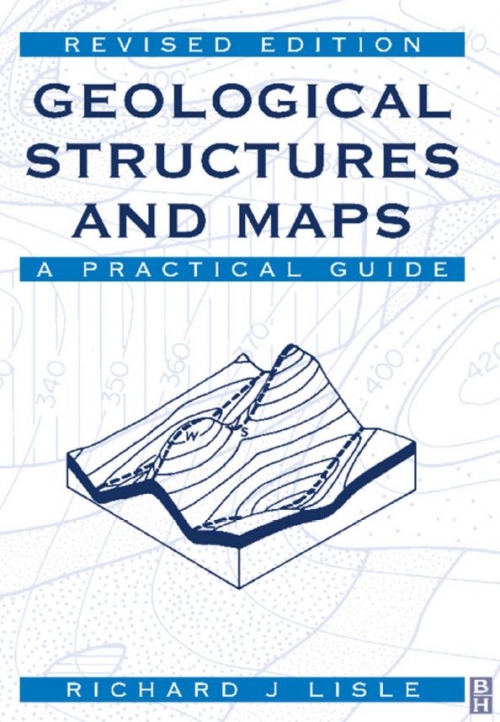
GEOLOGICAL maps represent the expression on the earth’s surface of the underlying geological structure. For this reason the ability to correctly interpret the relationships displayed on a geological map relies heavily on a knowledge of the basic principles of structural geology.
The great classical tectcnicians, such as Suess, Argand and Wegener, att empted (0 und erstand. without the benefi t of the plate tecto nic theory. the workings of the Ea rth engine as a who le, and the part that deformation played in that who le. In my student days, I deri ved great pleasure and benefit from De Sitter's textbook on str uctural geology where the study of geo logical structures and major Earth structure received more or less equal rreatment. Since then, until relatively recently, there has been a tendency for str uctu ral geology to become more parochial and inward-looking, despite the enormous advances in understand ing that the plate tectonic revolutio n has brought abo ut. I have longfelt the need, therefo re, for a bo ok tha t would give students a tectonic overview in which geo logical structures and deformation could be seen in their context as byproducts of the plate tectonic system <...>
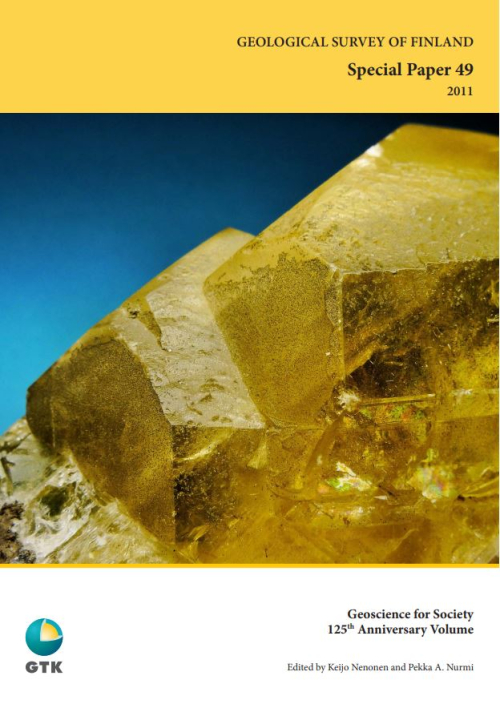
Geoscience has a long and glorious history in Finland (Tanskanen 1986, Haapala 2005). The first geological studies were already performed and academic dissertations written at the Academy of Turku, the first university in Finland founded in 1640. The first Chair in Geology and Mineralogy was established at the University of Helsinki in 1852. During the historical period of the Enlightenment, geoscience received more emphasis and funding, as it could show direct benefits to society and its rulers. The beginning of geological survey activities in Finland was closely connected with the father of Finnish mineralogy, Nils Nordenskiöld, who operated as the General Intendant of the Mining Council during 1823–1855. He was the one who showed initiative and pursued the beginning of geological surveys and exploration funded by the government. His initiatives were fulfilled by founding a geological office to the government’s Mining Council in 1870. The work of geologists and surveyors was effective: they mapped much of Southern Finland and made some promising findings of gold and other commodities <...>
ГеологическаяслужбаФинляндии.Геологияипетрологияруд основных расслоенных интрузий Аканваара иКойтелайнени расслоенного комплекса Кейвица-Сатоваара,севернаяФинляндия
The Akanvaara and Koitelainen intrusions, ca 2440 Ma old, represent a group of cratonic mafic layered intrusions (aged from 2500 to 2440 Ma) of the Fennoscandian (Baltic) Shield. These intrusions, which show all the standard types of igneous layering, host deposits of chromite, vanadium, titanium, platinum-group elements (PGE) and gold. The cumulate stratigraphy in Akanvaara and Koitelainen reflects both normal tholeiitic fractionation and superimposed intermittent selective and wholesale contamination by anatectic salic melt (now granophyre) from the floor and the roof, and by refractory residual phases after anatexis of the roof rocks.