Добрый день, Коллеги. Важное сообщение, просьба принять участие. Музей Ферсмана ищет помощь для реставрационных работ в помещении. Подробности по ссылке
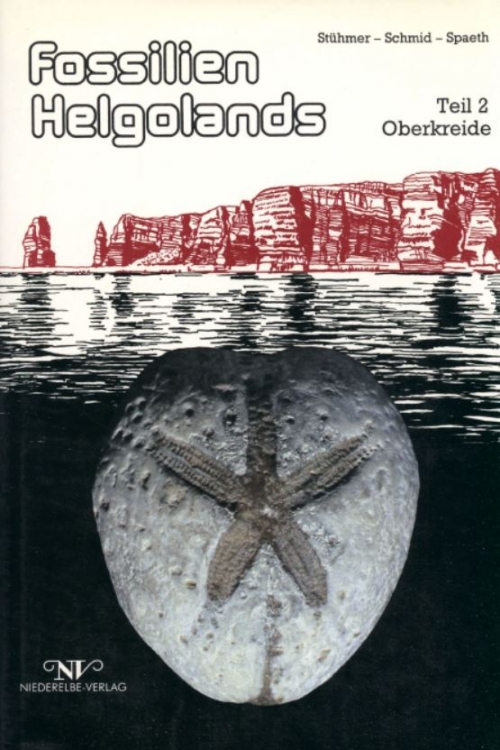
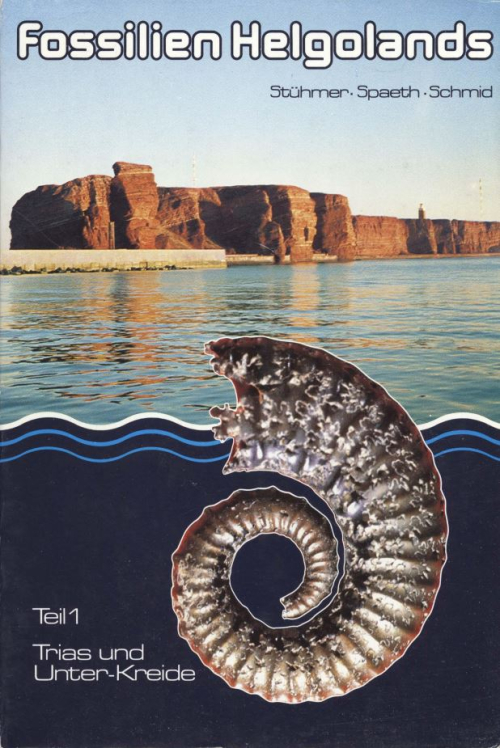
Rund 50 km weit vor den Küsten Schleswig-Holsteins und Niedersachsens erhebt sich in der Deutschen Bucht die Insel Helgoland. Die untermeerische Ausdehnung dieser einzigen deutschen Felseninsel in der Nordsee erstreckt sich erheblich weiter, als das über die Wasserlinie aufragende rote Gesteinsmassiv der Hauptinsel vermuten läßt. <...>
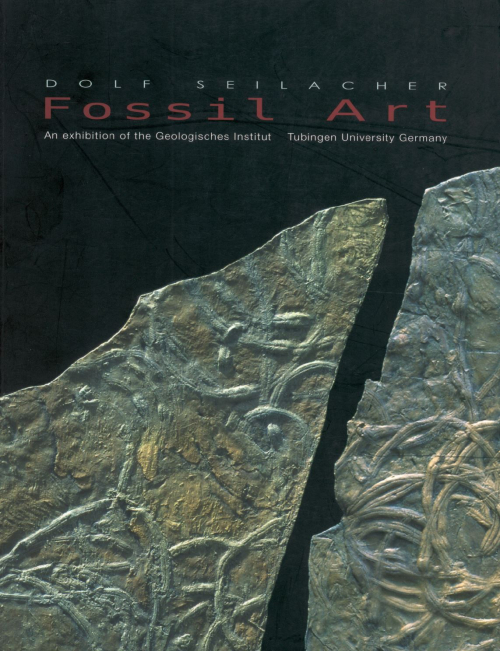
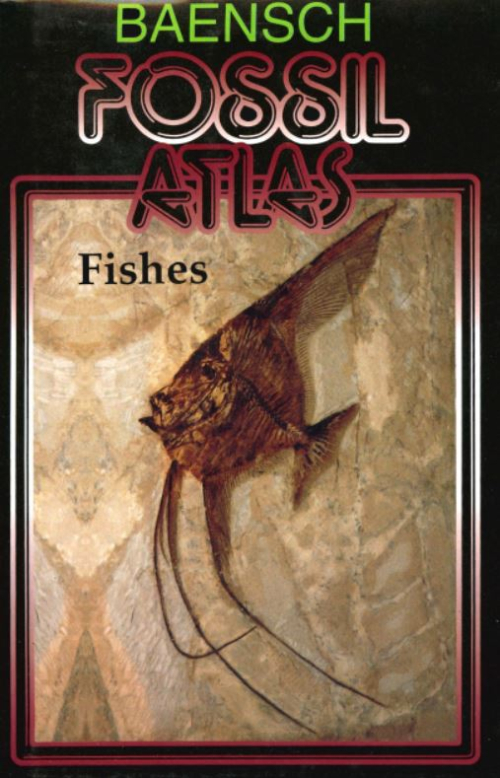
Fossil collecting is a fascinating hobby which has grown considerably in popularity over the last few decades. Its appeal is understandable; it combines the excitement of discovery with the practical skills of collecting and preparing specimens, and the academic challenge of identifying fossil finds. There are few other branches of science in which a beginner can make a serious contribution to the knowledge of our planet’s remarkable prehistory
Fossil collecting is a fascinating hobby which has grown considerably in popularity over the last few decades. Its appeal is understandable; it combines the excitement of discovery with the practical skills of collecting and preparing specimens, and the academic challenge of identifying fossil finds. There are few other branches of science in which a beginner can make a serious contribution to the knowledge of our planet’s remarkable prehistory. <...>
The Earth is more than four billion years old. Its history is documented by the rocks that form the Earth’s crust, which lies beneath our feet and can be structurally complex in some places. The time that has elapsed since the formation of our planet is infinitely long when compared to the age of the human lineage, and several methods make it possible for us to measure geological time. The study of fossils—the remains of animals and plants preserved in sedimentary rocks—allows us to recognize the order of events that have formed the Earth.
The characteristic white limestones that form the Chalk were deposited across much of northern Europe during the Upper Cretaceous, 100 to 65 million years ago. Although the Chalk is not normally rich in fossils, the preservation is often exquisite and specimens are relatively easy to prepare out from the matrix using needles and brushes or an air abrasive. This explains why the Chalk has been, and continues to be, a favourite formation of many fossil collectors. The extensive collections housed in museums are the result of persistent collecting over more than 150 years, though few were collected with the necessary detailed stratigraphical horizoning that is so essential to today's study of the Chalk fauna.
A work of this nature depends very heavily on one's fellow workers. We take this opportunity to thank those many people who have assisted us with advice, facilities, the loan of specimens, and helpful discussions over many years. We apologize to anyone who may have inadvertently been missed here. We especially would like to mention staff of the Natural History Museum, Dr С Patterson, Dr A. Milner, Dr M. K. Howarth, Dr P. D. Taylor, Dr A. Smith, Dr N. J. Morris and Mr R. J. Cleevely for allowing us to examine specimens in their care. Also, many thanks go to Dr B. M. Cox (British Geological Survey) and Dr J. K. Wright (Royal Holloway and Bedford College) for allowing us to use photographs. Professor J. H. Callomon (University College, London), Dr G. Chancellor (Peterborough City Museum), Mr Alan Dawn (Stamford), Dr D. T. Donovan (University College, London), Dr Tim Palmer (University of Wales at Aberystwyth), Dr Mike Barker (Portsmouth Polytechnic), Ms Liz Harper (Open University), Dr F. T. Fursich (University of Wurtzburg), and Dr R. G. Clements, Dr J. W. Faithfull and Mr R. Branson (Leicester University) all offered helpful advice. At Leicester Museum Dr M. A. Taylor and Dr A. Cruickshank offered helpful discussions on aspects of marine reptile paleobiology. We have also drawn heavily on data from Dr A. Williams and Dr I. St. J. Fisher, both of whom have made important contributions to our knowledge of the geochemistry of the Oxford Clay. Ms S. Button, Mr J. Taylor and Mr A. Lloyd assisted with diagrams. Mrs D. Туе and Mrs W. D. Hebden helped type manuscripts. Dr Alistair Crame (British Antarctic Survey) and Dr Ed. Jarzembowski acted on behalf of the Palaeontological Association.
With the decision to produce this guide book we very rapidly found that specimens of many of the fossils were not represented in our collections. To remedy this we undertook several field visits to enrich the collections at Leicester University and the Open University. We therefore thank the London Brick Company for permission to visit their brick pits, and in particular thank Mr P. Furr (LBC Bletchley), Mr Keith Morton (LBC Stewartby) and Mr A. Robinson (LBC Calvert) for their help.
Geophysical methods are based on studying the propagation of the different physical fields within the earth’s interior. One of the most widely used fields in geophysics is the electromagnetic field generated by natural or artificial (controlled) sources. Electromagnetic methods comprise one of the three principle technologies in applied geophysics (the other two being seismic methods and potential field methods). In this book the author presents both the foundations and the most recent achievements of electromagnetic geophysical methods in the framework of a unified systematic exposition.
It is easier to give examples of geological structures than to define them. The word 'structure' means 'that which is built or constructed'. Structural geologists use the word to signify something that has been produced by deformation; that is, by the action of forces on and within the Earth's crust. Structures consist of a geometric arrangement - of planes, lines, surfaces, rock bodies, etc. The form and orientation of this arrangement reflect the interaction between the deforming forces and the preexisting rock body. <...>
In the Preface to the first edition of this book, published in 1983, I explained my reasons for writing the book as follows.
There are already a number of excellent books covering the various aspects of Structural Geology. Among these are works by Hobbs, Means and Williams, Jaeger and Cook, Price, Ramsay, and Turner and Weiss, all of which I have used extensively in preparing this book and have listed therein as further reading. However, these textbooks are rather advanced for many students commencing the study of geology, and for many years I have been aware of the lack of a suitable elementary book which I could recommend to beginners. My purpose in writing this book, therefore, was to supplement existing textbooks by providing an introduction to the subject which will convey enough information over the whole field of structural geology to stimulate the reader’s interest and encourage further study of more advanced textbooks and scientific papers.’
By the end of this book students should be well grounded in the basic techniques of geological map analysis. This is primarily an exercise in 3-D geometry coupled with a need to appreciate the time element which is central to the study of geology. Geology is emphatically four-dimensional! The level of the text is introductory, targeted at first-year university students, though it may be of use to those in the last year or so of secondary education and should be a useful reference work throughout an undergraduate course.