Добрый день, Коллеги. Важное сообщение, просьба принять участие. Музей Ферсмана ищет помощь для реставрационных работ в помещении. Подробности по ссылке
The Cajon Borate Deposit lies within Bacanora Minerals Ltd’s Magdalena Basin Project area in the state of Sonora, Northern Mexico. The Magdalena project consists of 2 concession blocks covering a total of 15,508 hectares. The concessions are 100% owned by Bacanora’s Mexican subsidiary: Minera Sonora Borax S.A. de C.V., subject to a 3% royalty to a Rio Tinto subsidiary and a 3% gross over-riding royalty to Colin Orr-Ewing. The property is road accessible and located 17 kilometres east of the town of Magdalena de Kino and has excellent access from that centre, either by rail or truck, to local markets for borate or to overseas markets from the port at Guaymas. <...>
Since the earliest days of NMR, it has been recognized that the technique can provide information on matters concerning the disposition of atoms in the unit cells of crystals. Thus, the distance between protons in the water molecules of gypsum, CaSO4 · 2H2O, was determined by Pake and reported as 1.58 A in 1948. However, the term NMR crystallography has only recently come into common usage, and even now causes raised eyebrows within some parts of the diffraction community. On the other hand, the power of solid-state NMR to give crystallographic information has considerably increased since the CPMAS suite of techniques was introduced in 1976.
Noble Gas Geochemistry discusses the fundamental concepts of using noble gases to solve problems in the earth and planetary sciences. The discipline of noble gas geochemistry has become a major branch in the earth and planetary sciences. It offers a powerful and unique tool in resolving problems such as the origin of the solar system, evolution of the planets, Earth formation, mantle evolution and dynamics, atmospheric degassing and evolution, ocean circulation, dynamics of aquifer systems, and numerous applications to other geological problems.
This volume is the ninth of a series of review volumes published jointly under the banner of the Mineralogical Society of America and the Geochemical Society. The newly titled Reviews in Mineralogy and Geochemistry has been numbered contiguously with the previous series, Reviews in Mineralogy. <...>
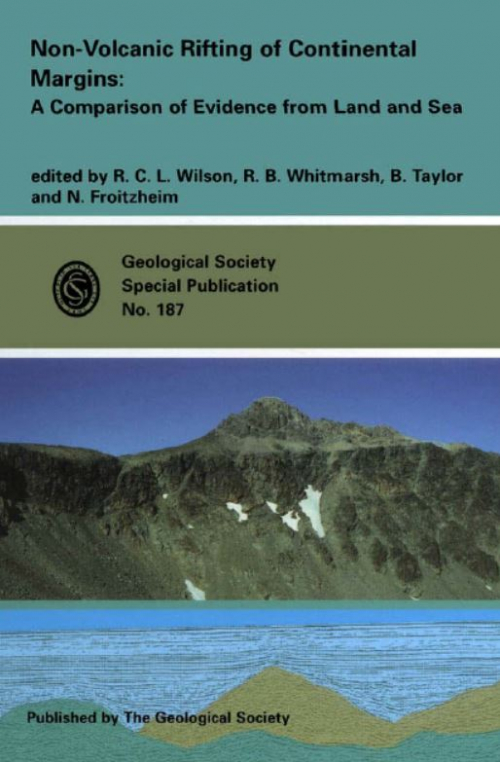
The idea for a special publication on nonvolcanic margins arose during Ocean Drilling Program (ODP) Leg 173 off West Iberia, prompted by ODP's decision to cease publishing the scientific results volumes as hard copy. The Shipboard Scientific Party favoured an open scientific meeting and associated publication. But they did not want to produce a book that was a scientific results volume by another name, but rather contribute to a publication that had a much broader scope than just reporting results obtained off West Iberia.
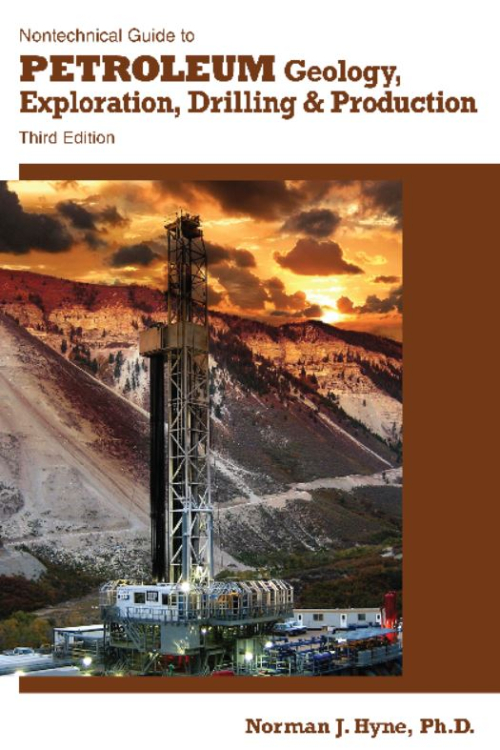
Both crude oil and natural gas occur naturally in subsurface deposits. Crude oil is a black liquid that is sold to refineries to be refined into products such as gasoline and lubricating oil. Natural gas is a colorless, odorless gas that is sold to gas pipelines to be transported and burned for its heat content. There are many different types of crude oils and natural gases, some more valuable than others. Heavy crude oils are very thick and viscous and are difficult or impossible to produce.