Добрый день, Коллеги. Важное сообщение, просьба принять участие. Музей Ферсмана ищет помощь для реставрационных работ в помещении. Подробности по ссылке
Feasibility studies are required in the pre-production stages to justify the continued investment of money. Usually a scoping study is followed by one or more prefeasibility studies which reflect the increasing level of technical and economic knowledge gained at the various earlier stages.
Water is among the most essential resources that sustain Earth’s ecosystems, but these systems are currently under threat due to land use and climate change. Assessing the impact of this global change on water security and ecosystem’s functions is not only the key concern of the United Nation’s Sustainable Development Goals, playing a key role in sustainable development of society, but also the most important research focus in “Future Earth” and Earth critical zone research.
This volume, Observing the volcano world: volcanic crisis communication, focuses at the point where the ‘rubber hits the road’, where the world of volcano-related sciences and all its uncertainties meet with the complex and ever-changing dynamics of our society, wherever and whenever this may be.
This is one of a Series of Volumes on Oceanography. It is designed so that it can be read on its own, like any other textbook, or studied as part of S330 Oceanography, a third level course for Open University students. The science of oceanography as a whole is multidisciplinary. However, different aspects fall naturally within the scope of one or other of the major ‘traditional1 disciplines.
This book is concerned with the role of the ocean in the climate system, with a focus on physical processes relevant to scientifically describing and understanding that role. The two chapters in this Part I offer a context for the discussion extending over the nearly 30 chapters that follow. We are introduced in this Part to notions of the huge space and time scales over which ocean phenomena play a role in climate. Such phenomena extend from the millimeter and seconds relevant for irreversibly mixing heat, carbon, and other tracers, to the global scales of sea level changes, water mass variations, and air–sea interactions that comprise natural and anthropogenic climate fluctuations. We also encounter evidence seen for rather large fluctuations in the paleo record, and consider future climate scenarios suggested through computer simulations. <...>
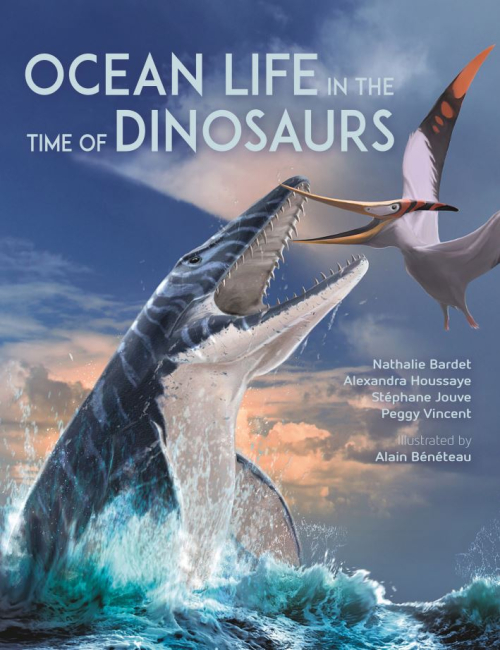
Fossil. The mere word kicks most people’s imagination into high gear. It mostly evokes dinosaurs, of course—the stars of the Mesozoic era. And yet, because those famous reptiles are already the focus of many other books, in this book we will discuss different but no less fascinating kinds of animals: the ones that many people refer to incorrectly as “marine dinosaurs.
Although the ocean covers more than two thirds of the Earth's surface, the processes of accumulation of sediments on the seafloor have been insufficiently studied. For many years, the efforts of researchers were concentrated on the study of the continents. By studying sediments in various parts of the oceans in space and in time, I will attempt to establish the processes governing the formation of sediments in the oceans as a whole. The present monograph is my second book on the subject of the formation and accumulation of oceanic deposits. In 1972, a book entitled Sedimentation in the ff/orM
The bright midday sun glinted off the calm waters of the Inland Sea and silhouetted the long, sinuous form of a huge mosasaur lying motionless amid the floating tangle of yellow-green seaweed. At 20 years old, more than 30 feet in length, and weighing over a ton, the adult mosasaur was almost full grown and was much larger than any of the fishes or sharks that lived in the shallow seaway.
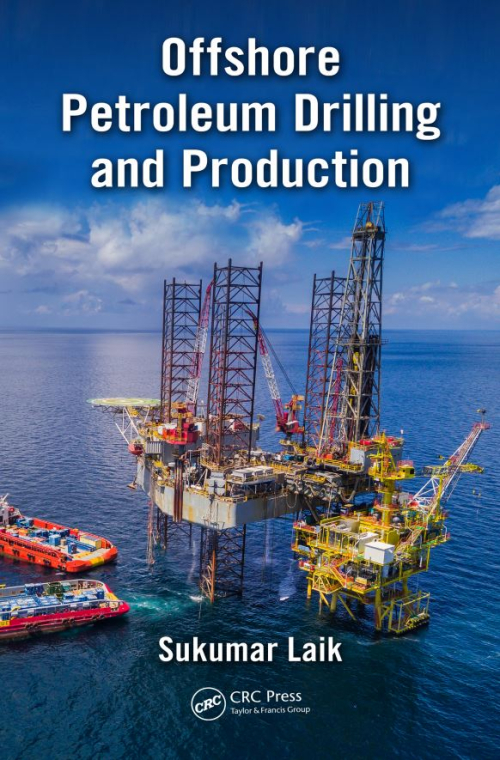
The 1970s was a decade when the quest to understand petroleum drilling and production operations offshore acquired a new impetus. It was a time when global oil production surged on the heels of a rapidly growing world economy. India joined the bandwagon of offshore oil producing nations in 1974 following a momentous discovery of Bombay High. While oil producing nations rejoiced at the acquisition of captive resources, the lack of special techniques and equipment loomed onerously.