Добрый день, Коллеги. Важное сообщение, просьба принять участие. Музей Ферсмана ищет помощь для реставрационных работ в помещении. Подробности по ссылке
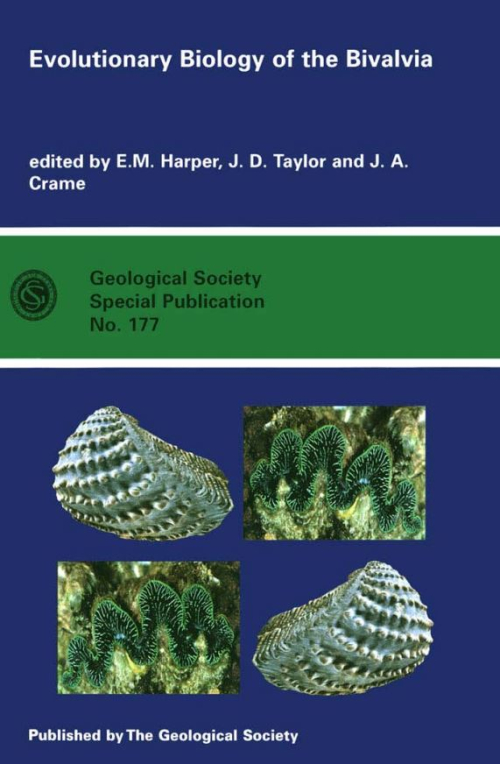
Harper, E. M., Taylor, J. D. & Crame, J. A. Unravelling the evolutionary biology of the Bivalvia: a multidisciplinary approach Steiner, G. A. & Hammer, S. Molecular phylogeny of the Bivalvia inferred from 18S rDNA sequences with particular reference to the Pteriomorphia Campbell, D. C. Molecular evidence on the evolution of the Bivalvia Carter, J. G., Campbell, D. C. & Campbell, M. R. Cladistic perspectives on early bivalve evolution Cope, J. C. W. A new look at early bivalve phylogeny Skelton, P. W. & Smith, A. B. A preliminary phylogeny for rudist bivalves: sifting clades from grades Harper, E. M., Hide, E. A. & Morton, B. Relationships between the extant Anomalodesmata: a cladistic test Lydeard, C., Minton, R. L. & Williams, J. D. Prodigious polyphyly in imperilled freshwater pearly-mussels (Bivalvia: Unionidae): a phylogenetic test of species and generic designations
Before launching into four thousand million years (4 Ga) of time travel we should have an introductory briefing. The aim of this book is to provide an up-to-date synthesis of Earth history as indicated by the geological record and constrained by isotopic, geophysical, sedimentological and geochemical data. However, recent single crystal dating with the ion microprobe has revealed the existence of zircons over 4.0 Ga old, and this takes us into the pregeological period before the formation of the oldest known rocks, which have an isotopic age of 3.96 Ga. Therefore, we shall first consider briefly this missing gap of about 600 Ma before starting on the geological record. <...>
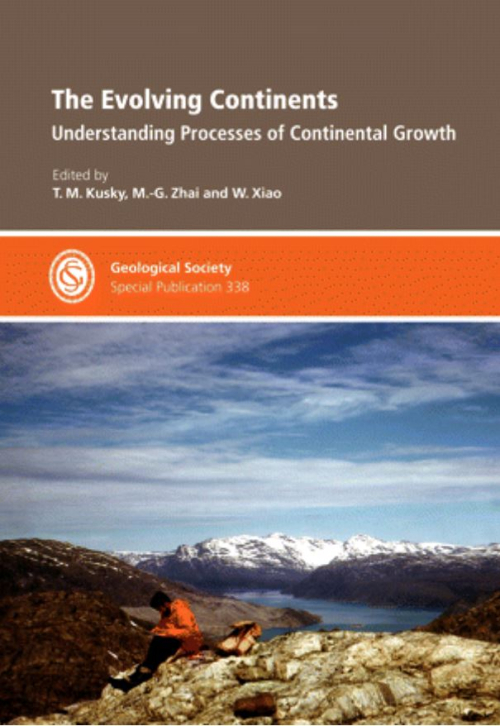
This Special Publication of the Geological Society of London, The Evolving Continents: Understanding Processes of Continental Growth, is dedicated to the long and spectacular career of Brian F. Windley, a pioneer in the application of uniformitarianism to Precambrian rocks, a leader in linking field geology with the geochemistry and geochronology of different orogenic units with global tectonic history, and an overall polymath who has had a deep influence on many fields of geological sciences.
The earth is a dynamic planet, always changing and evolving. Its oceans and atmospheres have transformed radically since the earth was formed 4.6 billion years ago. Its crust is in constant motion, pulling continents apart and slamming them together to produce the great earthquakes and volcanoes. The core and mantle beneath are also flowing and moving, causing the changes in the crust above and in the magnetic field that shields us all from cosmic radiation.
The Analyzing Development Issues (ADI) team and research participants express their gratitude to the Bunong indigenous people in the Mondulkiri villages of Gati and Pou Rapeth for sharing with us their experiences of interacting with the corporate mining companies in their midst. The researchers would also like to thank the local authorities and mining officials in Mondulkiri who cooperated in this study. Tien Hien Tang and Vaing Samrith from Development and Partnership in Action (DPA) assisted the fieldwork in Gati village in Keo Seima district.
An IUGS Geological Heritage Site is a key place with geological elements and/or processes of international scientific relevance, used as a reference, and/or with a substantial contribution to the development of geological sciences through history
The African continent preserves a long geological record that covers almost 75% of Earth’s history. The Pan-African orogeny (c. 600–500 Ma) brought together old continental kernels (or cratons such as West African, Congo, Kalahari and Tanzania) forming Gondwana and subsequently the supercontinent Pangea by the late Palaeozoic (Fig. 1). The break-up of Pangea since the Jurassic and Cretaceous, primarily through the opening of the Central Atlantic (e.g. Torsvik et al. 2008; Labails et al. 2010), Indian (e.g. Gaina et al. 2007; Mu¨ller et al. 2008; Cande et al. 2010) and South Atlantic (e.g. Torsvik et al. 2009) oceans and the complicated subduction history to the north gradually shaped the African continent and its surrounding oceanic basins. Many first-order questions of African geology are still unanswered.
This book contains information obtained from highly regarded resources. Reprinted material sources are indicated. Copyright for individual articles remains with the authors as indicated and published under Creative Commons License. A Wide variety of references are listed.
“Because it’s there.” That was George Mallory's answer to the question why he wanted to climb the highest mountain in the world (Fig. 1.1). The Everest pioneer had an accident a few hundred metres below the summit during his third expedition in 1924. Even though he did not conquer the summit, his legendary saying made him immortal. Since time immemorial, mountains have fascinated people: large and mighty, visible from afar and yet unapproachable (Figs. 1.2 and 1.3), another world in front of which one feels small and insignificant and yet close to heaven.
It is virtually impossible to overstate the importance of the successful development of shale gas and tight oil to the energy economy of the United States. According to data tracked by the US Energy Information Agency (EIA), by 2009, shale gas had led the United States from natural gas shortages to becoming the largest producer of natural gas in the world (USEIA, 2018). Liquefied natural gas (LNG) terminals constructed on the US East Coast at the start of the 21st century for energy imports were converted less than a decade later to export LNG to Europe and elsewhere. The Marcellus Shale in the Appalachian basin is now the most productive natural gas formation in the United States (Fig. I.1). <...>