Добрый день, Коллеги. Важное сообщение, просьба принять участие. Музей Ферсмана ищет помощь для реставрационных работ в помещении. Подробности по ссылке

Поиск по книгам
Редактор(ы):Астахов В.И.
Издание:Cambridge Scholars Publishing, 2020 г., 607 стр., ISBN: 978-1-5275-4928-9
Язык(и)Английский
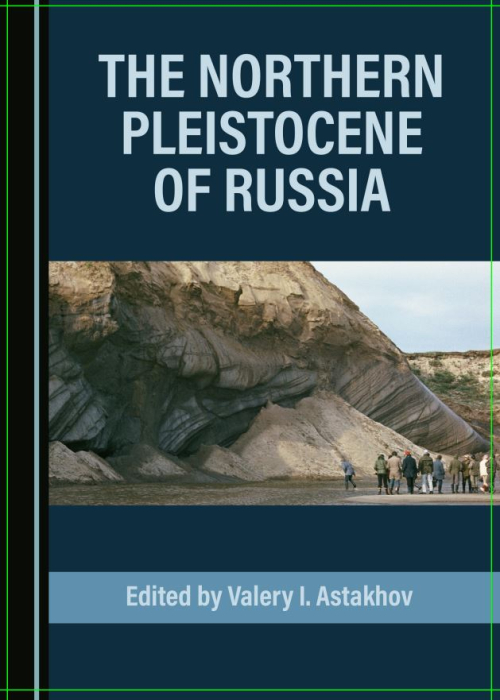
The northern pleistocene of Russia / Северный плейстоцен России

Chapter I. Mode of Pleistocene Glaciation 1. Geological Evidence of Kara Sea Centre of Inland Glaciation
Valery I. Astakhov
2. New Data on the Latest Activity of Kara-shelf Glaciers in West Siberia
Valery I. Astakhov
3. Middle Pleistocene Glaciations of the Russian North
Valery I. Astakhov
4. Pleistocene Ice Limits in Russian Northern Lowlands
Valery I. Astakhov
Chapter II. Peculiarities of Sedimentary Record
5. The ‘Ice Hill’: An Example of Retarded Deglaciation in Siberia
Valery I. Astakhov and Lia L. Isayeva 
6. The Last Glaciation in West Siberia
Valery I. Astakhov

Выпуск 46
Автор(ы):Joralemon P.
Издание:Economic geology, 1951 г., 44 стр.
Язык(и)Английский
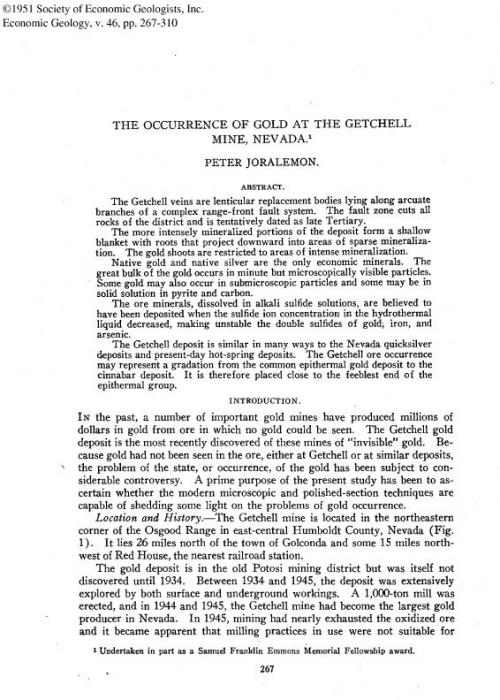
The occurrence of gold at the Getchell mine, Nevada

The Getchell veins are lenticular replacement bodies lying along arcuate branches of a complex range-front fault system. The fault zone cuts all rocks of the district and is tentatively dated as late Tertiary.

The more intensely mineralized portions of the deposit form a shallow blanket with roots that project downward into areas of sparse mineralization.    The gold shoots are restricted to areas of intense mineralization.

Native gold and native silver are the only economic minerals. The great bulk of the gold occurs in minute but microscopically visible particles. Some gold may also occur in submicroscopic particles and some may be in solid solution in pyrite and carbon.

The ore minerals, dissolved in alkali sulfide solutions, are believed to have been deposited when the sulfide ion concentration in the hydrothermal liquid decreased, making unstable the double sulfides of gold-, iron, and arsenic.

The Getchell deposit is similar in many ways to the Nevada quicksilver deposits and present-day hot-spring deposits. The Getchell ore occurrence may represent a gradation from the common epithermal gold deposit to the cinnabar deposit. It is therefore placed close to the feeblest end of the epithermal group.


Автор(ы):Dominy S.C., Platten I.M.
Издание:2001 г., 24 стр.
Язык(и)Английский
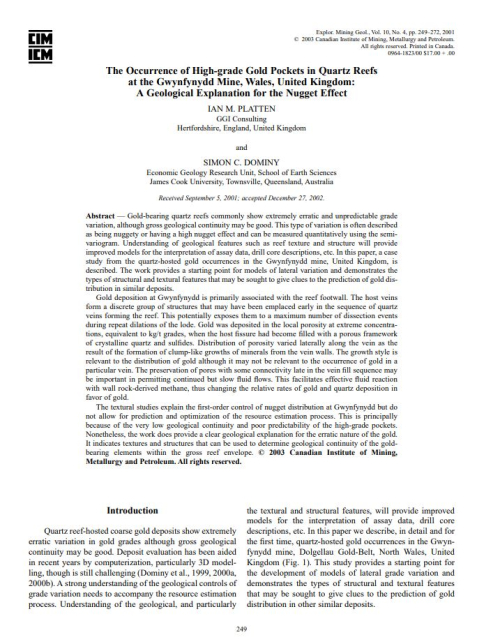
The occurrence of high-grade gold pockets in quartz reefs at the Gwynfynydd Mine, Wales, United Kingdom: A geological explanation for the nugget effect / Проявление золоторудных гнезд в окварцованных зонах шахты Гвинфинидд

Проявление золоторудных гнезд в окварцованных зонах шахты Гвинфинидд: геологическое объяснение эффекта самородка

Gold-bearing quartz reefs commonly show extremely erratic and unpredictable grade variation, although gross geological continuity may be good. This type of variation is often described as being nuggety or having a high nugget effect and can be measured quantitatively using the semivariogram. Understanding of geological features such as reef texture and structure will provide improved models for the interpretation of assay data, drill core descriptions, etc.

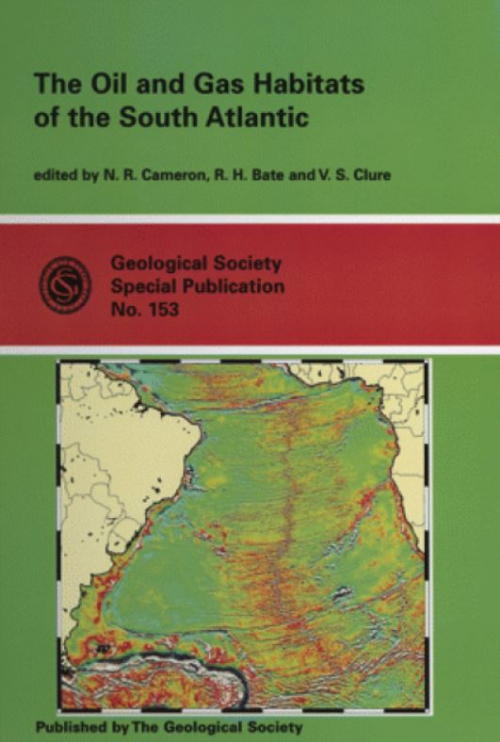
Редактор(ы):Bate R.H., Cameron N.R., Clure V.S.
Издание:The Geological Society of London, 1999 г., 472 стр., ISBN: 1-86239-030-4
Язык(и)Английский
The oil and gas habitats of the South Atlantic / Области развития нефти и газа в Южной Атлантике

For the purposes of this volume, the South Atlantic comprises the Atlantic Ocean south of a direct line from Tangier (Morocco) to the Guyana-Venezuela border and north of a direct line from Cape Town (South Africa) and Cape Horn (Argentina). At the end of 1997 this region contained 4.3% of the world's total discovered oil reserves and 2.4% of the world's total discovered gas reserves (Petroconsultants 1998).
On the basis of the 1997 figure, six countries - Brazil, Argentina, Nigeria, Gabon, Congo (Brazzaville) and Angola - host 96.3% of the region's oil reserves and 92.1% of the region's gas reserves. Figure 1 illustrates the geographical distribution of the reserve splits, Table 1 gives the details.<...>

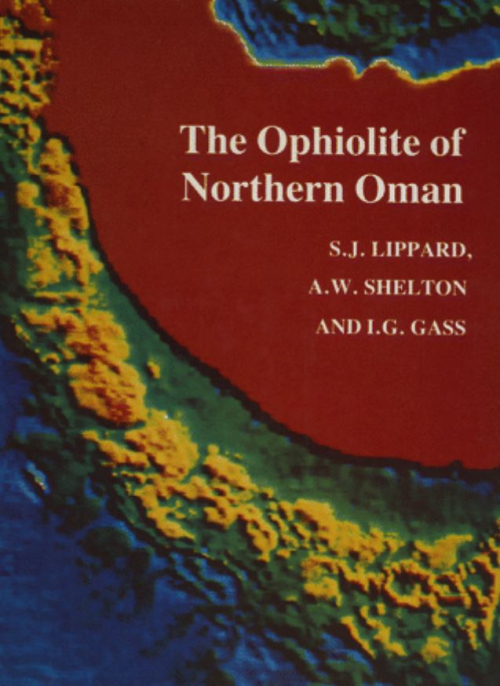
Издание:Blackwell, 1986 г., 187 стр., ISBN: 0-632-01587-X
Язык(и)Английский
The ophiolite of Northern Oman / Офиолиты Северного Омана

This memoir is based on studies by Open University (OU) and associated personnel between 1975-85 and represents a fullsome precis, correlation and evaluation of work presented in eleven Ph.D. theses and numerous scientific publications. In total, it represents some 48 man-years of effort. The names of persons associated with the research project at various times, together with their status and affiliation, are listed in the table below. 

Издание 3
Автор(ы):Рамдор П.
Издание:Pergamon Press, 1969 г., 1178 стр.
Язык(и)Английский (перевод с немецкого)
The ore minerals and their intergrowths / Рудные минералы и их срастания

The study of rocks and other mineral associations, especially of ore deposits, starts out from the purely descriptive. The composition of these materials, their geologic position in the most comprehensive sense, and their gross and fine structures and textures, etc., must be established. Further research must explain, first the "How"', then the "Why". The latter must comprise the interpretation of the association of materials and geologic position as well as each detail of texture and structure, even the smallest. On the knowledge obtained, one must build further and must generalize. Things of which the "Why" can be explained directly will serve in the explanation of others. In doing this the danger of circular reasoning will exist ; criticism is therefore invariably necessary, self-criticism most of all. The interpretations must, if possible, be reached along several paths, and the validity of the various paths must be carefully considered. <...>

Издание 2
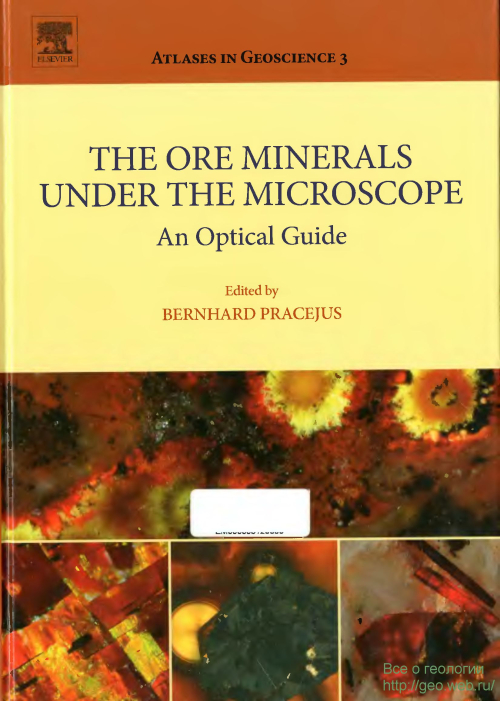
Редактор(ы):Pracejus B.
Издание:Elsevier, Amsterdam, 2015 г., 888 стр., ISBN: 978-6-155-52863-6
Язык(и)Английский
The ore minerals under the microscope: an optical guide. Atlas / Рудные минералы под микроскопом: оптическое руководство. Атлас

This book would not have been written were it not for the everlasting patience of my dear wife Ramona, who tolerated my long-lasting mental absence when working behind the microscope or the connected computer and for tirelessly assisting me with data compilation. Our son Andre also took part in the data gathering, for which I am quite thankful. Many polished sections had not been looked after for decades and D. Lange (FU Berlin) provided much needed help in upgrading severely oxidised samples.

Since it is very difficult to gather the vast amount of different ore minerals included in this atlas, I am very much indepted to a number of colleagues, who provided many uncommon samples. In particular, the use of Ramdohr's famous research collection, now held at the Mineralogy Department of Heidelberg University, as well as the samples from the BGR and the private collection of T. Witzke proved to be valuable sources for many specimens. All published photo contributions are thankfully referenced below and cited in the text with the respective abbreviation in square brackets

Источник:geo.web.ru
Автор(ы):Kemp T.S.
Издание:Oxford university press, 2005 г., 341 стр., ISBN: 0-19-850760-7
Язык(и)Английский
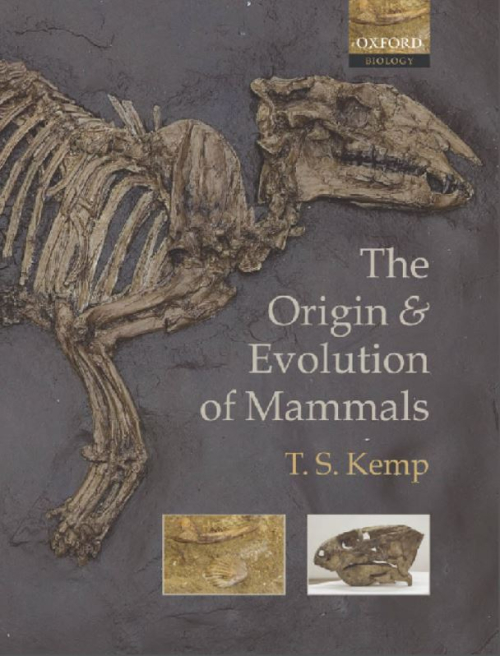
The origin and evolution of mammals / Происхождение и эволюция млекопитающих

There are about 4,600 species of animals today that are called mammals because, despite an astonishing diversity of form and habitat, they all share a long list of characters not found in any other organisms, such as the presence of mammary glands, the single bone in the lower jaw, and the neocortex of the forebrain. This makes them unambiguously distinct from their closest living relatives, and their unique characters together define a monophyletic taxon, the class Mammalia. Three subgroups are readily distinguished amongst the living mammals.

Автор(ы):Sears D.W.G.
Издание:Cambridge University Press, 2004 г., 22 стр., ISBN: 978-0-511-33722-2
Язык(и)Английский
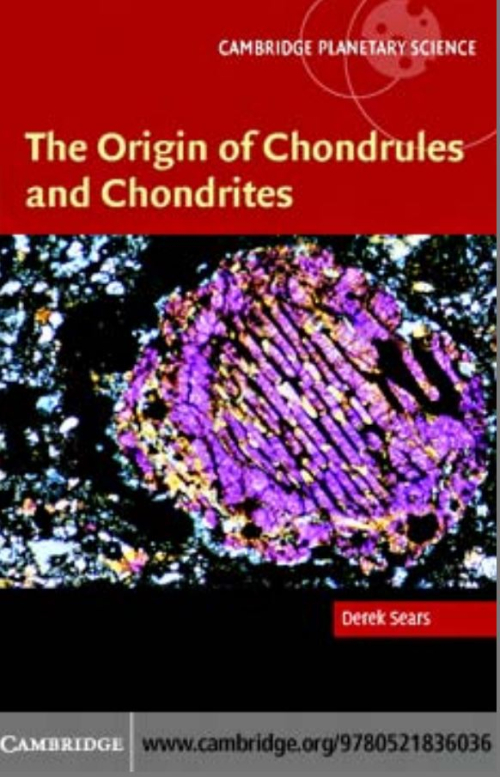
The origin of chondrules and chondrites / Происхождение хондр и хондритов

The ancients observed and collected rocks that fell from the sky. There are reports of the Romans, Greeks, Egyptians, Japanese, and the natives of North America and other countries collecting them, using them for trade, and putting them in places of importance such as tombs. Modern-age research on such objects opened with the pioneering work of Howard and Bournon (Fig. 1.1).

1321.17