Добрый день, Коллеги. Важное сообщение, просьба принять участие. Музей Ферсмана ищет помощь для реставрационных работ в помещении. Подробности по ссылке
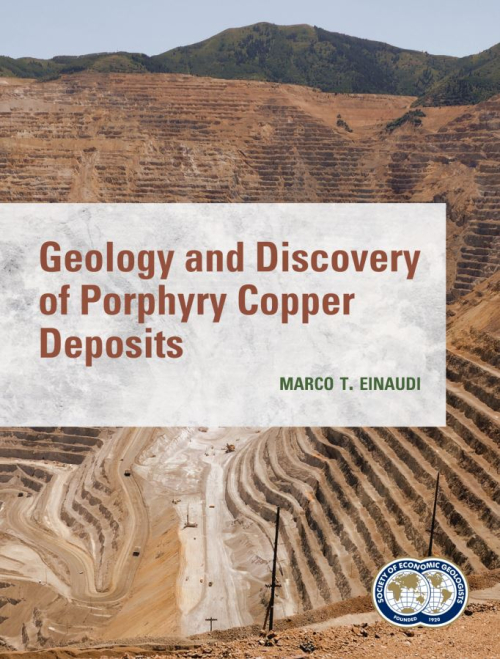
Porphyry deposits arguably represent the most economically important class of nonferrous metallic mineral resources. These magmatic-hydrothermal deposits are characterized by sulfide and oxide ore minerals in vein-lets and disseminations in large volumes of hydrothermally altered rock (up to 4 km3). Porphyry deposits occur within magmatic belts worldwide and are spatially, temporally, and genetically related to hypabyssal dioritic to granitic intrusions that are porphyritic and that commonly have an aplitic groundmass. The preponderance are Phanerozoic and most typically Cenozoic in age, which reflects the dominance of magmatism related to subduction tectonics and preservation in young rocks.
Геологические и экологические характеристики медно-порфировых месторождений: акцент на перспективах их освоения в бассейне Бристольского залива (Аляска)
This report is prepared in cooperation with the Bristol Bay Watershed Assessment being conducted by the U.S. Environmental Protection Agency. The goal of the assessment is to help understand how future large-scale development in this watershed may affect water quality and the salmon fishery. Mining has been identified as a potential source of future large scale development in the region, especially because of the advanced stage of activity at the Pebble prospect. The goal of this report is to summarize the geologic and environmental characteristics of porphyry copper deposits in general, largely on the basis of literature review. Data reported in the Pebble Project Environmental Baseline Document, released by the Pebble Limited Partnership in 2011, are used to enhance the relevance of this report to the Bristol Bay watershed.
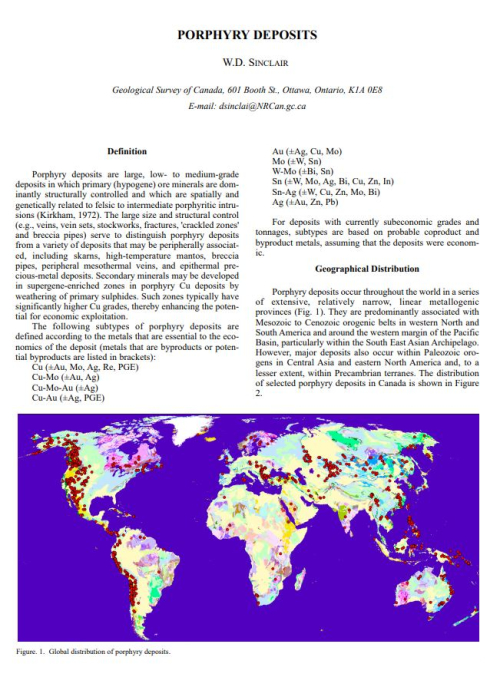
Porphyry deposits are large, low- to medium-grade deposits in which primary (hypogene) ore minerals are dominantly structurally controlled and which are spatially and genetically related to felsic to intermediate porphyritic intrusions (Kirkham, 1972). The large size and structural control (e.g., veins, vein sets, stockworks, fractures, 'crackled zones' and breccia pipes) serve to distinguish porphyry deposits from a variety of deposits that may be peripherally associated, including skarns, high-temperature mantos, breccia pipes, peripheral mesothermal veins, and epithermal precious-metal deposits. Secondary minerals may be developed in supergene-enriched zones in porphyry Cu deposits by weathering of primary sulphides. Such zones typically have significantly higher Cu grades, thereby enhancing the potential for economic exploitation. <...>
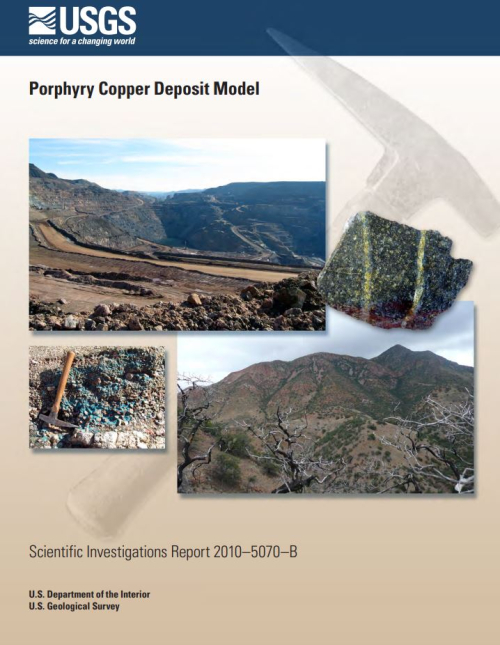
This report contains a revised descriptive model of porphyry copper deposits (PCDs), the world’s largest source (about 60 percent) and resource (about 65 percent) of copper and a major source of molybdenum, gold and silver. Despite relatively low grades (average 0.44 percent copper in 2008), PCDs have significant economic and societal impacts due to their large size (commonly hundreds of millions to billions of metric tons), long mine lives (decades), and high production rates (billions of kilograms of copper per year). The revised model describes the geotectonic setting of PCDs, and provides extensive regional- to deposit-scale descriptions and illustrations of geological, geochemical, geophysical, and geoenvironmental characteristics. Current genetic theories are reviewed and evaluated, knowledge gaps are identified, and a variety of exploration and assessment guides are presented. A summary is included for users seeking overviews of specific topics. <...>
Porphyry Cu deposits are typically large tonnage (>150 Mt) and low grade (<1%) hypogene deposits (Holliday and Cooke 2007, Sillitoe 2010b). Porphyry Cu deposits are unified by close spatial, temporal and genetic associations between subvolcanic porphyritic intrusive complexes and hypogene mineralisation, with hydrothermal alteration mineral assemblages that occur in and around them (Holliday and Cooke 2007). Hydrothermal alteration associated with porphyry Cu deposits is large volume (10>100 km3), centred on porphyry Cu stocks, plutons or dykes that form above larger batholiths at 6–10 km depth (Sillitoe 2010b). The potential for giant porphyry Cu deposits (i.e. several deposits >1 billion tonnes @ 0.5% Cu, e.g. Bingham Canyon, Utah;
Простые графические инструменты для понимания взаимосвязи между составом порфировых пород, гидротермальными изменениями, минералогией и содержанием меди и золота в медно-порфировых месторождениях
Alteration zonation in porphyry copper deposits is a standard tool to establish spatial relationships with respect to the best Cu-grade core of the magmatic-hydrothermal system. With the development in recent times of low cost and good quality whole-rock multi-element ICP-MS analysis, large databases of drill hole litho-geochemistry have become available from drilling campaigns of porphyry copper targets.
Porphyry-type deposits range from Sn or W-(Mo), through Mo with negligible Cu, to Cu deposits with variably associated Au and/or Mo (Seedorff et al., 2005). Most deposits occur in provinces that are associated with Phanerozoic orogenic belts related to convergent plate boundaries (Fig. 1.1).
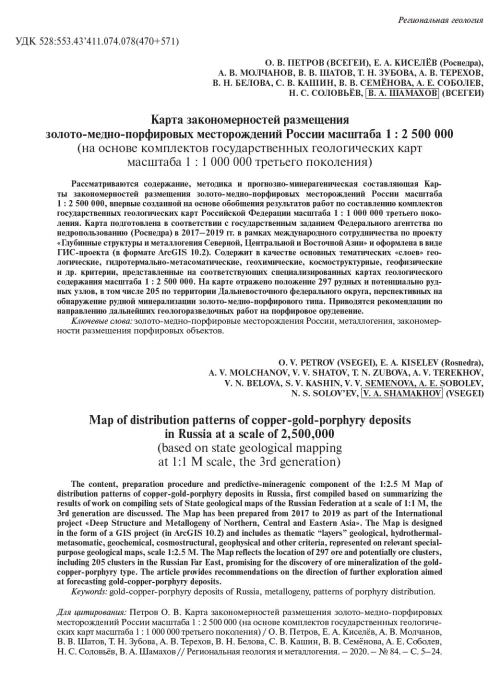
Рассматриваются содержание, методика и прогнозно-минерагеническая составляющая Карты закономерностей размещения золото-медно-порфировых месторождений России масштаба 1 : 2 500 000, впервые созданной на основе обобщения результатов работ по составлению комплектов государственных геологических карт Российской Федерации масштаба 1 : 1 000 000 третьего поколения. Карта подготовлена в соответствии с государственным заданием Федерального агентства по недропользованию (Роснедра) в 2017–2019 гг. в рамках международного сотрудничества по проекту «Глубинные структуры и металлогения Северной, Центральной и Восточной Азии» и оформлена в виде ГИС-проекта (в формате ArcGIS 10.2). Содержит в качестве основных тематических «слоев» геологические, гидротермально-метасоматические, геохимические, космоструктурные, геофизические и др. критерии, представленные на соответствующих специализированных картах геологического содержания масштаба 1 : 2 500 000. На карте отражено положение 297 рудных и потенциально рудных узлов, в том числе 205 по территории Дальневосточного федерального округа, перспективных на обнаружение рудной минерализации золото-медно-порфирового типа. Приводятся рекомендации по направлению дальнейших геологоразведочных работ на порфировое оруденение. <...>
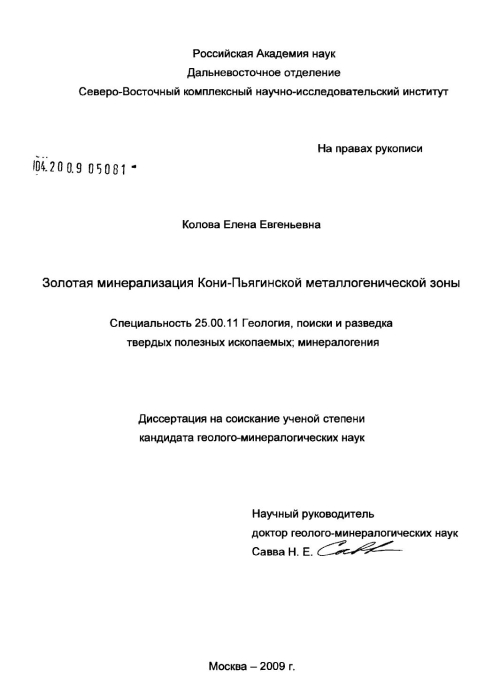
Изучение золотоносных и сереброносных объектов в Cu-Мо-порфировых металлогенических поясах, формировавшихся на палеоостроводужных основаниях, способствует решению таких важных научных проблем, как общая и региональная металлогения золота, пространственно-временные связи благороднометалльной минерализации с медно-порфировыми системами, ее специфические минералогические особенности.
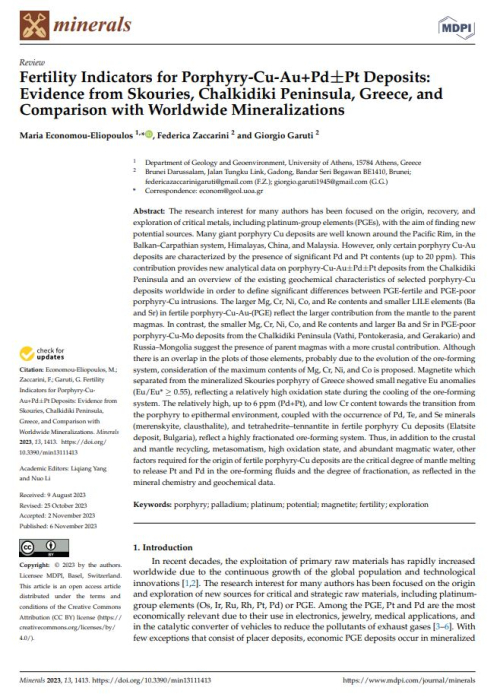
Показатели продуктивности порфировых месторождений Cu-Au+Pd±Pt: данные из Скуриса, полуостров Халкидики, Греция, и сравнение с мировыми минерализациями
: The research interest for many authors has been focused on the origin, recovery, and exploration of critical metals, including platinum-group elements (PGEs), with the aim of finding new potential sources. Many giant porphyry Cu deposits are well known around the Pacific Rim, in the Balkan–Carpathian system, Himalayas, China, and Malaysia. However, only certain porphyry Cu-Au deposits are characterized by the presence of significant Pd and Pt contents (up to 20 ppm).