Добрый день, Коллеги. Важное сообщение, просьба принять участие. Музей Ферсмана ищет помощь для реставрационных работ в помещении. Подробности по ссылке
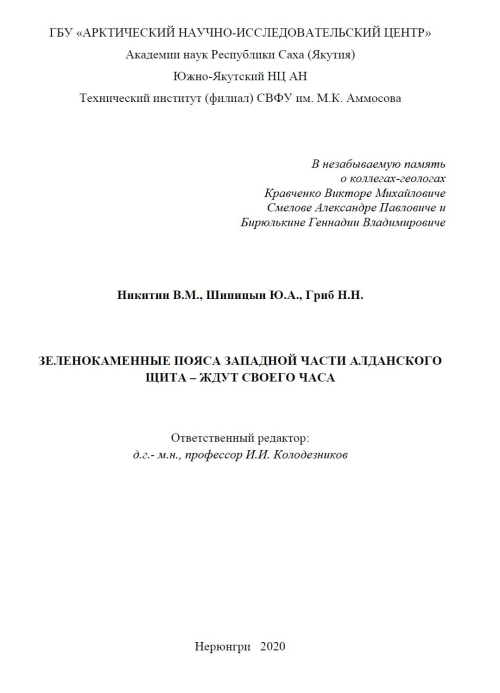
На основе выявленных факторов геологического контроля и поисковых признаков месторождений золота в зеленокаменных поясах мира был проведен анализ формационного состава и особенностей строения типовых объектов в западной части Алданского щита. По результатам этих работ выделены три наиболее перспективных района (Лемочинский, Олондинский и Чаро-Токкинский), в пределах которых были выполнены опытно-методические и поисковые работы с целью выявления золоторудной минерализации, определения ее типа и уточнения поисковых критериев.
Докембрийские зеленокаменные комплексы охарактеризованы в работе не одинаково. Это объясняется, разной степенью изученности данного, весьма обширного, региона, что обусловлено различными обстоятельствами.
Для широкого круга специалистов в области наук о Земле, аспирантов, студентов, а также потенциальных инвесторов в горнорудную промышленность Республики Саха (Якутия).
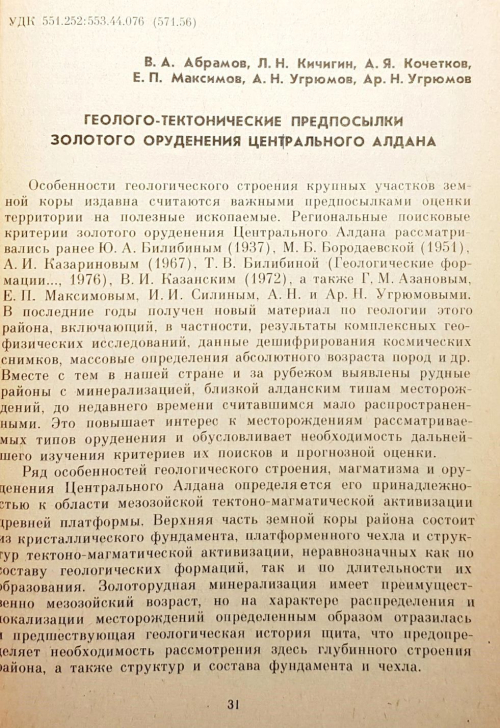
Особенности геологического строения крупных участков зем-u ной коры издавна считаются важными предпосылками оценки территории на полезные ископаемые. Региональные поисковые критерии золотого оруденения Центрального Алдана рассматривались ранее Ю. А. Билибиным (1937), М. Б. Бородаевской (1951), А. И. Казариновым (1967), Т. В. Билибиной (Геологические формации..., 1976), В. И. Казанским (1972), а также Г. М. Азановым, Е. П. Максимовым. И. И. Силиным, Л. Н. и Ар. Н. Угрюмовыми. В последние годы получен новый материал по геологии этого района, включающий, в частности, результаты комплексных геофизических исследований, данные дешифрирования космических снимков, массовые определения абсолютного возраста пород и др. Вместе с тем в нашей стране и за рубежом выявлены рудные районы с минерализацией, близкой алданским типам месторождений, до недавнего времени считавшимся мало распространенными. Это повышает интерес к месторождениям рассматриваемых типов оруденения и обусловливает необходимость дальнейшего изучения критериев их поисков и прогнозной оценки. <...>
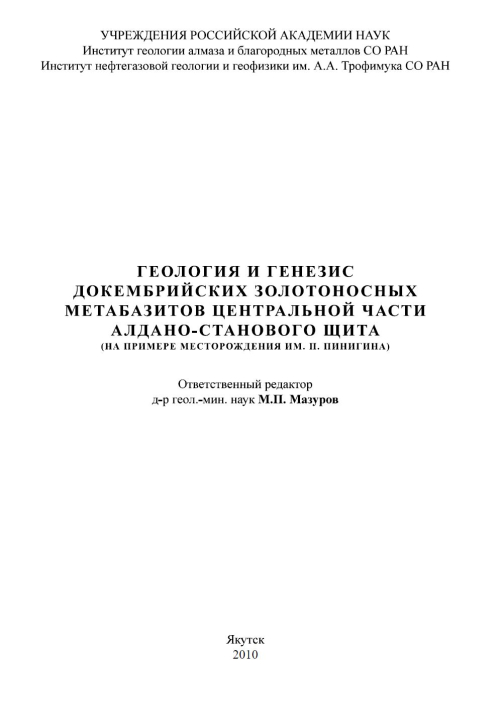
Работа является первым обобщением результатов исследований нового для Алдано-Станового щита геолого-промышленного типа месторождений золота - прожилково-вкрапленных руд в метабазитах гранулитовой фации. В ней приведены и обсуждаются данные по геолого-структурному положению и изотопному возрасту золотоносных метабазитов, минералогии и химическому составу рудовмещающих пород и руд. Большое внимание уделено вопросам генезиса руд и определению критериев поисков золоторудной минерализации.
Книга рассчитана на широкий круг специалистов в области геологии и металлогении докембрия, аспирантов, студентов, а так же потенциальных инвесторов в горнорудную промышленность.
Северо-Восток России обладает высоким ресурсным (тенциалом на многие полезные ископаемые и, прежде всего, на золото. Расытию его потенциала способствовали основополагающие труды отечественах учёных: Ю.А. Билибина, C.B. Обручева, И.С. Рожкова, В.И. Смирнова, С. Смирнова, B.C. Соболева, А.Д. Щеглова, H.A. Шило, а также их соратников последователей, обосновавших и творчески применивших региональную и теотическую металлогению как инструмент научного прогноза. На современном апе изучения металлогении золота одно из наиболее перспективных его направлений связано с полихронностью и полигенностью рудообразования (Лавёров В и др., 2010).
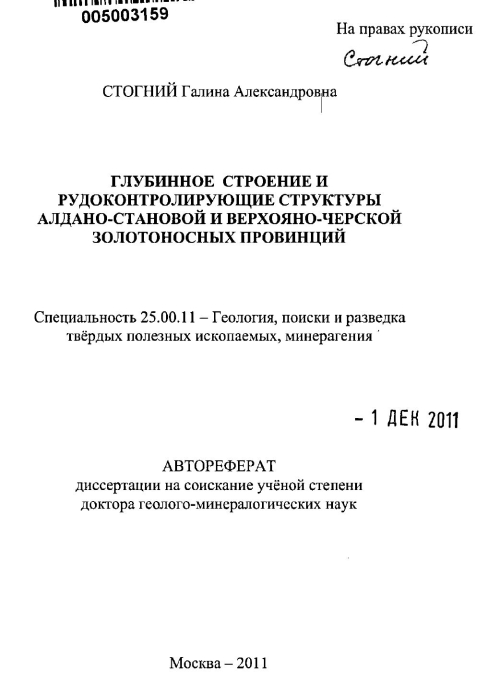
Проблемы этапов формирования и геодинамики раннедокембрийской континентальной земной коры, а также ее металлогенической специализации в различных по составу и степени метаморфизма структурно-вещественных комплексах имеют актуальное значение при усовершенствовании теоретических основ учения о рудных месторождениях и методологии их прогнозирования и поисков, в частности месторождений благородных и редких металлов в высокометаморфизованных комплексах раннего докембрия. В докембрийских провинциях мира месторождения золота связаны с ультрабазит-базитовыми и вулканогенно-осадочными комплексами зеленокаменных поясов и высокометаморфизованных областей (Шер, 1972, 1974).
Актуальность работы обусловлена необходимостью оценки перспективности золоторудных проявлений в докембрийских метаморфических комплексах Алдано-Стаиового щита. В Южной Якутии до недавнего времени были известны только россыпные и гидротермальные месторождения рудного золота, образование которых происходило в эпоху тсктономагматической активизации. Открытие в метаморфических образованиях центральной я западной частях щита золотой минерализации и золоторудного месторождения им. Пинигина, локализованного в габбро-норитах, позволило по-новому подойти к оценке золоторудного потенциала докембрийских базитов этого региона.
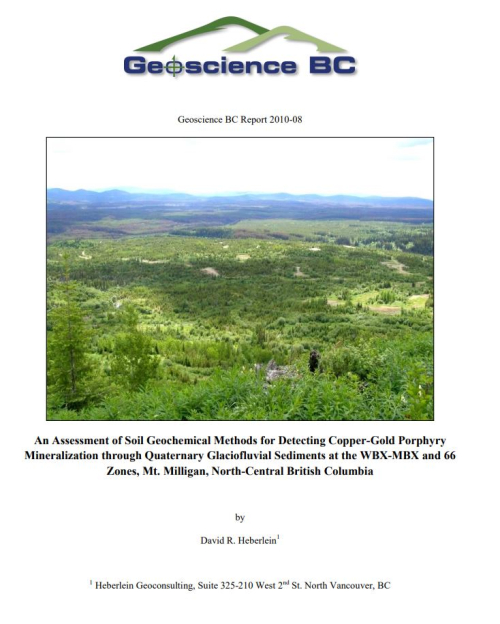
Оценка геохимических методов исследования почв для обнаружения медно-золотой порфировой минерализации в четвертичных ледниково-флювиальных отложениях в зонах WBX-MBX и 66, гора Миллиган, северо-центральная часть Британской Колумбии.
This study is the second and final part of a Geoscience BC funded project (Project 2009-19) carried out by the author to test the effectiveness of a variety of commonly used chemical extractions at detecting mineralization through thick Quaternary glaciofluvial cover. In the first part carried out at the Kwanika Central Zone (Heberlein and Samson, 2010), results showed that conventional soil sampling (an aqua regia digestion of -80 mesh screened, upper B horizon) is ineffective at detecting the buried mineralization. Furthermore, laboratory specific extractions like MMI-M (SGS) and Ionic Leach (ALS-Chemex), Enzyme Leach and Bioleach (Actlabs) also performed poorly.
Age-frequency data are used to determine amounts of vertical tectonic displacement experienced by the global population of orogenic gold deposits following their emplacement at a crustal depth of 10 ± 1 km. Knowledge of this tectonic dispersion allows for an estimate of the total crustal endowment of gold in orogenic gold deposits. This estimate is based on a compilation of data on 365 orogenic gold deposits, of which gold contents are available for 314 deposits and good age control is available for 126 deposits. Ages of well-dated deposits form three clusters that range in age from 47 to 850 Ma (primarily Phanerozoic; 69 deposits), 1730 to 2090 Ma (Proterozoic; 13 deposits), and 2540 to 3107 Ma (Archean; 44 deposits).
Магматические гидротермальные флюиды в осадочных вмещающих породах, связанное с интрузиями золо-медное месторождение Телфер, Ороген Патерсон, Западная Австралия: Ограничения давления, температуры и состава рудообразующих флюидов
The Neoproterozoic Telfer deposit, one of Australia’s largest gold-copper deposits, is located in the Paterson orogen. Several highly differentiated calc-alkaline to alkali-calcic peraluminous granites intruded the metasedimentary rocks near (5–20 km) Telfer contemporaneously with structurally controlled gold-copper mineralization. Fluid inclusion assemblages with different fluid inclusion types were identified in samples from a range of different vein types.
A metamorphic devolatilization model can explain the enrichment, segregation, timing, distribution and character of many goldfields such as those found in Archean greenstone belts, slate-belts and other goldonly provinces. In this genetic model, hydrated and carbonated greenschist facies rocks, particularly metabasic rocks, are devolatilized primarily across the greenschist–amphibolite facies boundary in an orogenic setting. Devolatilization operates on the scale of individual mineral grains, extracting not just H2O and CO2 but also S and, in turn, Au.