Добрый день, Коллеги. Важное сообщение, просьба принять участие. Музей Ферсмана ищет помощь для реставрационных работ в помещении. Подробности по ссылке
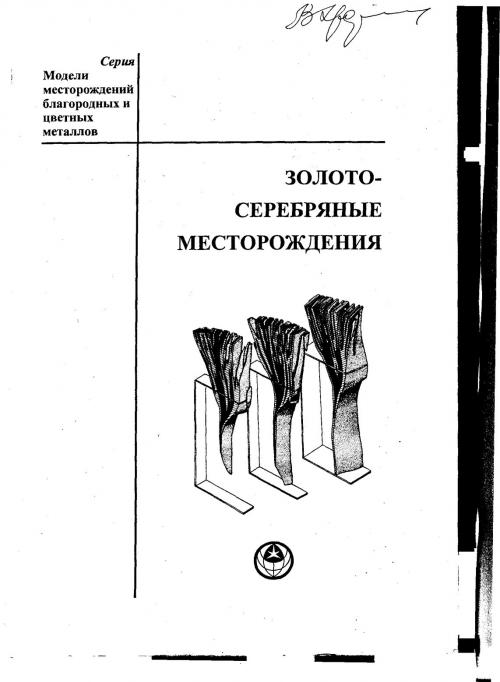
Для золото-серебряных месторождений вулкано-плутонических поясов разработаны и поэлементно описаны прогнозно-поисковые, параметрические и геолого-генетические модели, основанные на систематизации информации по наиболее изученным месторождениям России и других стран. Дана комплексная характеристика элементов различных моделей с широким использованием количественных методов. Предложена геолого-генегическая группировка золото-серебряных месторождений с учетом специфики соответствующих рудообразующих систем и процессов. На основе описаний современных геотермальных систем и изотопно-геохимических характеристик рул и месторождений разработана комплексная модель золото-серебряной рудообразующей системы.
Для широкого круга специалистов в области металлогении, геологии, прогноза и поисков рудных месторождений, а также преподавателей и студентов учебных заведений геологического и горно-геологического профиля.
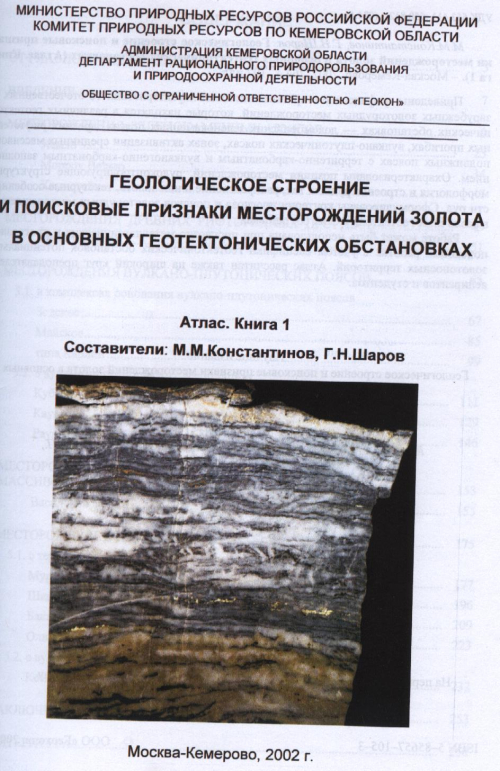
Приведены графические и краткие текстовые характеристики 16 отечественных и зарубежных золоторудных месторождений, которые находятся в различных геотектонических обстановках — докембрийских зеленокаменных поясах, древних рифтогенных прогибах, вулкано-плутонических поясах, зонах активизации срединных массивов, подвижных поясах с терригенно-карбонатным и вулканогенно-карбонатным заполнением. Охарактеризованы позиции месторождений, рудоконтролирующие структуры, морфология и строение рудных тел, распределение в них золота, текстурные особенности руд. Сформулированы критерии прогноза и поисков золоторудных месторождений в различных геотектонических обстановках.
Работа может быть использована при прогнозно-металлогенических и прогнозно-поисковых работах с учетом специфики геотектонических обстановок потенциально золотоносных территорий. Атлас рассчитан также на широкий круг преподавателей, аспирантов и студентов.
There has been gold production in Kazakhstan since the ancient times, the earliest primary gold workings having been dated to the Bronze Age (2000-4000 BC). Ancient workings, otherwise called "Chudskie" pits that often contain implements dating to the Stone or Bronze Age, still survive to the present at many gold deposits in the north and east of the country.
Gold production in Kazakhstan resumed only at the beginning of the 18th century, with the first gold produced in 1725 at the Kolyvano-Voskresensky plant in Russia having been recovered from Kazakhstan's pyrite-polymetallic gold-silver deposits at Rudnoi Altai. More than 191 of by-product gold were mined here between 1745 and 1800. Gold production at these properties had increased steadily in the 19th and 20th centuries, and has accounted for 30-40% of the country's total output in recent years.
Рассмотрены геологические комплексы, главные типы тектонических структур и геодинамические обстановки их формирования. Охарактеризованы форма-ционные и генетические типы золоторудных месторождений региона, геологическое строение, минеральный состав, минералого-геохимическая зональность. Показана их пространственно-временная связь с геологическими комплексами и положение в главных типах тектонических структур. Выделены основные метал-логенические золотоносные эпохи. Обоснован поясно-узловой характер размещения промышленных месторождений золота. Разработан прогнозно-поисковый комплекс золоторудных и золотосодержащих месторождений. По единой методике оценены количественные прогнозные ресурсы известных и вновь прогнозируемых месторождений. Построены геолого-генетические модели золотоносных эндогенных рудообразующих систем.
Для геологов, геофизиков и геохимиков, а также для специалистов, занимающихся геологией рудных месторождений и металлогенией.
Обобщены материалы по золоторудным месторождениям Востока России. Проведено районирование золотоносных территорий, приводится систематика золоторудных месторождений. Кратко охарактеризованы золотоносные пояса и зоны. Описано около 110 золоторудных месторождений. Рассмотрены закономерности размещения месторождений, самородное золото, геологические модели развития золоторудных систем, принципы регионального прогнозе. оруденения.
Книга рассчитана на широкий круг геологов, изучающих золоторудные месторождения, преподавателей, аспирантов и студентов вузов.
Геохимическая разведка золота в глубоких выветренных латеритизированных отложениях в регионе Амазонки, Бразилия: на примере месторождения Игарапе Баия
The Igarape Bahia gold mine is located in the Carajds region, Para State, northern Brazil. The area is a typical example ofsupergene gold mineralization related to gossans, where superimposed lateritization processes obliterated their upper horizon and gave rise to new and wider dispersion of gold and of other metals, with meaningful consequences for geological exploration in this environment. An exploration program in this area was carried out by Docegeo, a subsidiary of "Companhia Vale do Rio Doce - CVRD", which is the sponsor of the Carajds mining district and, currently, is also minigfor gold at Igarape Bahia.
The Genesis and Blue Star sedimentary rock-hosted gold deposits occur within the 40-mile-long Carlin trend and are located in Eureka County, Nevada. The deposits are hosted within the Devonian calcareous Popovich Formation, the siliciclastic Rodeo Creek unit and the siliciclastic Vinini Formation. The host rocks have undergone contact metamorphism, decalcification, silicification, argillization, and supergene oxidation.
On the basis of textural features and spatial distributions, both supergene and hypogene origins have been proposed for alunite in sediment-hosted micron gold deposits. If alunite is indeed primary, its presence provides important constraints on the chemistry of the ore fluid. Thus, determination of the genesis of alunite is critical to the understanding of the geologic history of these ore deposits.
At the Post deposit in Nevada K/Ar ages of alunite are much younger than the age of mineralization. Sulfur isotope compositions of alunite from several sediment-hosted micron gold deposits are virtually identical to those of sulfides, suggesting that alunite sulfur came from quantitative (closed-system) oxidation of primary sulfide minerals during weathering. Sulfur and oxygen isotope compositions of barite are markedly different from those of alunite. The oxygen and hydrogen isotope compositions of alunite fall in the supergene alunite fields; data for cogenetic kaolinite fall on the kaolinite line, whereas those for hypogene kaolinite do not. From all available petrographic and geochemical data, it would appear that alunite in the micron gold deposits of Nevada is entirely of secondary supergene origin.
Discriminating productive jasperoids associated with economic gold mineralization from barren jasperoids, those with no known gold association, has long been an objective of Great Basin explorationists. Holland et al. (1988) use factor analysis of a multielement geochemical data set to compare jasperoids associated with Carlin-type gold mineralization with jasperoids in barren systems. They go on to propose a genetic model for Carlin-type deposits based on their interpretation of the factor analysis results. There are problems with their approach, several of which the authors acknowledge. The geologic control for their samples is inadequate, the analytical technique used is inaccurate for several critical elements, and their statistical analysis of the data could be much simpler, easier to interpret, and useful.
В учебном пособии изложены геологические и методические основы разведки россыпных месторождений. Даны признаки генетической, морфологической и возрастной классификации россыпей, являющиеся основой проводимой автором классификации промышленных россыпей. Даны основные особенности и характеристика россыпей как сложной природной системы. Разработана классификация концентрационной подсистемы по иерархическим уровням неоднородности. На этой теоретической основе изложены основные методы разведки, обеспечивающие подготовку материалов для освоения разведанных россыпей. Значительно внимание уделено геологическому обслуживанию в процессе эксплуатации россыпей. Учебное пособие предназначено для студентов и работников геологических и горных специальностей.