Добрый день, Коллеги. Важное сообщение, просьба принять участие. Музей Ферсмана ищет помощь для реставрационных работ в помещении. Подробности по ссылке
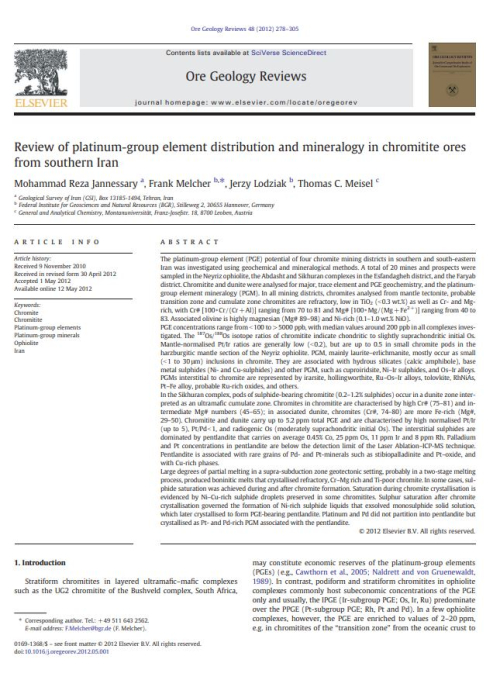
The platinum-group element (PGE) potential of four chromite mining districts in southern and south-eastern Iran was investigated using geochemical and mineralogical methods. A total of 20 mines and prospects were sampled in the Neyriz ophiolite, the Abdasht and Sikhuran complexes in the Esfandagheh district, and the Faryab district. Chromitite and dunite were analysed for major, trace element and PGE geochemistry, and the platinumgroup element mineralogy (PGM). In all mining districts, chromites analysed from mantle tectonite, probable transition zone and cumulate zone chromitites are refractory, low in TiO2 (b0.3 wt.%) as well as Cr- and Mgrich, with Cr# [100*Cr /(Cr+Al)] ranging from 70 to 81 and Mg# [100*Mg /(Mg+ Fe2+)] ranging from 40 to 83.
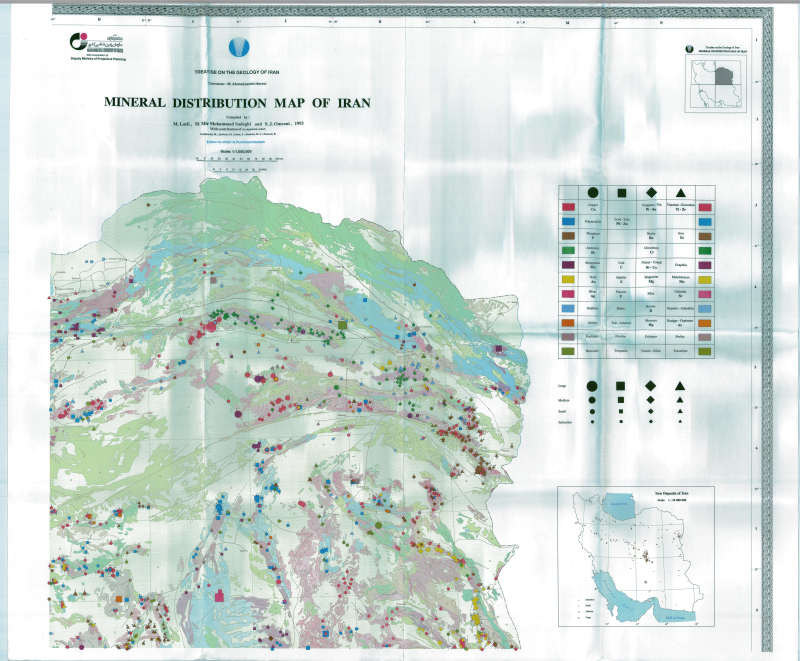
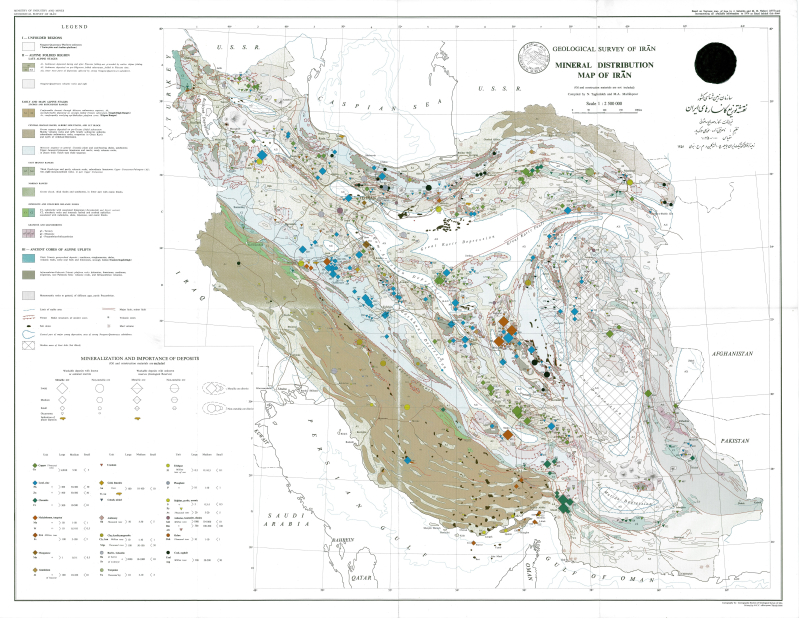
The beginning of any scientific, economic, investigational, and executive achievement depends on the proper knowledge of basic information. The application of geosciences to meet the needs of each country is related to the level of knowledge of the geologists.
Copper and gold mineralization in the Maher-Abad deposit, eastern Iran, is closely related to the multiple emplacement episodes of Upper Eocene granodiorite porphyries within andesitic volcaniclastic and coeval quartz monzonite stocks. The magmatic hydrothermal fluids thereafter hydrofracturing provided appropriate conduits, formed a stockwork of quartz and quartz–sulfide veinlets within the porphyritic host rocks which were extensively altered into potassic, propylitic, phyllic, and argillic assemblages.
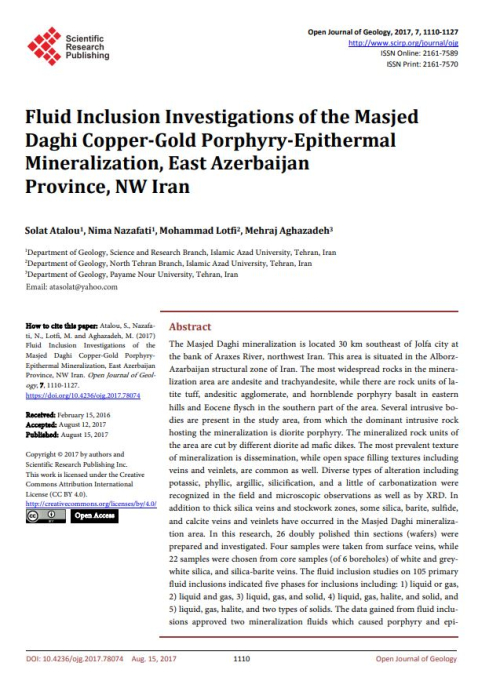
The Masjed Daghi mineralization is located 30 km southeast of Jolfa city at the bank of Araxes River, northwest Iran. This area is situated in the AlborzAzarbaijan structural zone of Iran. The most widespread rocks in the mineralization area are andesite and trachyandesite, while there are rock units of latite tuff, andesitic agglomerate, and hornblende porphyry basalt in eastern hills and Eocene flysch in the southern part of the area. Several intrusive bodies are present in the study area, from which the dominant intrusive rock hosting the mineralization is diorite porphyry.
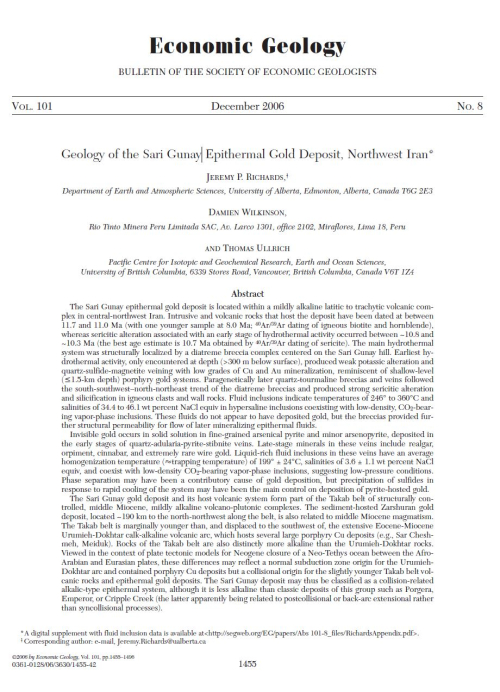
The Sari Gunay epithermal gold deposit is located within a mildly alkaline latitic to trachytic volcanic complex in central-northwest Iran. Intrusive and volcanic rocks that host the deposit have been dated at between 11.7 and 11.0 Ma (with one younger sample at 8.0 Ma; 40Ar/39Ar dating of igneous biotite and hornblende), whereas sericitic alteration associated with an early stage of hydrothermal activity occurred between ~10.8 and ~10.3 Ma (the best age estimate is 10.7 Ma obtained by 40Ar/39Ar dating of sericite).
Обобщая геологоструктурные особенности двух участков (Веди-Ехегнадзор и Хой-Аваджик) можно заключить: Исходя из сравнения стратиграфических данных участков Веди-Ехегнадзор и Хой-Аваджик можно предположить, что, по всей вероятности, до открытия северного Неотетиса в раннем мезозое эти единицы принадлежали Г'ондване. Происхождение основных складчатых строений обусловлено обдукцией офиолитов на Южно Армянско-Хойском Микрконтиненте (ЮАХМ) и коллизией евразийской плиты в эпоху палеоцена- нижний эоцена далее коллизией Арабской и Евразийских плит, в эпоху верхнего эоцена-нижнего олигоцена которые вместе с более мелкими тектоническими сдвигами, а также с другими экзогенными (эрозия, крупномасштабные склоновые процессы и т. д.) процессами образовали современную сложную структуру изучаемых участков.