Добрый день, Коллеги. Важное сообщение, просьба принять участие. Музей Ферсмана ищет помощь для реставрационных работ в помещении. Подробности по ссылке
Igneous petrology is the study of melts (magma) and the rocks that crystallize from such melts, encompassing an understanding of the processes involved in melting and subsequent rise, evolution, crystallization, and eruption or emplacement of the eventual rocks. Origin by crystallization from a melt seems a simple enough criterion for considering a rock to be igneous.
Petrology, from the Greek words petra , meaning rock, and logos, meaning knowledge, is the study of rocks and the conditions in which they form. It includes igneous, metamorphic, and sedimentary petrology.
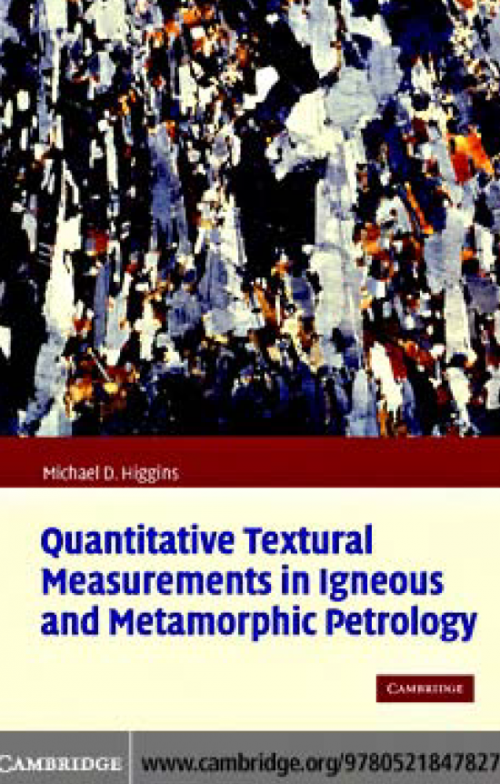
Processes involved in the development of igneous and metamorphic rocks involve some combination of crystal growth, solution, movement and deformation, which is expressed as changes in texture (microstructure). Recent advances in the quantification of aspects of crystalline rock textures, such as crystal size, shape, orientation and position, have opened new avenues of research that extend and complement the more dominant chemical and isotopic studies.
Igneous and metamorphic petrology in the last decades of the twentieth century exploded into a broad, multifaceted, increasingly quantitative science. Advances in physical and field petrology and geochemistry have forever changed our thinking about the origin and evolution of magmas, their dynamic behavior, and the way in which they are intruded and explosively extruded. Developments in geochronology, quantitative evaluation of the role of heat and fluid transfer in crustal rocks, and new field discoveries have impacted our understanding of the evolution of metamorphic systems and their dynamic interaction with tectonic processes. Geophysics and mineral physics have provided new insights into the nature of the convecting mantle and its role as a giant heat engine driving magmatic and metamorphic processes. New tools of all kinds allow new ways of gathering petrologic data, while phenomenal developments in computers and computer software permit data to be stored, processed, and modeled in ways unimaginable as recently as a couple of decades ago.
Metamorph;c processes have been taking place on a massive scale throughout the Earth's history, and have affected the bulk of the rocks now present in the crust. Despite this, they are not as well understood as sedimentary or volcanic processes, because metamorphism can scarcely ever be observed directly, and the study of metamorphic rocks is instead based on observation, inference and logic, founded in relatively simplistic experimental studies and the basic principles of chemistry and physics
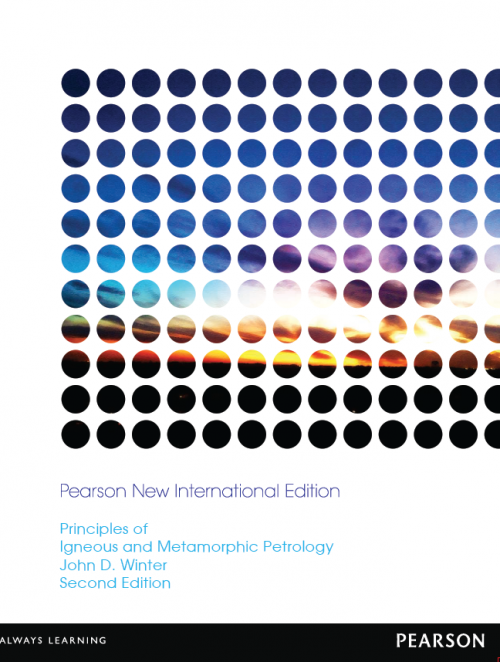
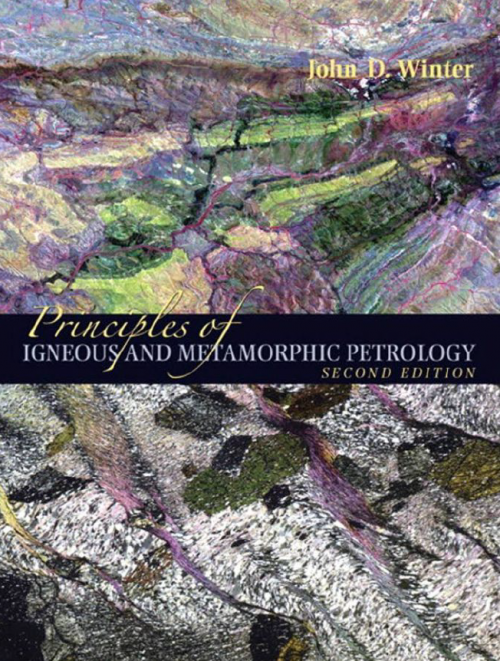
The second edition of Principles of Igneous and Metamorphic Petrology follows the same general approach as the first edition. The book is designed to introduce igneous and metamorphic petrology to those who have completed introductory college-level courses in physics, chemistry, and calculus. Its emphasis is on principles and understanding rather than on facts and memorization. With this approach, it is hoped that students will not only gain a sound understanding of petrology but will develop skills that can be applied to the analysis of problems in many other fields of Earth Science. <...>
This text is designed for use in advanced undergraduate or early graduate courses in igneous and metamorphic petrology. The book is extensive enough to be used in separate igneous and metamorphic courses, but I use it for a one-semester combined course by selecting from the available chapters. The nature of geological investi-gations has largely shaped the approach that I follow.
Сборник содержит результаты исследования офиолитов и базитовых комплексов, а также связанной с ними минерализации в Забайкалье и Прибайкалье, имеющие как региональное, так и общегеологическое значение. Приведены новые оригинальные фактические материалы, представляющие самостоятельный интерес, особенно данные по минералогии, основанные на широком использовании микрозондовых анализов и масс-спектрометрического анализа золотин. Представленные в сборнике материалы вносят заметный вклад в решение проблем базитов, офиолитов и эклогитов.
Четвертый том тезисов, представленных к 27-му Международному геологическому конгрессу, включает две секции: С.08 - Геофизика, С.09 - Петрология. Тезисы, представленные ведущими учеными-геологами из разных стран мира, отражают вопросы теоретической и прикладной геологии.
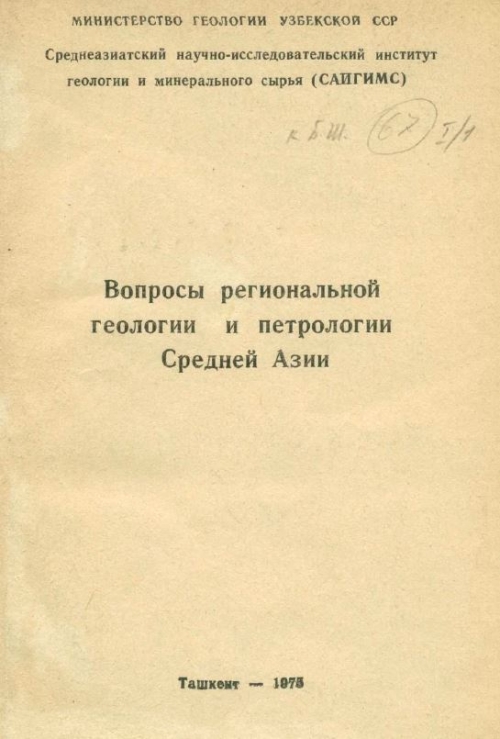
М.А. Ахмеджанов, О.М. Борисов. О юго-западной границе Урало-Монгольского складчатого пояса. О.М. Черных. Основные структурные элементы тектонического строения западного окончания Гиссарского хребта и юго-западных отрогов. Х.Р. Рахматуллаев, А.К. Каюмов, Г.И. Журавлев. О связи блоковой тектоники, магматизма и металлогении гор Кульджуктау. Н.И. Ишназаров. Стратиграфия средне-верхнедевонских отложений гор Нуратау и Тамдытау. В.Я. Клипенштейн, А.С. Масумов. О границе каменноугольной и пермской систем в связи с находкой стефанской флоры в хр.Гузан (Южяая Фергана). В.С. Попов, В.В. Вировец, Т.С. Садыков. Литолого-геохимические особенности неогеновых соленосных отложений Тянь-Шаня. Т.Н. Далимов. Эволюция и типы липаритовых комплексов Узбекистана. С.И. Ибадуллаев, Б.Р. Махмудов, А.М. Эргешов. Редкометальные проявления Южного Тянь-Шаня. Д.С. Мукимова, Л.П. Быковская. Растворимость ртути из ртутьсодержащих минералов и пород различных типов вод.