Добрый день, Коллеги. Важное сообщение, просьба принять участие. Музей Ферсмана ищет помощь для реставрационных работ в помещении. Подробности по ссылке
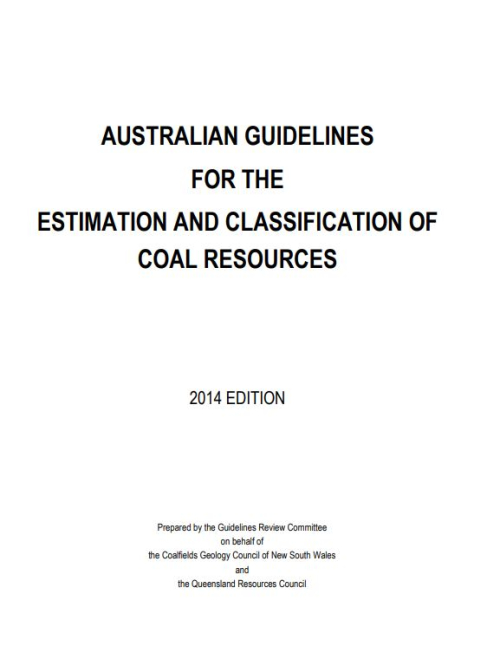
1.2 Prior to September 1999 the estimation and reporting of Coal Resources and Coal Reserves in Australia were prescribed by the "Australian Code for Reporting Identified Coal Resources and Reserves (February 1986)". This code was ratified by the Government Geologists’ Conference in April 1986 and appended to the "Australasian Code for Reporting of Identified Mineral Resources and Ore Reserves" (The JORC Code), prepared by the Joint Ore Reserve Committee (JORC) in February 1989. The JORC Code was subsequently revised in 1992 and 1996.
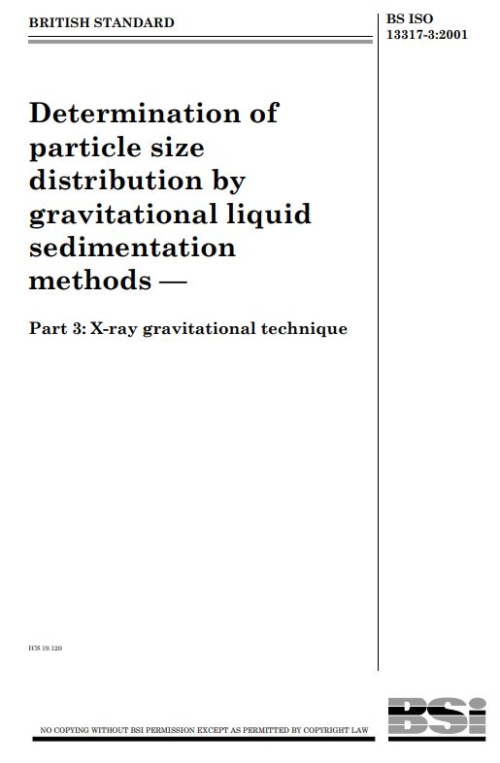
This part of ISO 13317 describes a method for the determination of the particle size distribution of a powder dispersed in a liquid using gravity sedimentation. The measurement of the concentration of solids settling in a liquid suspension is achieved by monitoring the incremental signal absorption from a beam of X-rays.
The method of determining the particle size distribution described in this part of ISO 13317 is applicable to powders which can be dispersed in liquids or powders which are present in slurry form. The typical particle size range for analysis is from about to about . The method is used for materials containing particles of the same chemical composition which produce adequate X-ray opacity. <...>
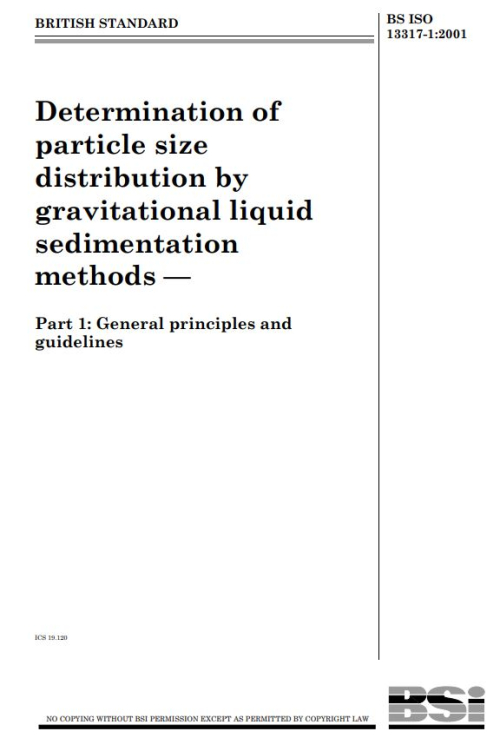
ISO (the International Organization for Standardization) is a worldwide federation of national standards bodies (ISO member bodies). The work of preparing International Standards is normally carried out through ISO technical committees. Each member body interested in a subject for which a technical committee has been established has the right to be represented on that committee. International organizations, governmental and non-governmental, in liaison with ISO, also take part in the work. ISO collaborates closely with the International Electrotechnical Commission (IEC) on all matters of electrotechnical standardization.
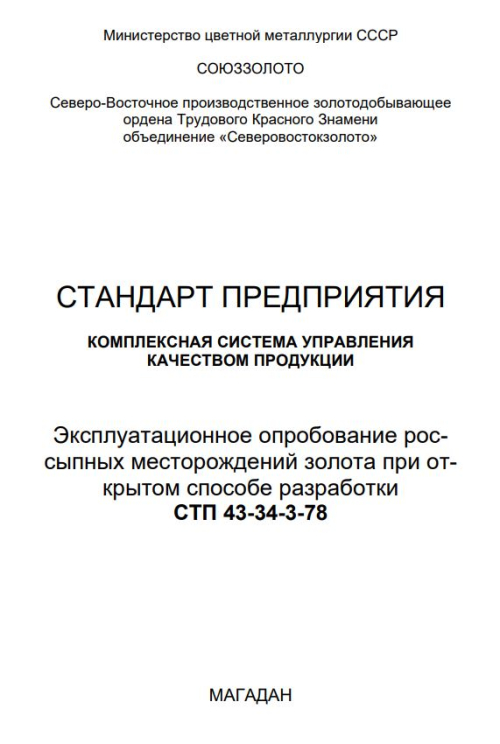
Настоящий стандарт распространяется на эксплуатационное опробование россыпных месторождений золота, разрабатываемых открытым способом. Стандарт устанавливает цели и задачи, организацию и планирование, виды, методы и способы опробования применительно к циклам горных работ, плотность сети опробования и объемы в зависимости от геологических особенностей месторождения или его участка, обработку проб и использование результатов в оперативном подсчете запасов, требуемую документацию. Стандарт обязателен для применения на золотодобывающих предприятиях объединения «Северовостокзолото»: горнообогатительных комбинатах, приисках и в старательских артелях. <...>
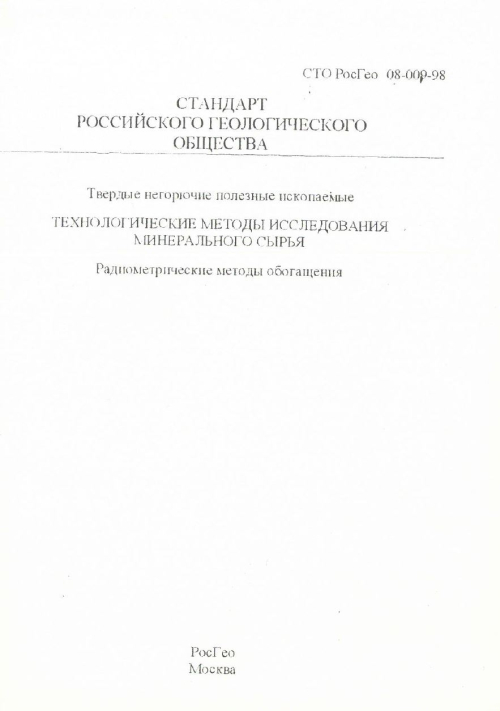
Настоящий стандарт распространяется на радиометрические методы обогащения твердых негорючих полезных ископаемых, используемые при изучении технологических свойств минерального сырья в процессе геологического изучения недр
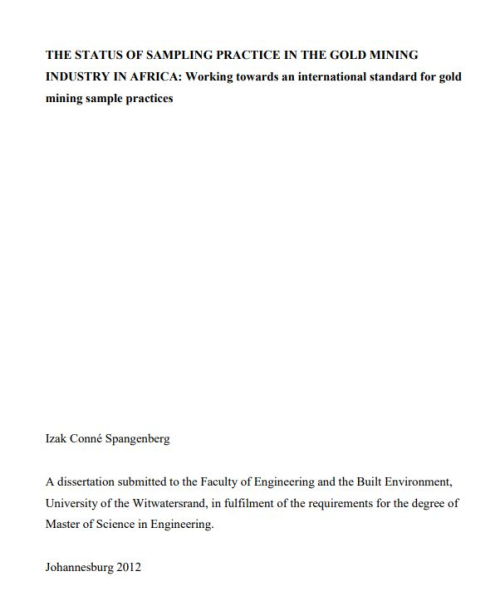
The status of sampling practices in the Gold Mining Industry in Africa was determined as an initial step in a process to standardise sampling practices in the Mining Industry. Several mines, metallurgical plants and laboratories were visited and the status of equipment, standards and procedures were rated to determine the potential influence of the relevant sampling errors on each component of the particular sampling system.
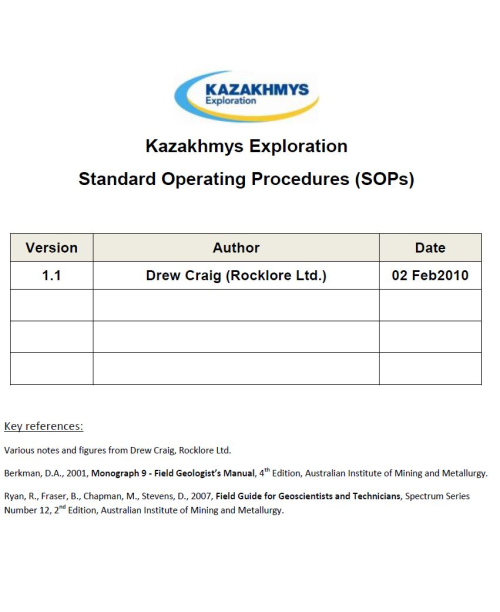
Once the decision to drill a hole has been made it is the geologist's responsibility to insure the site is properly located in the field. The collar should then be clearly marked with 1.5 - 2.0 m high wooden marker that is spray painted, labelled and marked with flagging tape.
Настоящий стандарт распространяется на эксплуатационную разведку россыпных месторождений золота при подземном способе разработки и устанавливает требования к оконтуриванию, порядок учета добычи песков и золота при ведении горноподготовительных и нарезных работ, подсчета подготовленных к выемке запасов в шахтном поле и оценки достоверности эксплуатационной разведки.