Добрый день, Коллеги. Важное сообщение, просьба принять участие. Музей Ферсмана ищет помощь для реставрационных работ в помещении. Подробности по ссылке
This Introduction - and its philosophies - are dedicated to the late Johann (Hans) Steiner (Canada) and John Elliston (Australia) for their respective concepts offered far ahead of most of their contemporary fellow scientists. That is, Steiner’s ideas in “The sequence of geological events and the dynamics of the Milky Way Galaxy - the present cosmic year; a preliminary study” (J. Geol. SOC. Aust., 1967, 14(1): 99 - 132)
This volume brings together 36 of the manuscripts that were presented as oral or poster papers at the Third International Fluvial Sedimentology Conference hosted by Colorado State University in August, 1985. The conference was co-sponsored by the Society of Economic Paleontologists and Mineralogists and the U.S. Geological Survey with additional support and cooperation from Conoco, Inc., Rocky Mountain Energy, Mobil Corporation, the Rocky Mountain Section-SEPM, and the College of Forestry and Natural Resources and the Department of Earth Resources of Colorado State University.
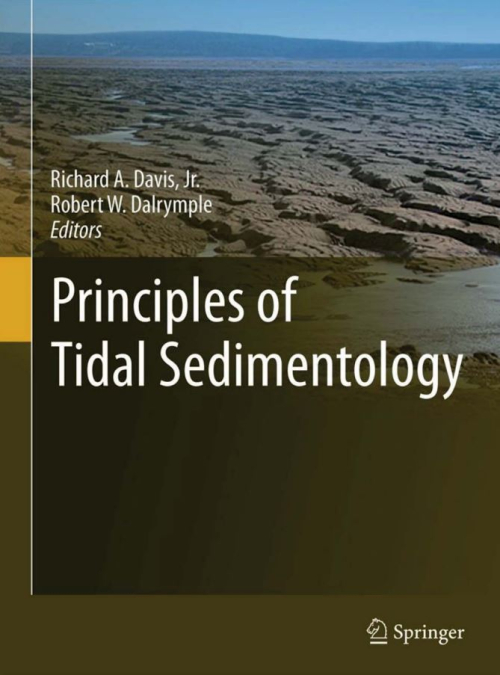
Tides have fascinated humans for millennia. Their regularity and their apparent correlation with lunar behavior intrigued natural philosophers, even the Greeks, who live on an essentially tideless sea although there are strong tidal currents in localized constrictions. Apparently, they learned about tides from areas outside the Straits of Gibralter and from the Arabs who experienced signifi cant tides in the Persian Gulf. From a practical perspective, tidal changes in water elevation and the currents associated with these changes were of great importance for shipping and military purposes. In areas such as the countries surrounding the southern North Sea, such considerations required accurate tidal predictions, which in turn drew the attention of some of the greatest astronomers and mathematicians.
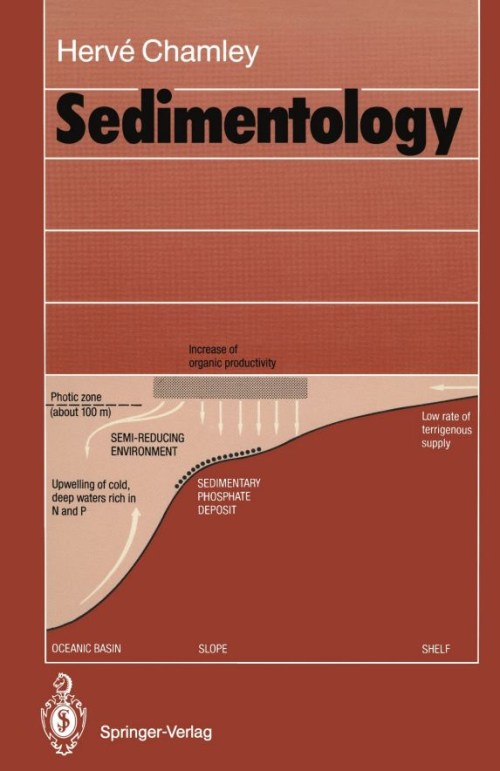
Sedimentology, which deals with the geology of sedimentary deposits, has become an actively studied discipline parallel to the development of academic and industrial drilling programs, research on plate tectonic concepts and environmental considerations. Continuous series such as those provided by the Deep Sea Drilling Project or the Ocean Drilling Program constitute outstanding archives to reconstruct environmental conditions governing past seas and adjacent landmasses.
La Sedimentología se puede defi nir como el estudio del transporte y deposición de sedimentos (Leeder, 1999) y trata de estudiar la composición, estructuras internas y procesos hidrodinámicos de formación de sedimentos. Para lograr sus fi nes, utiliza una gran cantidad de datos procedentes de ciencias afi nes: mineralogía, petrología sedimentaria, estratigrafía, dinámica de fl uidos, geoquímica, oceanografía y otras muchas. La Sedimentología moderna surge cuando el estudio de los procesos sedimentarios actuales demostró que los productos resultantes (facies) eran característicos de cada uno de ellos y que estos productos variaban de acuerdo con las variaciones de los parámetros fundamentales de los primeros: velocidad de las corrientes, sentido de las mismas, salinidad del agua, etcétera.
Стратиграфия, седиментология, угольная геология и условия осадконакопления нижнемеловой формации Гетхинг на северо-востоке Британской Колумбии и в западно-центральной части Альберты.
The Aptian to Early Albian Gething Formation comprises a nonmarine to marine sequence of interstratified conglomerate, sandstone, siltstone, mudstone and coal, and ranges from 18 m to approximately 1100 m thick. In the Burnt-Sukunka rivers area and part of the Monkman-Stony Lake area, the formation is subdivided into three lithostratigraphic units which, in ascending order, are the Gaylard (new), Bullmoose (new) and Chamberlain (now formally defined and revised) members.
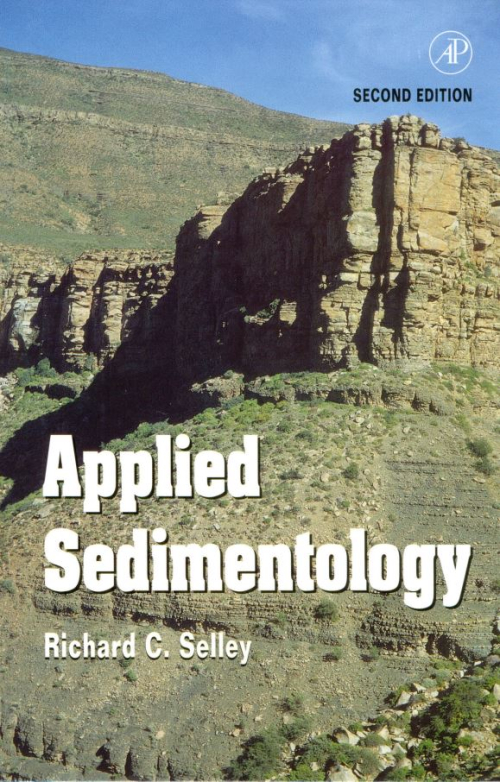
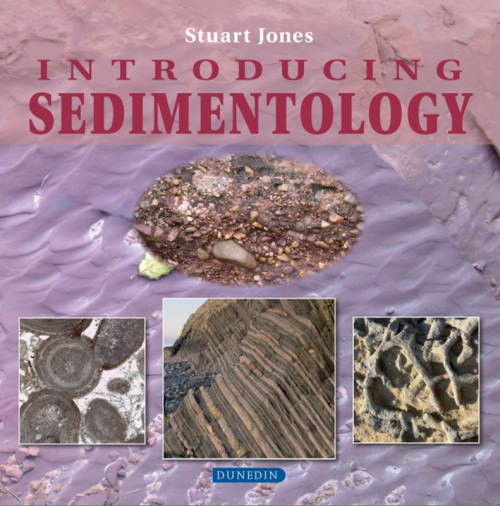
For at least the last 3.8 billion years of Earth’s history sediments and sedimentary rocks have accumulated providing an archive of past surface environments and the evolution of life. The Earth’s dynamic behaviour over geological time, mainly driven by plate-tectonics, has allowed a vast array of sedimentary rocks to form and it is these and the associated processes that eroded, transported and deposited the sediments that provides Earth with a uniqueness in the Solar System. This book is intended to provide some insight into sedimentology and the study of ‘soft rocks’ in different environmental settings and identify why sediments are so important.
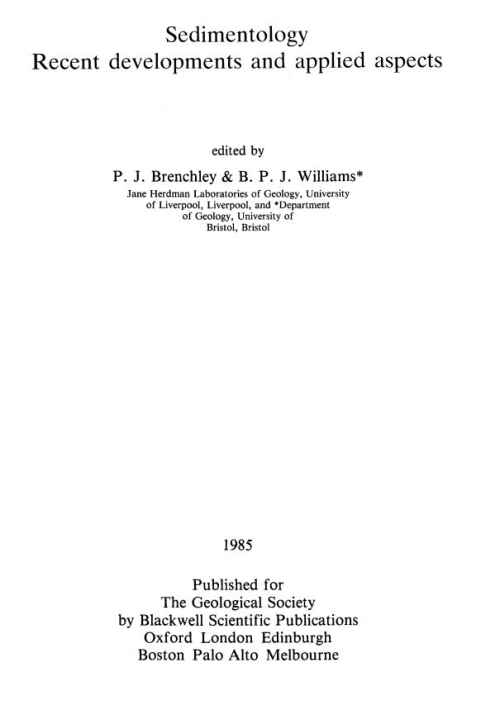
A major and acknowledged role in the advance o f sedimentological knowledge is played by the methods of physics as expressed through fluid mechanics and loose-boundary hydraulics. Turbulence is increasingly being seen as involving orderly flow structures, and these are significant for the origin of several sedimentary structures and for suspension transport. Recent advances in sediment-transport theory are rooted in the concept of the sediment load as a downward-acting force and in the notion of the flow as a transporting machine.
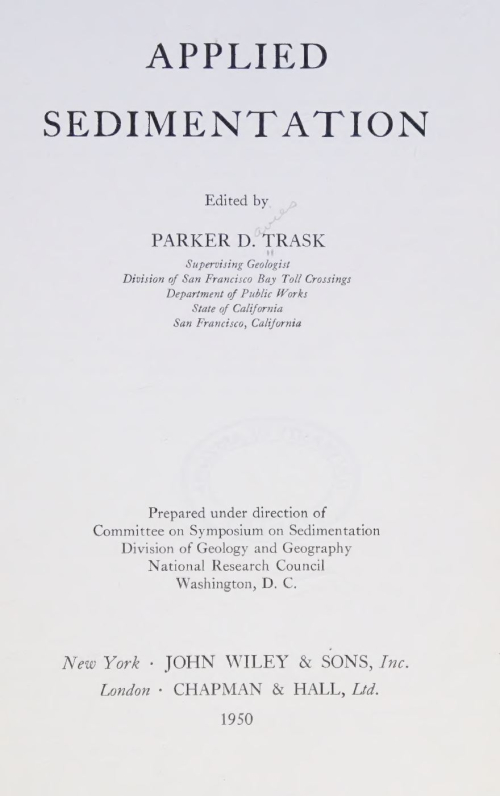
This symposium considers the practical applications of sedimentation. It is designed (1) to describe aspects of mutual interest to the geologist and to the engineer so that each can understand the other’s problems and thus cooperate more effectively in their work; (2) provide information for the consulting geologist who may not be completely familiar with specific problems; and (3) acquaint students with the many practical applications of sedimentation so that they may be more fully informed as to possibilities for a career in this field. Each chapter is a summary of a comprehensive subject.