Добрый день, Коллеги. Важное сообщение, просьба принять участие. Музей Ферсмана ищет помощь для реставрационных работ в помещении. Подробности по ссылке
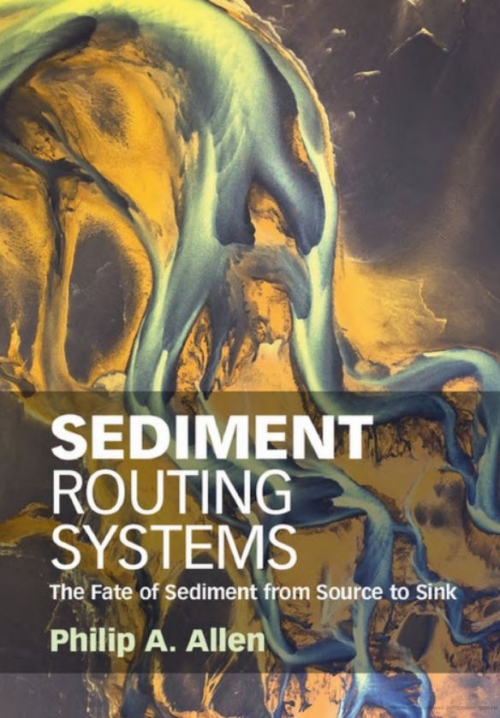
This cutting-edge summary combines ideas from several sub-disciplines, including geology, geomorphology, oceanography and geochemistry, to provide an integrated view of Earth surface dynamics in terms of sediment generation, transport and deposition. Introducing a global view of fundamental concepts underpinning source-to-sink studies, it provides an analysis of the component segments which make up sediment routing systems. The functioning of sediment routing systems is illustrated through calculations of denudation and sedimentation as well as the response to external drivers; with the final sections focusing on the stratigraphic record of sediment routing systems. Containing quantitative solutions to a wide range of problems in Earth surface dynamics, this book is suitable for graduate students as well as academic and professional researchers. philip a. allen is Emeritus Professor of Sedimentary Geology at Imperial College London and a process-oriented Earth scientist with a particular interest in the interactions and feedbacks between the solid Earth and its ‘exosphere’ through the critical interface of the Earth’s surface. He has received the Royal Society Wolfson Research Merit Award for 2006 to 2011 and the Lyell Medal from the Geological Society of London in 2007. He served on the Council of the Geological Society from 2008 to 2012, and was Secretary of the Science Committee from 2009 to 2012.
The noun sediment comes to the English language from the Latin root sedimentum, meaning settling or sinking down,aform ofthe verb sedere,to sit orsettle. In earth and environmental sciences, sediment has a wide context that includes many forms of organic and mineral matter. In Part 1 we look more deeply at the origins of the sediment that occurs on and under the surface of the solid planets and which may be used to infer past environmental conditions and changes. Sediment accumulations may be grandly viewed as the great stratal archive of past surface environments, or more basically as‘dirt’. There has been sediment on the surface of the Earth since the Archaean, with the oldest known sediment grains dating from at least 4.4Ga (Part 1 Fig. 1). Sediment also mantles the surface of many other planets and their satellites, notably Mars, Venus and Saturn’s moon, Titan. <...>
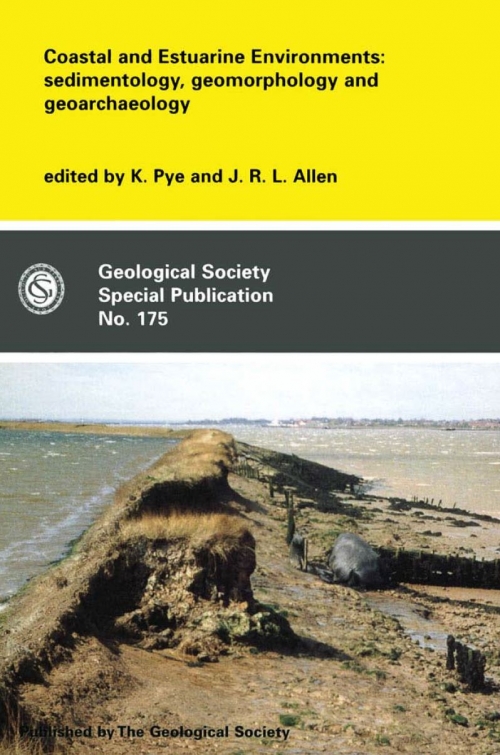
This book arises from a two day international conference held at the Geological Society of London in November 1998. The meeting was organized with the purpose of bringing together sedimentologists, geomorphologists, archaeologists, environmental scientists and environmental managers to discuss recent research and topical issues relating to the interactions between natural processes, morphology and human activities in coastal and estuarine environments. More than 200 delegates, from 16 countries, attended the meeting over the course of the two days, stimulating lively discussion both about basic scientific issues and management implications. The meeting was sponsored by the British Sedimentological Research Group, the British Geomorphological Research Group, and English Heritage, and was also supported by the Environmental Sedimentology Committee of the International Association of Sedimentologists. The editors would like to thank these organizations, together with staff at the Geological Society and numerous daily helpers, especially postgraduate students and others from the University of Reading, for their generous assistance in making the meeting a great success
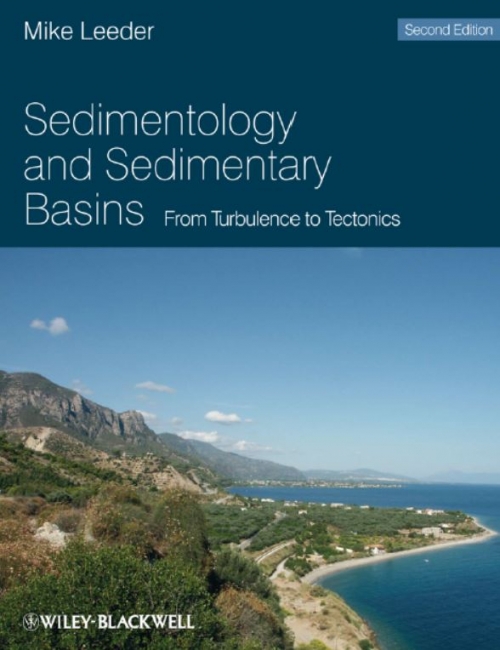
Sedimentary rocks form at low temperatures and pressures at the surface of Earth owing to deposition by water, wind, or ice. By contrast, igneous and metamorphic rocks form mainly below Earth’s surface where temperatures and pressures may be orders of magnitude higher than those at the surface, although volcanic rocks eventually cool at the surface. These fundamental differences in the origin of rocks lead to differences in physical and chemical characteristics that distinguish one kind of rock from another. Sedimentary rocks are characterized particularly by the presence of layers, although layers are also present in some volcanic and metamorphic rocks, and by distinctive textures and structures. Many sedimentary rocks are also distinguished from igneous and metamorphic rocks by their mineral and chemical compositions and fossil content.
Sedimentology is the study of the processes of formation, transport and deposition of material that accumulates as sediment in continental and marine environments and eventually forms sedimentary rocks. Stratigraphy is the study of rocks to determine the order and timing of events in Earth history: it provides the time frame that allows us to interpret sedimentary rocks in terms of dynamic evolving environments. The stratigraphic record of sedimentary rocks is the fundamental database for understanding the evolution of life, plate tectonics through time and global climate change.
The intention of this book is to provide a detailed synthesis of the enormous body of research which has been published on carbonate sediments and rocks. Such rocks are worthy of attention for several reasons. They are volumetrically a most significant part of the geological record and possess much of the fossil record of life on this planet. Most importantly they contain at least 40% of the world's known hydrocarbon reserves. They also play host to base metal deposits and groundwater resources, and are raw materials for the construction and chemical industries. No other rock type is as economically important. From a scientific viewpoint, carbonates are especially interesting for the diversity of their origins. Most limestones are ultimately biogenic in origin and an appreciation of biological and palaeobiological factors is essential in understanding their formation. Their simple mineralogies, usually monominerallic, belie their petrographic and chemical complexity and highly sophisticated microscopic and analytical techniques are required to decipher their diagenetic histories. Besides biological and geochemical expertise, understanding carbonate deposits also demands an appreciation of physical sedimentology and oceanography <...>
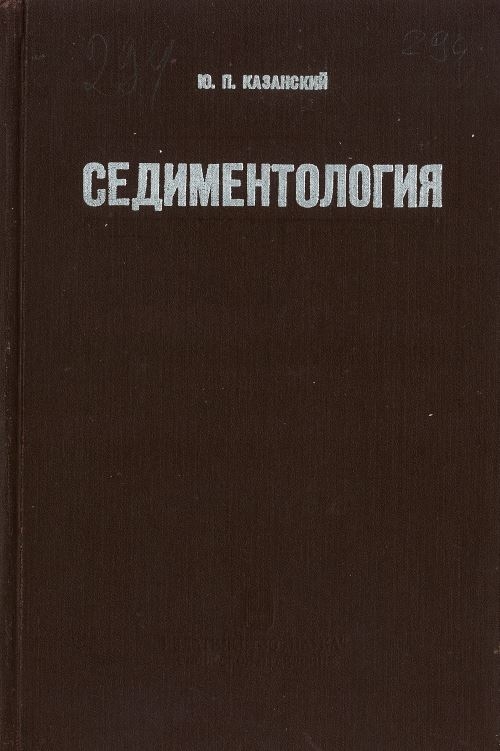
Приведен кратким исторический обзор развития седиментологии. Рассмотрено строение осадочных пород, даны методы оценки размеров зерен, их слагающих, степени их окатанности. Определено понятие «седиментационный цикл», описаны аллохтонные и автохтонные осадки, процессы транспортировки и отложения осадочного материала, текстуры осадочных пород. Изложены основы фациального анализа, дана классификация фациальных обстановок. Рассмотрено формирование и эволюция седимента-ционных бассейнов в различных структурно-тектонических зонах Земли. Освещены практические проблемы седиментологии в связи с формированием залежей нефти и газа, осадочных рудных месторождений. Книга предназначается для широкого круга геологов. Может быть использована преподавателями и студентами нефтяных и геологических институтов и факультетов.
Приведены основные сведения об условиях формирования пород, с которыми связана углеводородная продуктивность недр. Рассмотрена концепция секвенс-стратиграфии как методологической базы прогноза структуры и свойств природных резервуаров. На многочисленных примерах из различных нефтегазоносных областей мира продемонстрированы возможности применения результатов седиментационного моделирования при выборе направлений поисково-разведочных работ. Учебное пособие подготовлено на базовой кафедре (ООО «Газпромнефть НТЦ») «Геология углеводородных систем» для теоретической и практической подготовки студентов, магистрантов и аспирантов, специализирующихся в области «Технологии моделирования углеводородных систем».
В книге детально рассматриваются современные представления об условиях и механизмах накопления карбонатных толщ, а также о влиянии этих условий на формирование фильтрационно-ёмкостных характеристик пород-коллекторов и флюидоупоров. Анализируются применяемые на практике подходы к созданию седиментационно-ёмкостных моделей карбонатных резервуаров, и в первую очередь реализованные в рамках методических приёмов стратиграфии секвенций.
Книга содержит множество примеров использования результатов седиментологических исследований для разработки геологических моделей карбонатных резервуаров и обоснования их добычных характеристик.
Книга предназначена для геологов и геофизиков, занимающихся вопросами геологического строения месторождений нефти и газа, подсчетом запасов, обоснованием направлений поисково-разведочных работ
В книге рассматриваются осадочные процессы в континентальных и морских условиях. Среди седиментационных образований выделяются автохтонные и аллохтонные продукты. Дана их оценка как индикаторов ландшафтно-климатических обстановок. В работе широко использованы наблюдения над современным осадконакоплением и оригинальные экспериментальные исследования.
Книга рассчитана на широкий круг геологов, работающих с осадочными породами