Добрый день, Коллеги. Важное сообщение, просьба принять участие. Музей Ферсмана ищет помощь для реставрационных работ в помещении. Подробности по ссылке
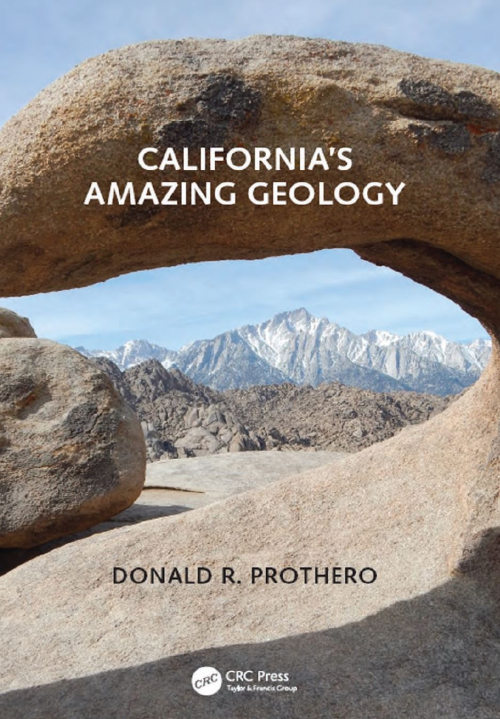
This book was inspired when I began to teach California geology at the college level and found there were no books suitable for such a course. All the books on the market either were grossly out of date or didn’t discuss the modern understanding of California tectonics. California has one of the most amazing and complex histories of any state in the United States, and so the simplistic approaches of the books currently on the market do not do it justice.
People and Environment in Amazonia: The LBA Experience and Other Perspectives M. Batistella, D. S. Alves, E. F. Moran, C. Souza Jr., R. Walker, and S. Walsh
The Changing Rates and Patterns of Deforestation and Land Use in Brazilian Amazonia Diogenes S. Alves, Douglas C. Morton, Mateus Batistella, Oar A. Roberts, and Carlos Souza Jr
Selective Logging and Its Relation to Deforestation Gregory P. Asner, Michael Keller, Marco Lentini, Frank Merry, and Carlos Souza Jr
The Spatial Distribution and Interannual Variability of Fire in Amazonia Wilfrid Schroeder, Ane Alencar, Eugenio Arima, and Alberto Setzer
The Expansion of Intensive Agriculture and Ranching in Brazilian Amazonia Robert Walker, Ruth DeFries, Maria del Carmen Vera-Diaz, Yosio Shimab,ukuro, and Adriano Venturieri
Scenarios of Future Amazonian Landscapes: Econometric and Dynamic ~imulation Models Stephen Perz, Joseph P. Messina, Eustaquio Reis, Robert Walker, and Stephen}. Walsh
Road Impacts in Brazilian Amazonia Alexander Pfaff, Alisson Barbieri, Thomas Ludewigs, Frank Merry, Stephen Perz, and Eustaquio Reis
I define an evaporite as a salt rock that was originally precipitated from a saturated surface or nearsurface brine by hydrologies driven by solar evaporation (Figure 1.1). This simple definition encompasses a wide range of chemically precipitated salts and includes alkali earth carbonates (Table 1.1). Some workers restrict the term evaporite to those salts formed directly via solar evaporation of hypersaline waters at the earth's surface.
The papers in this book are the early results of a research program on sedimentation in Shark Bay which is being carried out from the Department of Geology, The University of Western Australia. The investigation is directed toward an understanding of processes responsible for the formation and early diagenesis of carbonate sediments. Particular emphasis has been placed on development of sedimentary facies and processes in the context of sea-level changes and evolution of the hydrologic environment during the latter part of the Quaternary. Shark Bay, which lies between latitudes 24°30’ and 26°45’S on the arid western coast of Australia, has the dimensions of a minor epicontinental sea; it has an area of about 5,000 sq mi and an average depth of 30 ft. The embayment offers exceptional opportunities for research in carbonate sedimentation since there is a wide range of environments, biotic communities, and sediment types available for study. Carbonate deposition is predominant, and sedimentation is controlled by hydrologic factors, waves, currents, and organisms. Organisms play a major role in sedimentation by contribution of skeletal parts and by intervention in sedimentation. <...>
This symposium considers the practical applications of sedimentation. It is designed (1) to describe aspects of mutual interest to the geologist and to the engineer so that each can understand the other’s problems and thus cooperate more effectively in their work; (2) provide information for the consulting geologist who may not be completely familiar with specific problems; and (3) acquaint students with the many practical applications of sedimentation so that they may be more fully informed as to possibilities for a career in this field. Each chapter is a summary of a comprehensive subject.
BERNARD, A. J. : A Review of Processes Leading to the Formation of Mineral Deposits in Sediments ARNOLD, M., MAUCHER, A., SAUPE, F. : Diagenetic Pyrite and Associated Sulphides at the Almad^n Mercury Mine, Spain BARTHOLOME, P. , EVRARD, P., KATEKESHA, F. , LOPEZ-RUIZ, J. , NGONGO, M. : Diagenetic Ore-forming Processes at Kamoto, Katanga, Republic of the Congo BERNARD, A. J. : Metallogenic Processes of Intra-karstic Sedimentation BOGDANOV, Y. V., KUTYREV, ЕЛ. : Classification of Stratified Copper and Lead-Zinc Deposits and the Regularities of Their Distribution. BRONDI, A., CARRARA, C., POLIZZANO, C. : Uranium and Heavy Metals in Permian Sandstones Near Bolzano (Northern Italy)
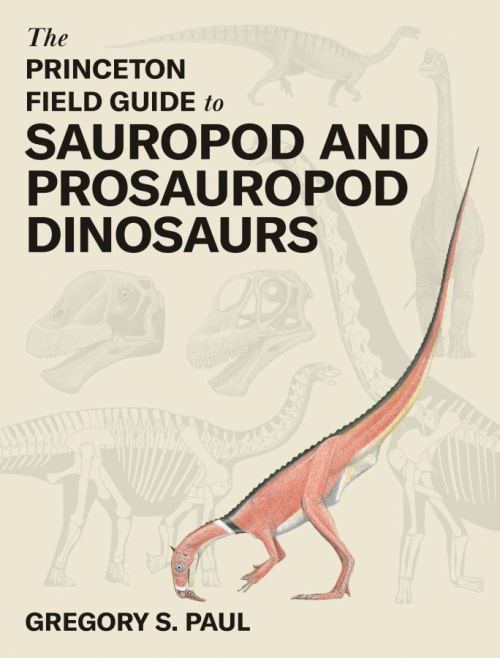
If I were, at about age twenty as a budding paleozoologist and paleoartist, handed a copy of this book by a mysterious time traveler, I would have been shocked as well as delighted. The pages would have revealed a world of new sauropod and related dinosaurs and ideas that I barely had a hint of or had no idea existed at all. My head would have spun at the revelation of the neck spines of Amargasaurus and of sauropods so colossal that they not only gave the giant baleen whales a run for their money in terms of sheer bulk but could feed over six stories high in tree crowns—and took only a few decades to get to those sizes!
Средний Урал. Каменноугольные и пермские морские и континентальные серии: путеводитель по полевой экскурсии 18 Международного конгресса по каменноугольным и пермским отложениям
The descriptions and biostratigraphic analyses of the important type and reference sections of the Famennian, Carboniferous and Lower Permian. The foraminifers, conodonts, Rugosa corals are illustrated. For geologists and paleontologists who study Carboniferous and Permian stratigraphy, paleontology <...>
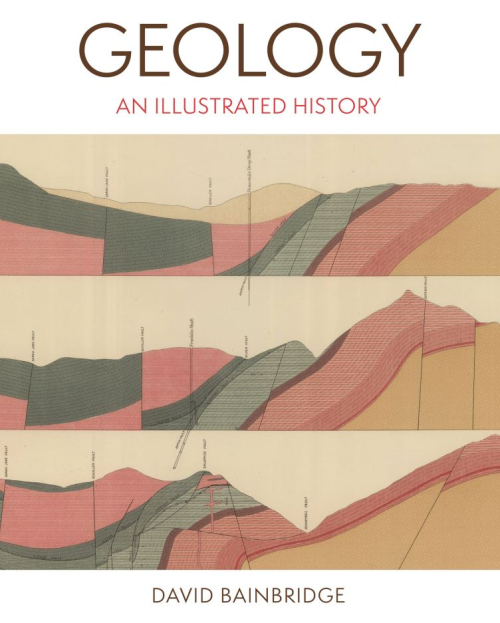
The Earth is our familiar home, yet the geological processes which underlie our tenure on it can seem intimidatingly vast, ancient, and sometimes even alien—certainly beyond everyday human experience. Our planet’s origins and upheavals have fascinated humans for millennia, but only recently have we developed a clear understanding of how the Earth actually works. Many people alive today were born at a time when no one knew where Earth’s constituents came from, why continents move, how diamonds are made, what causes earthquakes, when life started, or whether geological processes occur elsewhere in the Universe. We now know a great deal about all these things, and geology is expanding at breakneck speed.Long before it had a name, geology was a crucial part of human knowledge. Even before agriculture, humans needed to know where water was wrung from the ground, where the best tool-stones could be found, and how to choose a stable, safe campsite. This knowledge expanded with the advent of farming and settlements around ten thousand years ago—working the land where minerals in the soil would make crops and beasts thrive, carving irrigation channels and trackways into the ground, and hewing stones to build the new villages and cities. <...>