Добрый день, Коллеги. Важное сообщение, просьба принять участие. Музей Ферсмана ищет помощь для реставрационных работ в помещении. Подробности по ссылке
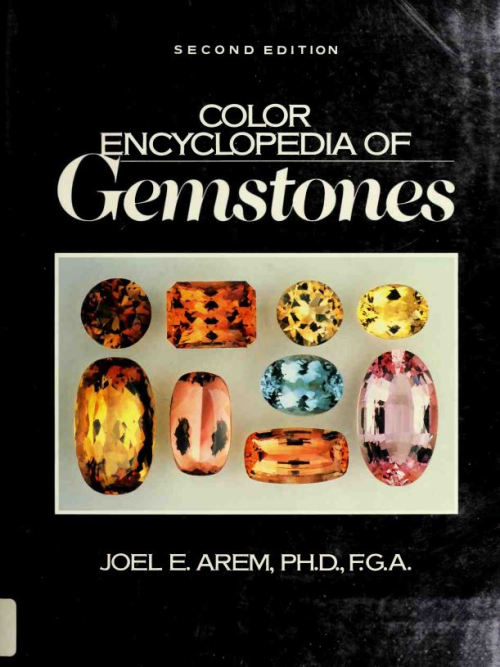
The first edition of this encyclopedia was published a decade ago, and some remarkable changes have occurred in the gemstone marketplace during this interval. Although diamond still retains its place as the most popular and esteemed of all gemstones, the extremely wide gap in this leadership position versus colored stones has nar- rowed. There is a large and growing demand for all kinds of gemstones, especially brightly colored stones that can be worn as fashion accessories. Beaded jewelry has become an item of immense popularity; pearls have seen a huge revival.
The distribution of rare earth elements was analyzed in the Early Cambrian diamondiferous calcsilicate rocks and gneisses, calciphyres, and marbles of the Kumdy-Kol deposit. These data were compared with the lithogeochemical characteristics of the sedimentary assemblages of weakly metamorphosed Late Precambrian graphite-bearing sedimentary rocks of the Kokchetav metamorphic belt. The obtained results allowed us to suppose that the protoliths of the Kumdy-Kol rocks were compositionally similar to the Late Precambrian graphite-bearing terrigenous–carbonate and sand–shale sequences of the continental shelf of the Kokchetav microcontinent, some of which were transformed in a subduction zone into diamondiferous rocks.
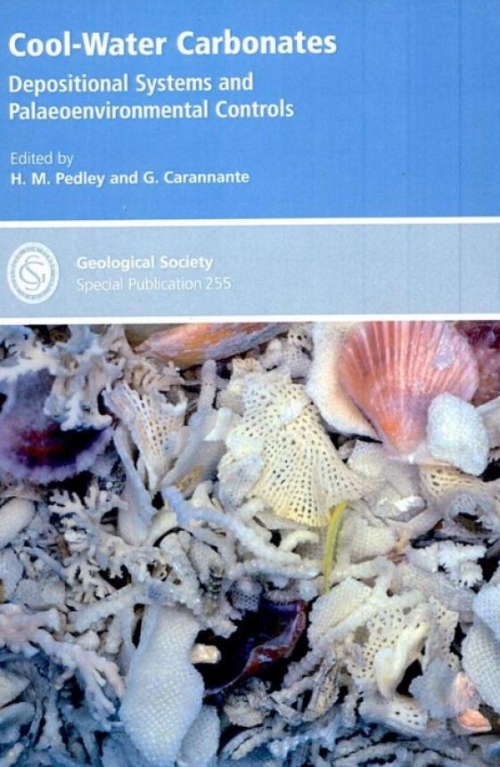
This review of marine, cool-water carbonate ramps considers both their defining features and the key publications relating to them. Cool-water carbonate environments are dominated by open, skeletal debris-covered sea bottoms which support biological assemblages devoid of hermatypic coral reefs, calcified green algae and non-skeletal grains. The growing body of modem literature deals mainly with Neogene to Recent examples, particularly from the Australian, New Zealand and Mediterranean regions. Nevertheless, many ancient examples have been recognized and, without doubt, many more - currently described as 'tropical carbonates' - will also be found to be cool-water examples. <...>
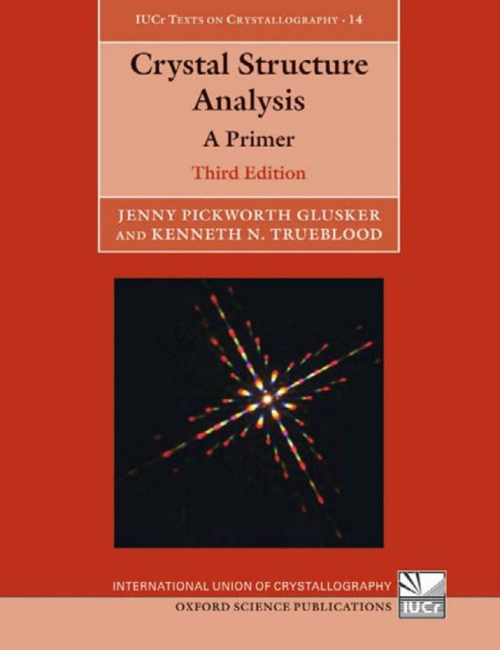
Much of our present knowledge of the architecture of molecules has been obtained from studies of the diffraction of X rays or neutrons by crystals. X rays* are scattered by the electrons of atoms and ions, and the interference between the X rays scattered by the different atoms or ions in a crystal can result in a diffraction pattern. Similarly, neutrons are scattered by the nuclei of atoms. Measurements on a crystal diffraction pattern can lead to information on the arrangement of atoms or ions within the crystal. This is the experimental technique to be described in this book
The material in this book is derived from an intensive course in X-ray structure analysis organized on behalf of the Chemical Crystallography Group of the British Crystallographic Association and held every two years since 1987. As with a crystal structure derived from X-ray diffraction data, the course contents have been gradually refined over the years and they reached a stage in 1999 (the seventh course) where we considered they could be published, and hence made available to a far wider audience than can be accommodated on the course itself.
The 5000 lines of FORTRAN code that became known as SHELX-76 had their origins around 1970 when the University of Cambridge replaced the ICL Titan computer with an IBM-370. My previous attempts to write programs used Titan Autocode, a simple but efficient programming language closer to assembler than to a modern high-level language. With the IBM computer came two major innovations: a FORTRAN compiler and punched cards.
The terms interlayering, mixed-layering, and interstratification describe phyllosilicate structures in which two or more kinds of layers occur in a vertical stacking sequence, that is, along c* or a line normal to (001). Phyllosilicate layers are strongly bonded internally but rather weakly bonded to each other. Thus, each layer approximates a one-dimensional “molecule” in the e* direction, and a two-dimensional crystal in the a and b directions. The basal surfaces of different kinds of layers are geometrically very similar and consist of sheets of oxygen or hydroxyl ions in quasi-hexagonal array. Consequently, layers with different internal arrangements can stack together and still articulate well at their interfaces. These structural factors are almost unique to the clays and phyllosilicates generally, and doubtless are responsible for the common occurrence of interstratified species. <...>
This book (the first of two volumes) is devoted to the topic of the description of structures, especially periodic structures, and their symmetries. Much of the material is a prerequisite for serious students of solid state chemistry and related sciences (e.g. mineralogy, materials science and solid state physics).
The aim of this book is to provide reliable information not only on the science of crystallization from solution and from melt but also on the basic design methods for laboratory and especially industrial crystallizers. Up to now the niche between scientific results and practical design and operation of large-scale crystallizers has scarcely been filled. A work devoted to this objective has to take into account relevant crystallization phenomena as well as chemical engineering processes such as fluid dynamics, multiphase flow, and heat and mass transfer. In the design of crystallizers, experiments are initially performed on laboratory crystallizers to obtain kinetic data. In this book, information is given on reliable scale-up of such crystallizers.
Many materials are polycrystalline aggregates of tiny crystallites or grains of various sizes and shapes. Even for aggregates whose crystallites are chemically identical, the crystal lattices of the grains will still differ in their orientation in space. Since each crystallite is anisotropic in its physical properties, the macroscopic properties of a polycrystal will likewise be anisotropic unless the orientations of its constituent crystallites are completely random and the anisotropies of the crystallites even themselves out.