Добрый день, Коллеги. Важное сообщение, просьба принять участие. Музей Ферсмана ищет помощь для реставрационных работ в помещении. Подробности по ссылке
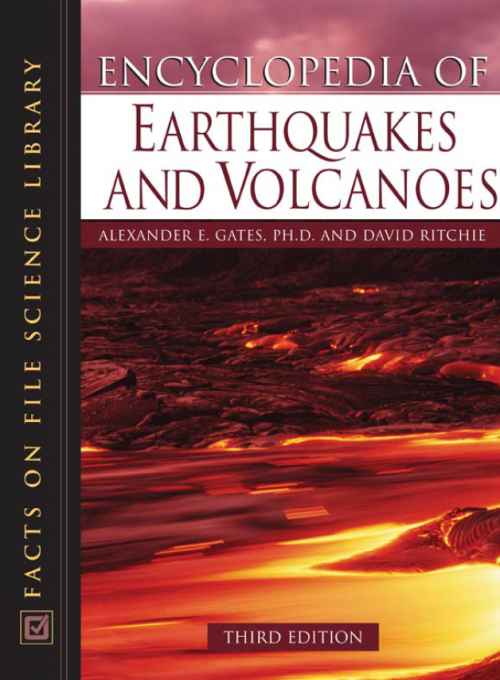
Until the 1950s, the various branches of geology, including the study of volcanoes and earthquakes, appeared to have no real connection, and the progress of the science was toward continued divergence. What pulled everything back together was the radical concept of plate tectonics that came into fruition in the 1960s and 1970s. Plate tectonics is sometimes referred to as “the glue that holds geology together” to reflect this power. It explains virtually all volcanoes and the lion’s share of earthquakes and even relates them to each other. The following review of plate tectonics is a good place to start for anyone needing a refresher.
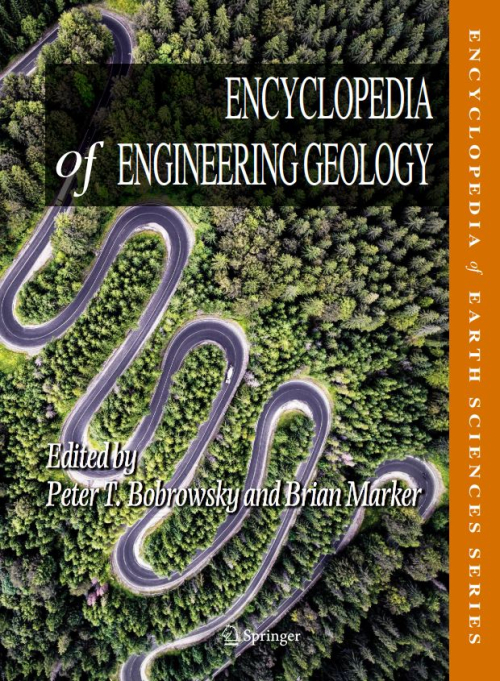
Engineering geology provides a vital link between the established, traditional, and relevant disciplines that link its identity and name; that is, “engineering” and “geology.” More recently, a variety of other fields of study are viewed as synonymous with engineering geology including but not limited to geotechnics, geological engineering, environmental engineering, environmental geology, applied geology, and so on.
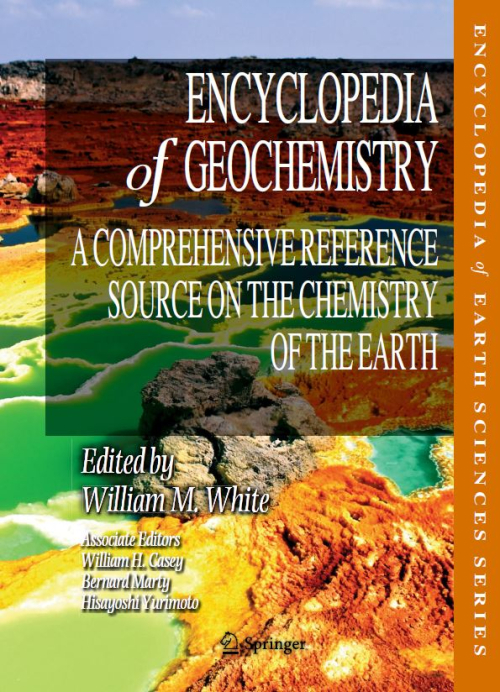
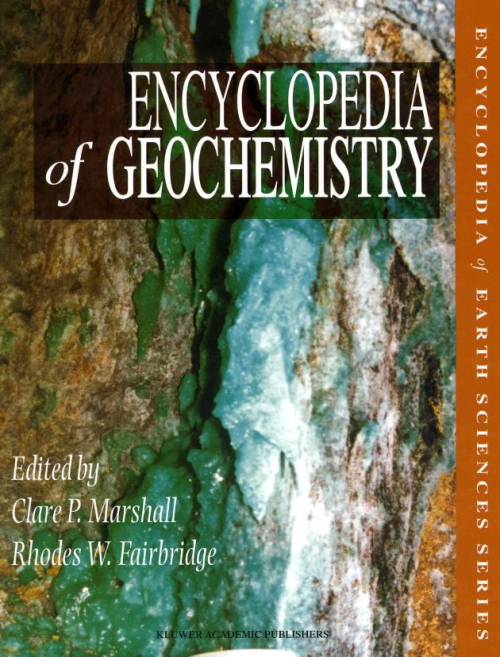
Few fields within the earth sciences have grown as rapidly or had as great an impact as geochemistry. The impact of geochemistry has been vast and greatly influenced our understanding of virtually every aspect of this planet, its neighbors, and the life that makes it so unique.
The Kluwer Encyclopedia of Earth Sciences Series provides comprehensive and authoritative coverage of all the main areas in the Earth Sciences. Each volume comprises a focused and carefully chosen collection of contributions from leading names in the subject, with copious illustrations and reference lists. These books represent one of the world’s leading resources for the Earth Sciences community. Previous volumes are being updated and new works published so that the volumes will continue to be essential reading for all professional earth scientists, geologists, geophysicists, climatologists, and oceanographers as well as for teachers and students. See the back of this volume for a current list of titles in the Encyclopedia of Earth Sciences Series.
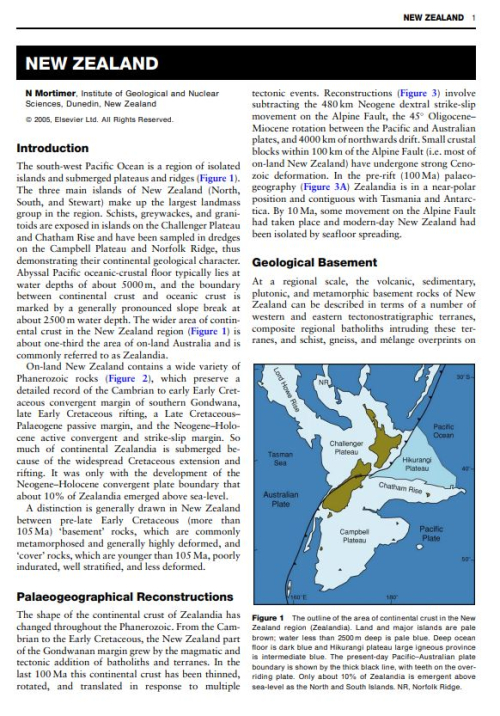
The south-west Pacific Ocean is a region of isolated islands and submerged plateaus and ridges (Figure 1). The three main islands of New Zealand (North, South, and Stewart) make up the largest landmass group in the region. Schists, greywackes, and granitoids are exposed in islands on the Challenger Plateau and Chatham Rise and have been sampled in dredges on the Campbell Plateau and Norfolk Ridge, thus demonstrating their continental geological character.
Few areas of science can have changed as fast as geology has in the past forty years. In the first half of the last century geologists were divided, often bitterly, between the drifters and those who believed that the Earth and its continents were static. Neither side of this debate foresaw that the application of methods from physics, chemistry and mathematics to these speculations would revolutionize the study of all aspects of the Earth Sciences, and would lead to accurate and detailed reconstructions of world geography at former times, as well as to an understanding of the origin of the forces that maintain the continental movements. This change in world-view is no longer controversial, and is now embedded in every aspect of the Earth Sciences. It is a real pleasure to see this change, which has revitalized so many classic areas of research, reflected in the articles of this encyclopedia. Particularly affected are the articles on large-scale Earth processes, which discuss many of the new geological ideas that have come from geophysics and geochemistry. Forty years ago we had no understanding of these topics, which are fundamental to so many aspects of the Earth Sciences. The editors have decided, and in my view quite rightly, not to include detailed discussion of the present technology that is used to make geophysical and geochemical measurements. Such instrumental aspects are changing rapidly and become dated very quickly. They can easily be found in more technical publications. Instead the editors have concentrated on the influence such studies have had on our understanding of the Earth and its evolution, and in so doing have produced an excellent and accessible account of what is now known.
Any encyclopedia has to satisfy a wide variety of users, and in particular those who know that some subject like sedimentation or mineral exploration is part of geology, and go to an encyclopedia of geology to find out more. The editors have made a very thorough attempt to satisfy such users, and have included sections on such unexpected geological topics as the evolution of the Earth’s atmosphere, the geology of Jupiter, Saturn, and their moons, aggregates, and creationism. I congratulate the editors and authors for producing such a fine summary of our present knowledge, and am particularly pleased that they intend to produce an online version of the encyclopedia. Though I have become addicted to using the Internet as my general encyclopedia, I will be delighted to be able to access something concerned with my own field that is as organized and scholarly as are these volumes.
Few areas of science can have changed as fast as geology has in the past forty years. In the first half of the last century geologists were divided, often bitterly, between the drifters and those who believed that the Earth and its continents were static. Neither side of this debate foresaw that the application of methods from physics, chemistry and mathematics to these speculations would revolutionize the study of all aspects of the Earth Sciences, and would lead to accurate and detailed reconstructions of world geography at former times, as well as to an understanding of the origin of the forces that maintain the continental movements. This change in world-view is no longer controversial, and is now embedded in every aspect of the Earth Sciences. It is a real pleasure to see this change, which has revitalized so many classic areas of research, reflected in the articles of this encyclopedia. Particularly affected are the articles on large-scale Earth processes, which discuss many of the new geological ideas that have come from geophysics and geochemistry. Forty years ago we had no understanding of these topics, which are fundamental to so many aspects of the Earth Sciences. The editors have decided, and in my view quite rightly, not to include detailed discussion of the present technology that is used to make geophysical and geochemical measurements. Such instrumental aspects are changing rapidly and become dated very quickly. They can easily be found in more technical publications. Instead the editors have concentrated on the influence such studies have had on our understanding of the Earth and its evolution, and in so doing have produced an excellent and accessible account of what is now known.
Any encyclopedia has to satisfy a wide variety of users, and in particular those who know that some subject like sedimentation or mineral exploration is part of geology, and go to an encyclopedia of geology to find out more. The editors have made a very thorough attempt to satisfy such users, and have included sections on such unexpected geological topics as the evolution of the Earth’s atmosphere, the geology of Jupiter, Saturn, and their moons, aggregates, and creationism. I congratulate the editors and authors for producing such a fine summary of our present knowledge, and am particularly pleased that they intend to produce an online version of the encyclopedia. Though I have become addicted to using the Internet as my general encyclopedia, I will be delighted to be able to access something concerned with my own field that is as organized and scholarly as are these volumes.
Few areas of science can have changed as fast as geology has in the past forty years. In the first half of the last century geologists were divided, often bitterly, between the drifters and those who believed that the Earth and its continents were static. Neither side of this debate foresaw that the application of methods from physics, chemistry and mathematics to these speculations would revolutionize the study of all aspects of the Earth Sciences, and would lead to accurate and detailed reconstructions of world geography at former times, as well as to an understanding of the origin of the forces that maintain the continental movements. This change in world-view is no longer controversial, and is now embedded in every aspect of the Earth Sciences. It is a real pleasure to see this change, which has revitalized so many classic areas of research, reflected in the articles of this encyclopedia. Particularly affected are the articles on large-scale Earth processes, which discuss many of the new geological ideas that have come from geophysics and geochemistry. Forty years ago we had no understanding of these topics, which are fundamental to so many aspects of the Earth Sciences. The editors have decided, and in my view quite rightly, not to include detailed discussion of the present technology that is used to make geophysical and geochemical measurements. Such instrumental aspects are changing rapidly and become dated very quickly. They can easily be found in more technical publications. Instead the editors have concentrated on the influence such studies have had on our understanding of the Earth and its evolution, and in so doing have produced an excellent and accessible account of what is now known.
Any encyclopedia has to satisfy a wide variety of users, and in particular those who know that some subject like sedimentation or mineral exploration is part of geology, and go to an encyclopedia of geology to find out more. The editors have made a very thorough attempt to satisfy such users, and have included sections on such unexpected geological topics as the evolution of the Earth’s atmosphere, the geology of Jupiter, Saturn, and their moons, aggregates, and creationism. I congratulate the editors and authors for producing such a fine summary of our present knowledge, and am particularly pleased that they intend to produce an online version of the encyclopedia. Though I have become addicted to using the Internet as my general encyclopedia, I will be delighted to be able to access something concerned with my own field that is as organized and scholarly as are these volumes.
Few areas of science can have changed as fast as geology has in the past forty years. In the first half of the last century geologists were divided, often bitterly, between the drifters and those who believed that the Earth and its continents were static. Neither side of this debate foresaw that the application of methods from physics, chemistry and mathematics to these speculations would revolutionize the study of all aspects of the Earth Sciences, and would lead to accurate and detailed reconstructions of world geography at former times, as well as to an understanding of the origin of the forces that maintain the continental movements. This change in world-view is no longer controversial, and is now embedded in every aspect of the Earth Sciences. It is a real pleasure to see this change, which has revitalized so many classic areas of research, reflected in the articles of this encyclopedia. Particularly affected are the articles on large-scale Earth processes, which discuss many of the new geological ideas that have come from geophysics and geochemistry. Forty years ago we had no understanding of these topics, which are fundamental to so many aspects of the Earth Sciences. The editors have decided, and in my view quite rightly, not to include detailed discussion of the present technology that is used to make geophysical and geochemical measurements. Such instrumental aspects are changing rapidly and become dated very quickly. They can easily be found in more technical publications. Instead the editors have concentrated on the influence such studies have had on our understanding of the Earth and its evolution, and in so doing have produced an excellent and accessible account of what is now known.
Any encyclopedia has to satisfy a wide variety of users, and in particular those who know that some subject like sedimentation or mineral exploration is part of geology, and go to an encyclopedia of geology to find out more. The editors have made a very thorough attempt to satisfy such users, and have included sections on such unexpected geological topics as the evolution of the Earth’s atmosphere, the geology of Jupiter, Saturn, and their moons, aggregates, and creationism. I congratulate the editors and authors for producing such a fine summary of our present knowledge, and am particularly pleased that they intend to produce an online version of the encyclopedia. Though I have become addicted to using the Internet as my general encyclopedia, I will be delighted to be able to access something concerned with my own field that is as organized and scholarly as are these volumes.