Добрый день, Коллеги. Важное сообщение, просьба принять участие. Музей Ферсмана ищет помощь для реставрационных работ в помещении. Подробности по ссылке
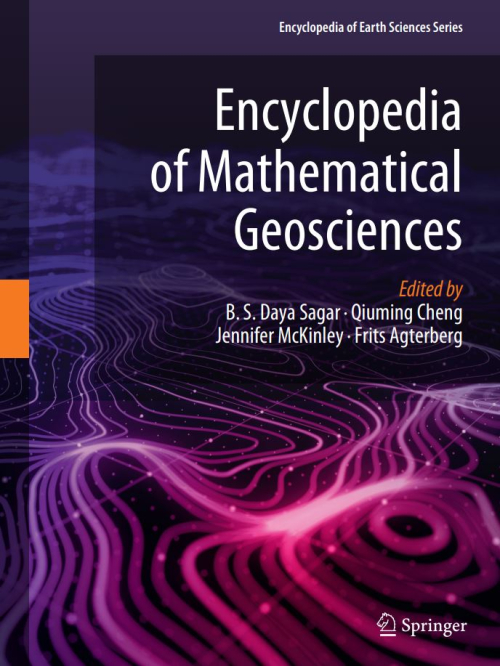
Accuracy is a measure of how close a measured value of a variable is to its true value. In the context of the mathematical geosciences, it could also be a measure of how close an estimated value of a variable is to the unknown true value at a given location when the estimate is obtained as some function of the measured data values.
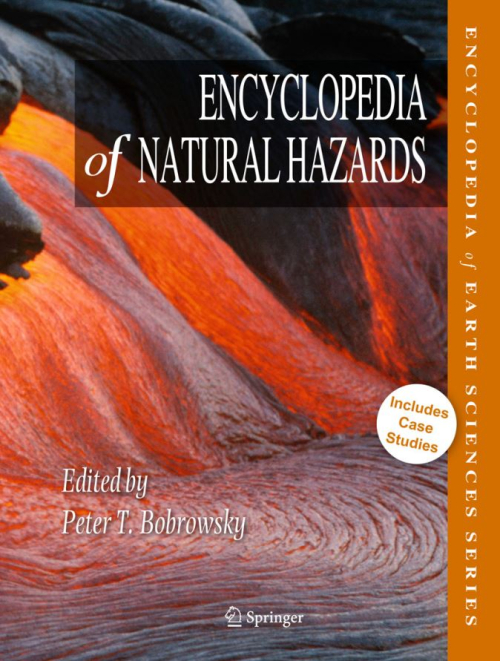
Few subjects have caught the attention of the entire world as much as those dealing with natural hazards. The first decade of this new millennium provides a litany of tragic examples of various hazards that turned into disasters affecting millions of individuals around the globe. The human losses (some 225,000 people) associated with the 2004 Indian Ocean earthquake and tsunami, the economic costs (approximately 200 billion USD) of the 2011 Tohoku Japan earthquake, tsunami, and reactor event, and the collective social impacts of human tragedies experienced during Hurricane Katrina in 2005 all provide repetitive reminders that we humans are temporary guests occupying a very active, angry, and ancient planet.
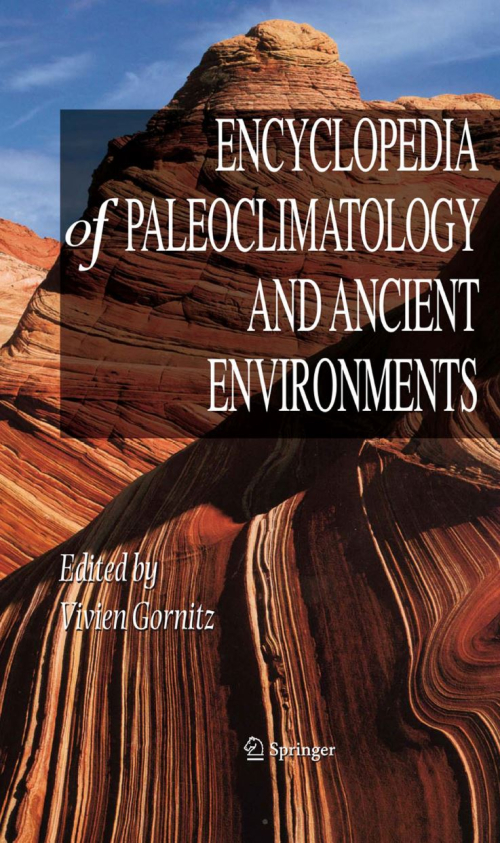
This volume is offered in tribute to the memory of Rhodes W. Fairbridge, Senior Editor of the Encyclopedia of Earth Sciences Series, who sadly passed away before this encyclopedia could be completed. It was upon his recommendation and inspiration that this project was undertaken. Rhodes Fairbridge took a keen interest in paleoclimatology, which ties together many aspects of the geosciences. He wrote several articles especially for this encyclopedia, including a detailed history of paleoclimatology and “Earth Laws and Paleoclimatology”, which summarizes many of the ideas he had covered in his long and distinguished career. He was way ahead of his time in his early acceptance of Wegener's theory of continental drift, the role of orbital cycles in climate change (i.e., the Milankovitch theory), solar influences on climate, and recognition of general aridity during glacial periods.
The great 19th-century geologist and natural historian, Charles Lyell (1830), is generally credited as being the author of the concept of Uniformitarianism (see History of Quaternary Science). Simply stated, this concept says that ‘‘the present is the key to the past.’’ In other words, we may interpret the ancient history of the planet through our understanding of modern-day processes. This concept represented a major step forward in scientific thought, greatly influencing contemporary scientists, such as Charles Darwin (see History of Quaternary Science).
As with the publication of the first edition in 2007, the publication of the second edition of the Encyclopedia of Quaternary Science represents a landmark in the history of publishing in the field of Quaternary Science. Quaternary Science is a multidisciplinary endeavor which seeks to establish as detailed a picture as possible of the manifold environmental changes that have occurred during the most recent geological period, the Quaternary – an interval of time that spans the past 2.59 million years or the past 0.056% of geological time. It is a period of significant climate and environmental change and witnessed the widespread dispersal of our species, Homo sapiens, across the planet.
The earth's cryosphere, which includes snow, glaciers, ice caps, ice sheets, ice shelves, sea ice, river and lake ice, and permafrost, contains about 75% of the earth's fresh water. It exists at almost all latitudes, from the tropics to the poles, and plays a vital role in controlling the global climate system. It also provides direct visible evidence of the effect of climate change, and, therefore, requires proper understanding of its complex dynamics. This encyclopedia mainly focuses on the various aspects of snow, ice and glaciers, but also covers other cryospheric branches, and provides up-to-date information and basic concepts on relevant topics. It includes alphabetically arranged and professionally written, comprehensive and authoritative academic articles by well-known international experts in individual fields. The encyclopedia contains a broad spectrum of topics, ranging from the atmospheric processes responsible for snow formation; transformation of snow to ice and changes in their properties; classification of ice and glaciers and their worldwide distribution; glaciation and ice ages; glacier dynamics; glacier surface and subsurface characteristics; geomorphic processes and landscape formation; hydrology and sedimentary systems; permafrost degradation; hazards caused by cryospheric changes; and trends of glacier retreat on the global scale along with the impact of climate change. This book can serve as a source of reference at the undergraduate and graduate level and help to better understand snow, ice and glaciers. It will also be an indispensable tool containing specialized literature for geologists, geographers, climatologists, hydrologists, and water resources engineers; as well as for those who are engaged in the practice of agricultural and civil engineering, earth sciences, environmental sciences and engineering, ecosystem management, and other relevant subjects.
More than ever before, a compelling need exists for an encyclopedic resource about soil the rich mix of mineral particles, organic matter, gases, and soluble compounds that foster both plant and animal growth. Civilization depends more on the soil as human populations continue to grow and increasing demands are placed upon available resources.
The Encyclopedia of Soils in the Environmentis a comprehensive and integrated consideration of a topic of vital importance to human societies in the past, present, and future. This important work encompasses the present knowledge of the world's variegated soils, their origins, properties, classification, and roles in the biosphere. A team of outstanding, international contributors has written over 250 entries that cover a broad range of issues facing today's soil scientists, ecologists, and environmental scientists.
This four-volume set features thorough articles that survey specific aspects of soil biology, ecology, chemistry and physics. Rounding out the encyclopedia's excellent coverage, contributions cover cross-disciplinary subjects, such as the history of soil utilization for agricultural and engineering purposes and soils in relation to the remediation of pollution and the mitigation of global climate change.
Darwin’s tangled bank is the biosphere in poetic microcosm, and the “damp earth” he refers to is soil. Soil is arguably the most complex of all geological materials, a combination of mineral and organic constituents in solid, aqueous and gaseous forms, organized into a loose, porous, horizonated, plant-bearing material, that is constantly changing. It forms as a result of a complex series of interactions and feedbacks between lithosphere, hydrosphere, atmosphere and, biosphere. As the natural geological cover of most of the land surface of the earth, it is the focus of this encyclopedia.
This entry explains the use of emergy analysis to evaluate systems and compare resource use, environmental loading, and sustainability. This method allows the free contributions of the environment to be compared directly with the purchased inputs from the economy. Results summarized from agriculture and forestry systems indicate that extensive amounts of indirect energy were dissipated to yield agricultural and forest products and that timber typically requires less indirect energy than crops.