Добрый день, Коллеги. Важное сообщение, просьба принять участие. Музей Ферсмана ищет помощь для реставрационных работ в помещении. Подробности по ссылке
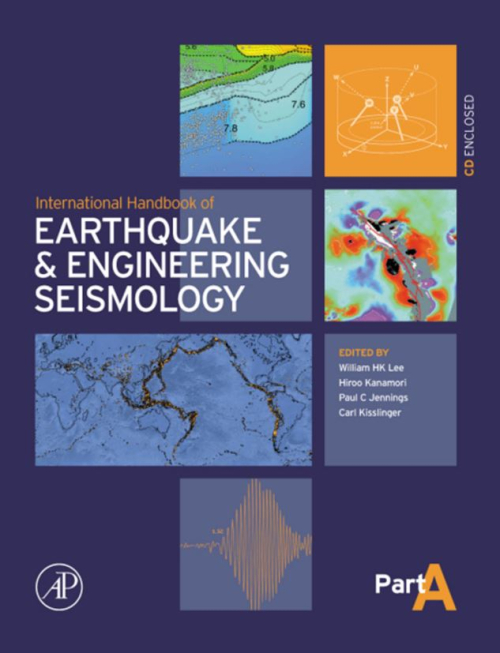
Seismology is, in the truest sense of the word, a global science, not limited to political boundaries. Thus, it can only be effectively practiced through international cooperation. Seismology is primarily an observational science. Quantitative measurements of seismic ground motion as a function of time require physically well defined, continuously recording instruments. Suitable seismographs of different design principles became available at the end of the 19th century. In the following years, a considerable number of seismograph stations were installed at sites around the globe. At the dawn of this century, some of these stations celebrate their 100th anniversary, as does the International Association of Seismology and Physics of the Earth’s Interior (IASPEI).
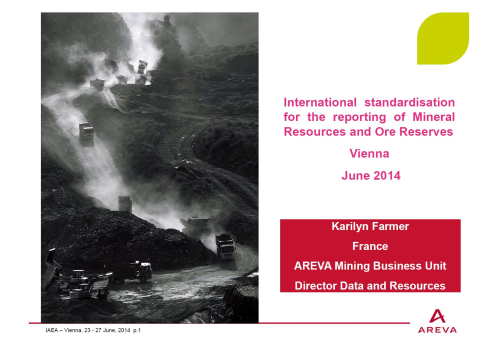
The International Template for Reporting of Exploration Results, Mineral Resources and Mineral Reserves integrates the minimum standards being adopted in national reporting codes worldwide with recommendations and interpretive guidelines for the Public Reporting of Exploration Results, Mineral Resources and Mineral Reserves. The definitions in this edition of the International Reporting Template are either identical to, or not materially different from those definitions used in the countries represented on the CRIRSCO committee <...>
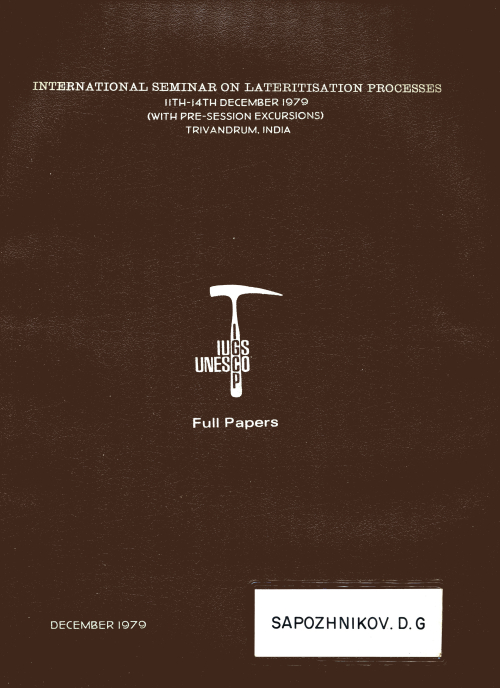
Geochemical and Mineralogical Studies of the Alteration (Lateritic) cover: of Alkali Trachy-Andesite From, the Ethiopian Plateau/ Gore, (W. Ethiopia). S.S. Augustithis et al Mode of Lateritization of Basaltic Rocks - A Petrographic and Chemical Approach S-.K. Babu et al On Transformation of Iron Oxides in Chemogenic eluvium F.V. Chukrov Study of Geochemistry of Lateritisation Process with the help of Trace Element Data. A.N. Chowdhury et al. Mineralogical and Chemical Aspects of Lateritisation in Southwestern Australia. R.J. Gilkes et al.
Geochemical and Mineralogical Studies of the Alteration (Lateritic) cover: of Alkali Trachy-Andesite From, the Ethiopian Plateau/ Gore, (W. Ethiopia). S.S. Augustithis et al Mode of Lateritization of Basaltic Rocks - A Petrographic and Chemical Approach S-.K. Babu et al On Transformation of Iron Oxides in Chemogenic eluvium F.V. Chukrov Study of Geochemistry of Lateritisation Process with the help of Trace Element Data. A.N. Chowdhury et al. Mineralogical and Chemical Aspects of Lateritisation in Southwestern Australia. R.J. Gilkes et al. Genesis of Bauxite deposits of Shevaroy Hills, Tamil Nadu, South India G.Krishna Rao Changes in Vertical Distribution of Heavy Elements During Tropical Weathering. Carlos J. Lopez. Eyzaguirre The Distribution abd the Chemical Composition of Some Laterites of Sri Lanka. Kapila Dahanayake et al. Geochemistry and Mineralogy of Nickel Oxide Ores in the Southwestern Pacific Area Yoshio Ogura et al.
1. Suggested methods for determining tensile strength of rock materials (1978) 2. Suggested methods for determining the strength of rock materials in triaxial compression (1978) 3. Suggested methods for determining the uniaxial compressive strength and deformability of rock materials (1979) 4. Suggested methods for determining shear strength (1974)
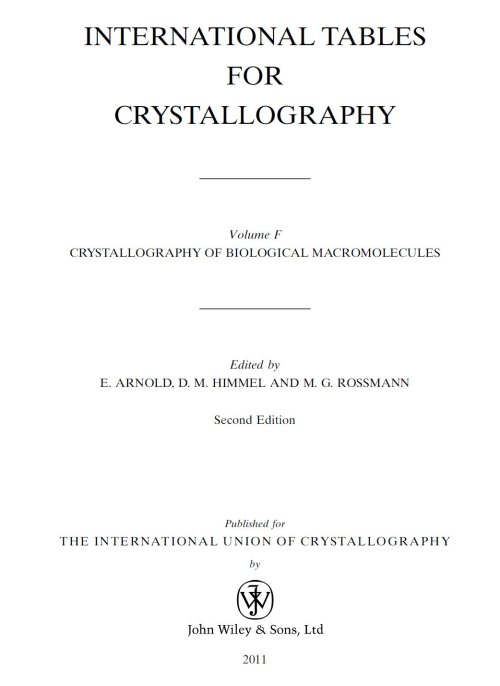
International Tables for Crystallography, Volume F, Crystallography of Biological Macromolecules, was commissioned by the International Union of Crystallography (IUCr) in recognition of the extraordinary contributions that knowledge of macromolecular structure has made, and will make, to the analysis of biological systems, from enzyme catalysis to the workings of a whole cell.
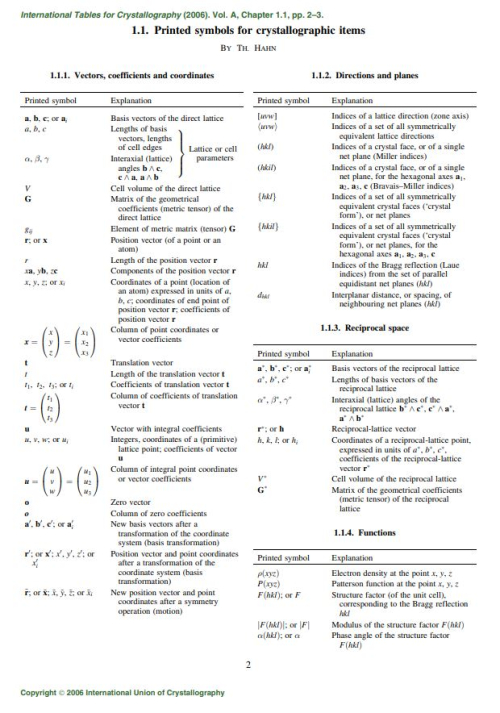
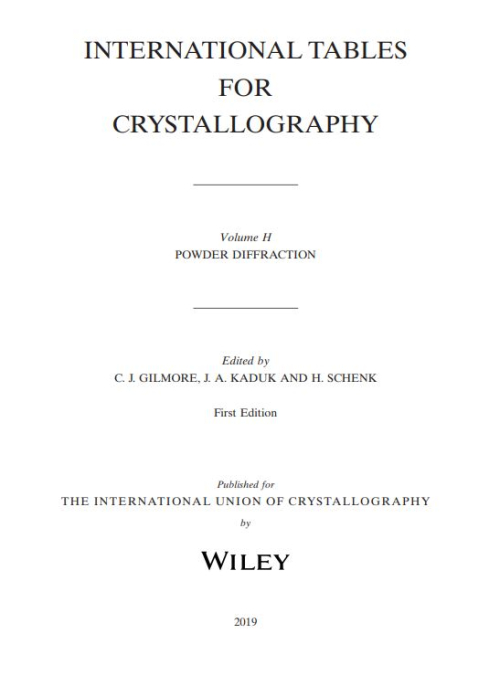
International Tables for Crystallography started life in in 1935 as a two-volume set entitled Internationale Tabellen zur Bestimmung von Kristallstrukturen, with C. Hermann as editor. We are now in the third series, with eight volumes covering all aspects of crystallography from symmetry to macromolecular crystallography. However, there has always been one glaring omission and one that has become increasingly serious: powder diffraction. This is odd: powder crystallography started as early as 1916 with the seminal work of Debye and Scherrer, and has grown to include quantitative and semi-quantitative analysis, structure solution and refinement, two-dimensional data, comprehensive databases, clustering, and microstructural properties, and is applied to a wide range of problems of both academic and industrial interest.
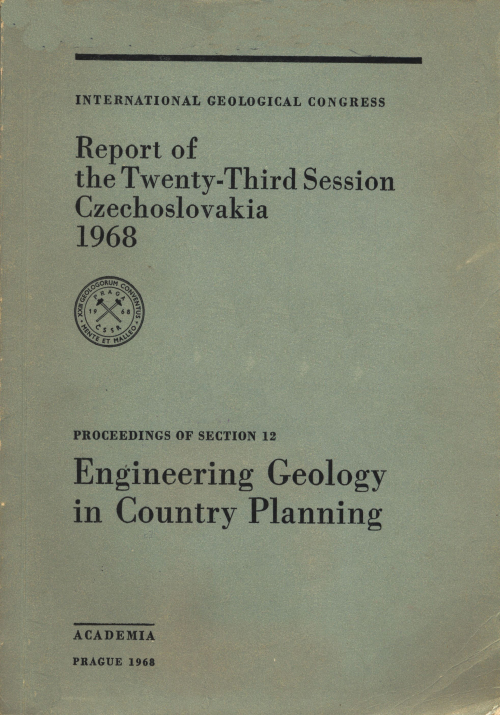
Engineering Geology under the Conditions of the Planned Economy of the U.S.S.R. Earth Scientists and Political Scientists Need Each Other G. Debaille et S. Ghiste: Influence des facteurs geologiques sur les proprietes mecaniques des sols de fondation Geology as Applied to Urban Planning: an Example from the Greater Anchorage Area Borough, Alaska Engineering Geological Mapping in the U.S.S.R.