Добрый день, Коллеги. Важное сообщение, просьба принять участие. Музей Ферсмана ищет помощь для реставрационных работ в помещении. Подробности по ссылке
The ever increasing amount of data on crystal arrangement in igneous and metamorphic rocks, alloys and ceramics, shows that the microtextures of these materials result from sequences of crystal growth and resorption. Metallurgists have become knowledgeable in the interpretation of textures and can make or modify textures of alloys in order to obtain specifjc responses to traction, distortion, etc. The modifications in texture can be reproduced or changed as often as desired. By analogy, it is probable that the microtextures observed in rocks may result from the same processes that govern similar textures in manufactured products. <...>
Christopher R. German, Jian Lin, and Lindsay M. Parson The Thermal Structure of the Oceani c Crust, Ridge-Spreading and Hydrothermal Circulation: How Well Do We Understand Their Inter-Connections? Christopher R. German and Jian Lin Geophysical Constraints Upo n the Thermal Regime of the Ocea n Crust Martin C Sinha and Rob L. Evans The Rheology and Morpholog y of Oceani c Lithosphere and Mid-Ocea n Ridges R. C. Searle and J. Escartfn
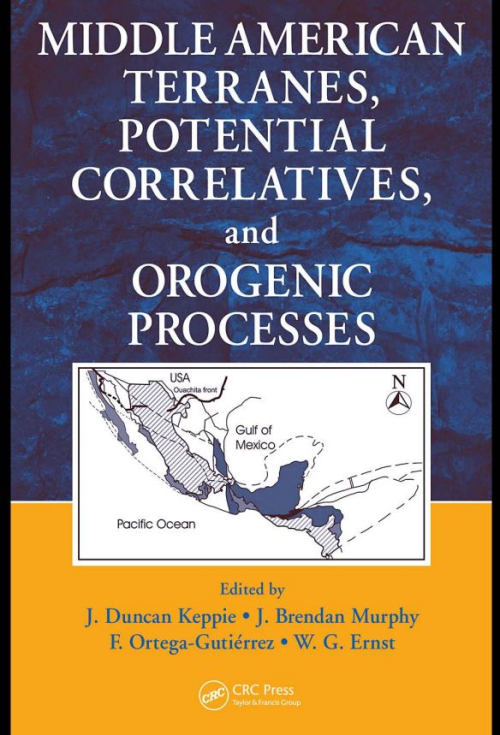
Editors’ Preface —J. Duncan Keppie, J. Brendan Murphy, F. Ortega-Gutierrez, and W. G. Ernst Middle American Terranes Terranes of Mexico Revisited: A 1.3 Billion Year Odyssey —J. Duncan Keppie Oaxaquia Terrane Sedimentary Origin of Calcareous Intrusions in the ~1 Ga Oaxacan Complex, Southern Mexico: Tectonic Implications —J. Dostal, J. D. Keppie, H. Macdonald, and F. Ortega-Gutierrez Geochronology and Geochemistry of the ~917 Ma, Calc-alkaline Etla Granitoid Pluton (Oaxaca, Southern Mexico): Evidence of Post-Grenvillian Subduction along the Northern Margin of Amazonia —C. Ortega-Obregon, J. D. Keppie, L. A. Solari, F. Ortega-Gutierrez, J. Dostal, R. Lopez, A. Ortega-Rivera, and J. W. K. Lee
Fossil oysters are among the most common and well preserved faunal elements in Cretaceous sediments. With few exceptions, however, they have been ignored in evolutionary studies and biostra-tigraphy. Although countless species have been described, the taxonomy of the group is confusing and inconsistent. It seems ironic, therefore, that they are one of the groups most suited to modern population systematics. The present investigation attempts to demonstrate the feasibility of detailed systematic and evolutionary study, faunal zonation, and regional correlation based on oysters. It employs simple biometric analysis of large collections, from numerous localities, distinct stratigraphic levels, and diverse sediment types. I have chosen for this purpose a typical lophid species group centered around Lopha lugubris (Conrad), and including L. bellaplicata bellaplicata (Shumard), L. bellaplicata novamexicana, n. subsp., and varieties of these forms.
Средний Урал. Каменноугольные и пермские морские и континентальные серии: путеводитель по полевой экскурсии 18 Международного конгресса по каменноугольным и пермским отложениям
The descriptions and biostratigraphic analyses of the important type and reference sections of the Famennian, Carboniferous and Lower Permian. The foraminifers, conodonts, Rugosa corals are illustrated. For geologists and paleontologists who study Carboniferous and Permian stratigraphy, paleontology <...>
Zuverlässige Kenntnisse über die Migrationsprozesse bilden eine entscheidende Grundlage zur erfolgreichen Bewirtschaftung und zum wirksamen Schutz unterirdischer Wasserressourcen. Ihre computergestützte Simulation bildet den Kern und zugleich das Ordnungsprinzip des Buches. Sie ist die Basis sowohl für die Projektierung effektiver Maßnahmen als auch für eine optimale Prozeßführung (CAD/CAM) und setzt die Existenz simulierbarer mathematischer Prozeßmodelle voraus.
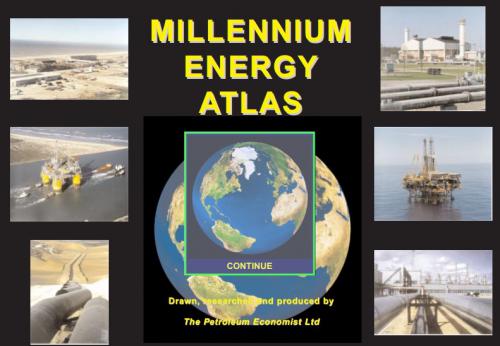
Данный атлас является результатом семимесячной кропотливой работы с картами. Его основой является серия карт с нанесенной экономической обстановкой нефтяной промышленности, которая полностью была пересмотрена и дополнена. Миллениум атлас - это действительно уникальный проект, содержащий информацию о более, чем 150,000 нефтегазовых месторождений в важнейших регионах нашей планеты, производящих энергию. Атлас также содержит информацию о расположении главных портов, терминалов, перерабатывающих заводов, СПГ в местах хранения и нефтегазопроводов
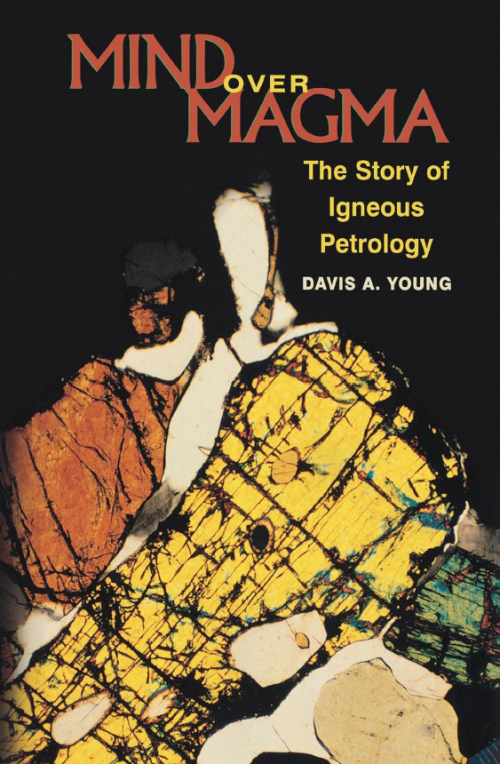
The science of igneous petrology requires three things: igneous rocks, human beings, and an appropriate methodology for the acquisition of knowledge and understanding about the igneous rocks. Magmatic activity and igneous rocks have characterized the crust throughout the 4.5 billion years of Earth history.
This revised handbook addresses mine closure, one of the themes in the Leading Practice Sustainable Development (LPSD) Program. The program aims to identify key issues affecting sustainable development in the mining industry and provide information and case studies that illustrate a sustainable basis for the industry. A number of other themed handbooks in the series complement this handbook. The leading practice handbooks integrate all phases of mineral production, from exploration to post-closure and relinquishment.
Mining has played an instrumental role in the development of modern society. These benefits have associated impacts and risks that must be managed by mining companies to retain their social licence to operate. A critical risk remains the ability to sustainably close mining operations. The concept of planning and executing mine closure has existed for a number of decades with the overarching philosophy “that closure should be considered throughout the lifecycle of a mine, from cradle to cradle” (Grant 2018). Regardless, there remain very few examples worldwide of successful mine closure and subsequent lease relinquishment, with notable exceptions (e.g. Grant 2006; Lacy & Bennett 2015). A major part of the challenge is that closure planning is rarely seen within the culture of the industry as a core business activity, and subsequently it is rarely integrated with other mineplanning activities more relevant to the day-to-day operation of the mine (e.g. short and medium mine planning, LoAP). This is generally due to the lack of ownership of closure issues by the site mine management teams, as closure is either seen as being too far into the future or someone else’s problem. This is despite the establishment of clear closure policy by most mining corporations and the many changes in mine closure related regulation around the globe <...>